ASEAN members should co-operate, not compete: AEF panel
ASEAN members should co-operate, not compete: AEF panel
ASEAN member states should focus more on regional trade and co-operation as opposed to solely competing with each other.
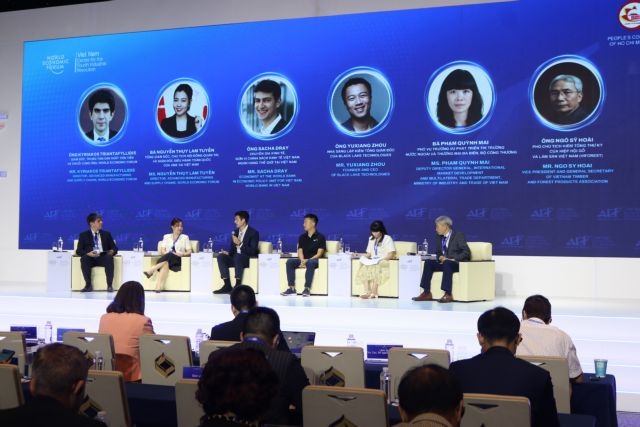
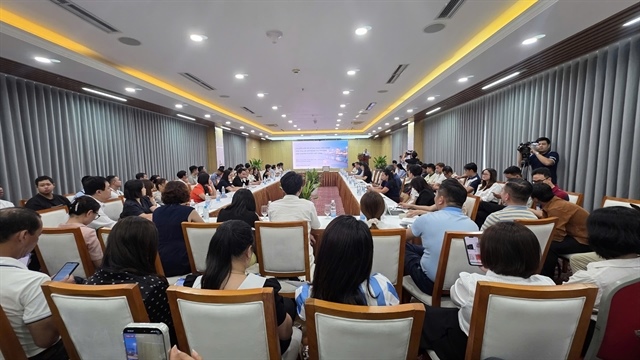
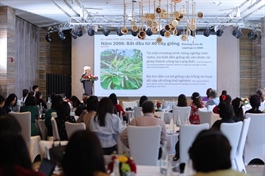
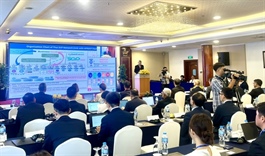
A panel titled “Repositioning Việt Nam and ASEAN in Global Value Chains” was held as part of the Autumn Economic Forum. — VNS Photo |
ASEAN member states should focus more on regional trade and co-operation as opposed to solely competing with each other, according to a discussion panel on positioning ASEAN on the global map in HCM City's Autumn Economic Forum (AEF) on October 27.
Nguyễn Thị Lam Tuyền, general director, chairwoman of the board and country holding officer of ABB Vietnam, said that "ASEAN is an increasingly attractive market thanks to several enablers, including the huge market of over 680 million people, rapid urbanisation and strong digital infrastructure".
"ASEAN is one of the most dynamic regions in the world."
"ASEAN countries are not only keeping low labour cost, but also investing greatly in advanced manufacturing, and there is also the increasing availability of engineering talent," she added.
According to Sasha Drey, economist at the Economic Policy Unit for Việt Nam under the World Bank in Việt Nam, every year, 15 per cent of foreign investment inflows are going into ASEAN countries, also open to trade.
ASEAN has a wide range of trade agreements, both within its members and also with other continents' countries.
ASEAN is very well integrated into global value chains, and there has been a lot of diversification of supply chains over the last 20 years in member countries, such as automobiles and EVs in Thailand, assemblies in Việt Nam, semiconductor fabrication and testing in Malaysia and Singapore.
However, regional value chains are more limited, representing only a third of global value chain participation of the region compared to 70 per cent within the EU.
There are still gaps in economic integration. Out of the approximately $2 trillion of exports every year, only 22 per cent stay in the ASEAN region, compared to the EU's 60 per cent.
This means that ASEAN members may be more exposed to external demand from other countries.
"Uncertainty is no longer uncertain. We know that we are living in a more volatile world. And if you're dependent on consumption in the EU, in the US, or other advanced economies, it makes you more vulnerable."
If resources within ASEAN could be better allocated, such as exploiting affordable production wage in one country and high productive capital in another, members could benefit better from existing trade, he said.
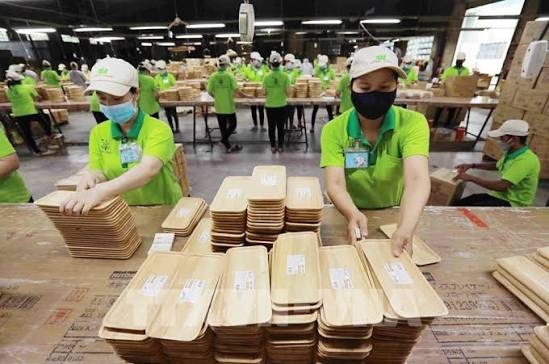
A panel titled “Repositioning Việt Nam and ASEAN in Global Value Chains” was held as part of the Autumn Economic Forum. — VNS Photo |
Similarly, Ngô Sỹ Hoài, vice president and general secretary of Việt Nam Timber and Forest Products Association, said that the members should leverage their advantages in wood manufacturing (which includes rich forest resources, low production costs and the bloc's economic dynamism) to move from competition to cooperation in order to uplift the region's overall competitiveness.
Phạm Quỳnh Mai, deputy head of International Market Development and Multilateral Trade Department under the Ministry of Industry and Trade, said that ASEAN member states should address non-tariff barriers hindering trade, as factors such as customs procedures, certifications and logistics all add expenses and inefficiencies.
ASEAN countries need to work together in order to exchange information and build capacity for member states in order to avoid unnecessary duplication of regulation, testing, certification procedures and rules of origin – the latter of which is especially important considering the fact that ASEAN members are negotiating a lot of free trade agreements, according to Mai.
Additionally, customs procedures need to be transparent and straightforward, and countries should enhance the use of electronic documents in processing the procedures.
Other experts highlighted the importance of specialising in specific stages of the regional value chain as opposed to trying to compete on all production stages, and how to combine these production specialisations into effective regional value chains.
One factor that can facilitate this is encouraging more cross-border regional investment, as investment is often the prerequisite for more trade and developing relations. In fact, ASEAN's 2025-30 plan for promoting FDI is not just about "selling ASEAN to global investors", but also "selling ASEAN to ASEAN."
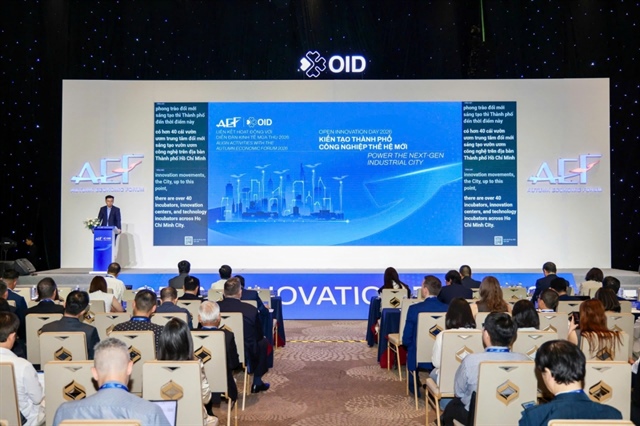
The ongoing AEF will take place until October 29, with more discussion opportunities on a wide variety of topics to foster sustainable growth not only for Việt Nam, but also other countries.
- 11:47 27/10/2026