Vietnam pushes digital finance into tangible gains
Vietnam pushes digital finance into tangible gains
On September 24 in Hanoi, the Ministry of Finance, together with other agencies, organised Vietnam Digital Finance 2026 under the theme “Powering an intelligent, secure, connected, and sustainable digital financial ecosystem."
Nguyen Viet Ha, director of the Department of Information Technology and Digital Transformation under the Ministry of Finance, said the finance sector would need to focus on four major transformations in the next phase.
“First, we need to move from digitisation to data-driven governance,” said Ha. “The finance sector manages a vast data landscape spanning the state budget, taxation, customs, the State Treasury, securities, public assets, businesses, investment, statistics, social insurance, and many other areas.”
The second transformation identified by Ha is a shift from individual AI applications towards building AI capabilities across the entire sector.
“AI is opening up new approaches to analysis, forecasting, automation, and decision support. However, given the specific characteristics of the finance sector, we should not pursue technology at any cost,” he said. “AI must address real-world problems, deliver measurable efficiency gains, and be deployed on a foundation of reliable data, with adequate controls, accountability, and security.”
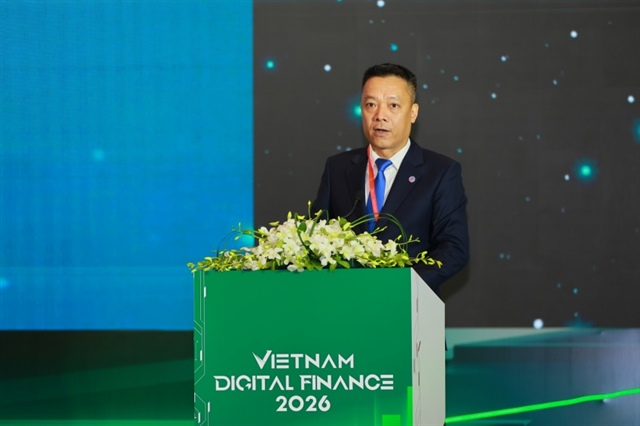
Nguyen Viet Ha, director of the Department of Information Technology and Digital Transformation. Photo: IEC Group |
The third aspect is a shift from standalone systems towards an interconnected and interoperable ecosystem. The value of data increases when it is properly connected; the value of platforms increases when they are shared. The value of digital transformation increases when it creates synergies among government agencies, businesses and citizens.
The final transformation is a shift from treating security as an afterthought to embedding security by design, according to Ha.
“The broader the connectivity, the more extensively data is used, and the deeper AI is integrated, the higher the requirements for safety and cybersecurity must be,” he said. “Our view is that digital transformation must go hand in hand with digital security; innovation must go hand in hand with risk controls; and data utilisation must go hand in hand with data protection.”
An intelligent digital financial ecosystem first and foremost requires high-quality data to operate effectively. Colonel Ha Nam Trung, deputy director of the National Data Centre under the Ministry of Public Security, said data needed to become a genuine foundational infrastructure, providing resources for analysis, forecasting, and management across the entire digital financial ecosystem.
“This requires a shift from simply having databases to actually unlocking the value of data. When financial data is standardised, connected, and effectively reused, much of the information that people and businesses previously had to declare repeatedly can be shared across systems. This can shorten administration and reduce compliance costs,” he said.
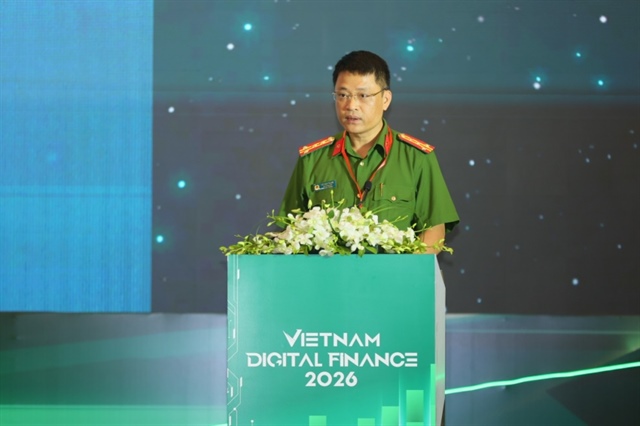
Colonel Ha Nam Trung, deputy director of the National Data Centre. Photo: IEC Group |
At the same time, connectivity must go hand in hand with requirements for data quality and security. According to Trung, data security, governance, monitoring and auditing need to be designed from the outset and maintained throughout the data lifecycle.
“This requirement is becoming increasingly important as AI plays a deeper role in analysis, decision support, and the delivery of digital financial services,” Trung said. “Vietnam has established a number of important foundations, from the legal framework for data and the infrastructure of the National Data Centre to large-scale databases operated by the MoF and the State Bank of Vietnam. The focus in the next phase will be on data quality, interoperability and the ability to turn data into value for practical applications.”
Nguyen Van Quang, director of the Strategic Customer Division at VNPT AI, said that in 2025 alone, the tax sector served more than 978,000 people through one-stop administrative service centres, recorded more than 1.1 million electronic interactions related to tax procedures, and maintained as many as 479 information and support channels.
“The financial sector is approaching a point where the question is no longer whether to deploy AI agents, but what role AI agents will play in supporting individuals and businesses, as well as in operations and decision-making,” he said.
“As people increasingly use multiple channels, adding personnel to handle peak periods is not always something that can be done immediately. This is a gap that AI agents can help fill. Rather than simply answering a single question on a chatbot, AI can receive requests, retrieve information, handle repetitive queries and support advisory services.”

Overview of the event. Photo: IEC Group |
In the customs sector, AI applications are already being directly linked to specific operational challenges.
Luu Manh Tuong, deputy director general of the Vietnam Customs, said annual growth in merchandise import and export turnover has exceeded 10 per cent, while this year’s growth could surpass 20 per cent, causing workloads to rise rapidly.
“Without AI applications, the customs sector will find it difficult to meet the requirements of serving individuals and businesses while fulfilling its state management responsibilities,” Tuong said. “One priority is to use AI to support individuals and businesses in completing customs procedures, shortening customs clearance times and reducing social costs. Customs authorities have deployed an AI chatbot to provide rapid answers to queries, while support for businesses in declaring dossier codes is also being piloted.”
- 08:17 25/09/2026