High-quality human resources needed to attract new tech investment capital
High-quality human resources needed to attract new tech investment capital
Besides infrastructure, Việt Nam must also rapidly develop a highly skilled workforce to attract investment in AI, semiconductors and advanced manufacturing, experts have said.
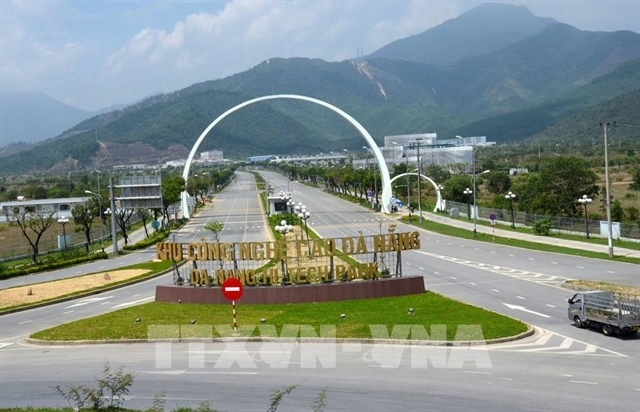
Đà Nẵng Hi-tech Park. The development of housing for experts and related social amenities within high-tech zones should be considered an integral part of human resource policy. — VNA/VNS Photo |
Besides infrastructure, Việt Nam must also rapidly develop a highly skilled workforce to attract investment in AI, semiconductors and advanced manufacturing, experts have said.
Don Lam, CEO and co-founder of investment management company VinaCapital, said that global technology investors were increasingly looking at the readiness of the entire ecosystem, with high-quality human resources a decisive factor.
According to Lam, the key issue is not merely the current number of engineers in Việt Nam, as investors require a domestic pool of research and technical talent deep enough to support large-scale recruitment.
More importantly, he believes Việt Nam must have a training pipeline that can scale in line with business needs. As technology projects expand, the workforce must grow correspondingly. Companies cannot simply be left to compete for talent in a market already facing a shortage of high-quality personnel.
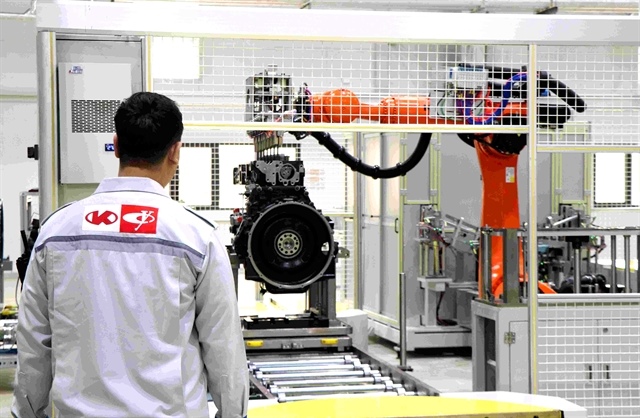
Đà Nẵng Hi-tech Park. The development of housing for experts and related social amenities within high-tech zones should be considered an integral part of human resource policy. — VNA/VNS Photo |
This requirement is particularly evident in sectors such as semiconductors, AI and advanced manufacturing that demand specialised skills and extensive training.
While a factory or research centre can be completed within a few years, building a team of engineers, experts and researchers capable of mastering the technology requires a much longer process.
Attracting technology investment to Việt Nam requires a focus on preparing an ecosystem capable of supporting operations and growth, rather than just preparing physical sites. From this perspective, human resources must be viewed as a critical form of infrastructure.
Skills gap
In a recent survey, the European Chamber of Commerce in Việt Nam (EuroCham) noted that talent shortages and personnel turnover have been rising since the fourth quarter of 2025. The issue has emerged as one of the top three challenges facing businesses.
According to the survey, workforce pressure is widespread across many sectors. Specifically, 65 per cent of businesses in agriculture and food value chains, along with 62 per cent of enterprises in manufacturing, industry, energy and construction, reported facing such pressures.
Such figures highlight a challenge that extends beyond a mere shortage of technology engineers. Many industries require a new generation of workers who possess both specialised expertise and the ability to work with digital technologies.
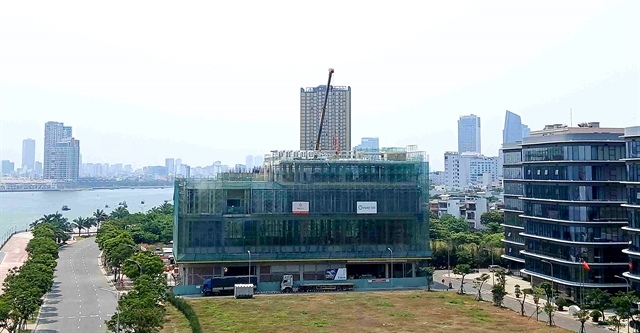
Đà Nẵng Hi-tech Park. The development of housing for experts and related social amenities within high-tech zones should be considered an integral part of human resource policy. — VNA/VNS Photo |
As AI becomes deeply integrated into production, the challenge is shifting from a lack of personnel to a lack of the right skills. Repetitive tasks, such as data entry and basic planning, can be automated, while the demand for system monitoring, data management, and cross-functional coordination is increasing. This trend is clearly evident in various manufacturing sectors, including fashion and textiles.
According to Corinna Joyce, a fashion business management expert at RMIT University, workers are increasingly required to combine specialised knowledge with digital skills.
Businesses need individuals who understand production processes, are confident in using digital tools and are capable of evaluating the outputs generated by automated systems. This creates new demands for educational institutions in Việt Nam.
Consequently, training programmes must be aligned with real industry challenges involving data, forecasting, traceability and sustainable development. The goal is not merely to produce individuals who know how to use AI, but to cultivate a workforce capable of leveraging AI to solve industry-specific problems.
Winning talent
Besides training, Việt Nam also needs policies attractive enough to secure the long-term commitment of both domestic and international experts.
In a recent proposal, the HCM City Department of Science and Technology recommended measures to attract experts and scientists to work at high-tech enterprises and R&D centres. One proposed measure is a five-year personal income tax exemption on salaries and wages.
Reforms to immigration and labour procedures are being pursued to create more favourable conditions for the digital technology and semiconductor workforce. Proposals have also been made to issue long-term visas to foreign investors, experts and their families.
Financial incentives alone are insufficient to retain top talent. Experts require a conducive research environment, substantial projects and opportunities for professional growth, while their families need adequate housing, education and healthcare.
|
Đà Nẵng Hi-tech Park. The development of housing for experts and related social amenities within high-tech zones should be considered an integral part of human resource policy. — VNA/VNS Photo |
As proposed by the department, the development of housing for experts and related social amenities within high-tech zones should be considered an integral part of human resource policy.
Consequently, the race to attract technology investment is shifting from a competition based on land, power supply and incentives to one centred on human capital. While physical infrastructure enables project implementation, it is the workforce that determines operational capacity, scalability and the ability to generate high-tech value.
Failure to prepare in time could result in a talent shortage becoming a bottleneck just as the flow of technology investment accelerates. Conversely, building robust and self-sustaining human capital infrastructure will enable Việt Nam not only to attract projects but also to capture a greater share of high-tech value.
Việt Nam has set a target of developing a highly skilled AI workforce of at least 10,000 people by 2030. This figure is part of the national programme for AI workforce development to 2030, with a vision toward 2035, which was approved by the Government last month.
- 07:42 12/09/2026