Beyond the upgrade, Việt Nam sets sights on long-term investment
Beyond the upgrade, Việt Nam sets sights on long-term investment
Việt Nam News reporter Ly Ly Cao spoke with Kojima Kazunobu, a Japan International Cooperation Agency (JICA) consultant and expert from the Daiwa Institute of Research, about the impact of the upgrade, reform priorities and the key risks facing Việt Nam as it enters emerging-market status.

Kojima Kazunobu, a Japan International Cooperation Agency (JICA) consultant and expert from the Daiwa Institute of Research. — Photo courtesy of JICA |
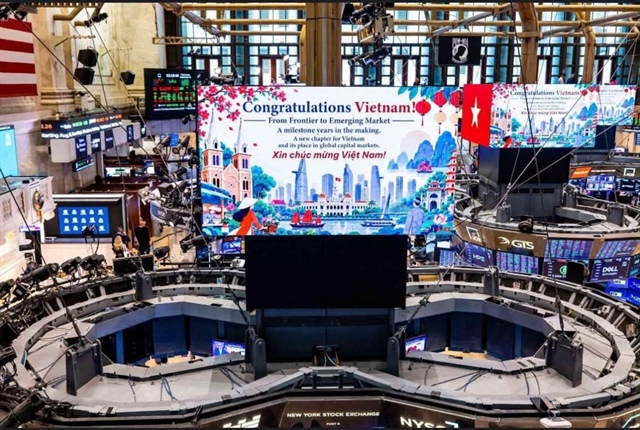
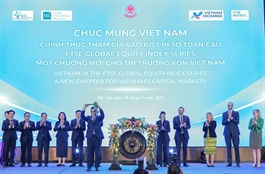
The stock market enters a new chapter on September 21 as its upgrade from frontier to secondary emerging market status under FTSE Russell takes effect.
Beyond expectations of increased foreign capital, the upgrade raises important questions about how it could reshape the quality and structure of the market and what further reforms are needed to attract and retain long-term international investment.
Việt Nam News reporter Ly Ly Cao spoke with Kojima Kazunobu, a Japan International Cooperation Agency (JICA) consultant and expert from the Daiwa Institute of Research, about the impact of the upgrade, reform priorities and the key risks facing Việt Nam as it enters emerging-market status.
What do you consider to be the most significant impact of a market upgrade and beyond attracting capital inflows, how will it affect the quality and structure of Việt Nam's stock market?
The most significant impact of the market upgrade is not simply the potential increase in foreign capital inflows.
In my view, its greater significance is that Việt Nam will become investable for a much broader universe of global emerging-market investors and will therefore be evaluated more closely as an investment destination.
As more international investors begin to follow Vietnamese listed companies, engagement between companies and investors is likely to increase. This can contribute to the continued development and international integration of the market.
At the market level, the upgrade is also likely to place greater emphasis on liquidity and investability. International investors assess not only market capitalisation but also whether they can build, manage, and exit positions efficiently.
Factors such as free-float availability, trading liquidity, and access to investment opportunities therefore become increasingly important as the market attracts a broader range of global investors.
For this reason, the upgrade can be viewed as the beginning of a new phase in which Việt Nam's stock market will be observed and evaluated by a much broader community of global emerging-market investors.
As investor participation expands, greater attention is likely to be paid to factors such as liquidity, investability, and the availability of attractive investment opportunities.
This process can support the continued evolution of the market and further strengthen Việt Nam's position as an increasingly important destination for international investment over the long term.
Following the market upgrade expected on September 21, which reforms should Việt Nam prioritise to ensure that international capital flows into the market not merely because of index inclusion, but remains invested over the long term?
While continued improvements in trading infrastructure, market transparency, corporate governance and investor protection remain important, Việt Nam's long-term objective should be to establish itself as a market that offers attractive investment opportunities and a growing universe of high-quality listed companies.
From that perspective, one of the most important priorities is to further strengthen the quality of disclosure and investor relations activities among listed companies.
International investors need sufficient information to understand a company's business model, growth strategy, competitive advantages, and long-term value creation potential. Even high-quality companies may not receive appropriate investor attention if these strengths are not communicated effectively.
In the long run, sustainable foreign investment will depend not only on market infrastructure or regulatory frameworks but also on the availability of attractive and investable companies.
Increasing the number of listed companies that can communicate their investment story clearly and engage effectively with investors will help strengthen market confidence and support long-term international investor participation in Việt Nam's stock market.
While retail investors continue to play a significant role in Việt Nam's stock market, what measures should Việt Nam take to foster the growth of long-term institutional investors?
To develop a stronger base of long-term institutional investors, it is important to recognise that institutional capital ultimately originates from household savings.
In many developed markets, pension funds, insurance companies, and investment funds have grown by channelling the long-term savings of households into professionally managed investment vehicles.
Therefore, the development of institutional investors should be viewed not only as a financial-sector objective but also as part of a broader effort to support long-term household asset formation.
In this regard, Việt Nam could consider several complementary measures. First, it should continue encouraging the growth of long-term investment through pension and insurance systems, which can provide a stable source of institutional capital for the capital market.
Second, tax incentives could be used to encourage long-term investment by individual investors through investment funds. International experience suggests that such incentives are most effective when they are designed for broad-based household asset formation, with appropriate investment limits to ensure that the benefits are focused on ordinary investors rather than high-net-worth individuals.
Third, financial and investment education should be strengthened from an early age to help build a culture of long-term saving and investing.
Over time, these measures can help channel household savings into professionally managed long-term investment and support the development of a more stable and diversified investor base.
In your view, what is the greatest risk facing Vietnam after achieving an upgrade to emerging market status?
I do not see any major structural risk that would undermine Việt Nam's long-term growth prospects after an upgrade to emerging market status. The country continues to benefit from strong economic fundamentals, a dynamic private sector, and a young, well-educated, and hard-working workforce. These factors provide a solid foundation for continued economic and capital market development.
In my view, the more important challenge is whether Việt Nam can continue enhancing its attractiveness as an investment destination as it becomes more closely followed by global emerging-market investors.
The upgrade is likely to increase investor attention, but it will also raise expectations regarding market quality, openness, and alignment with international standards. Whether Việt Nam can continue meeting these evolving expectations may therefore become a risk factor in the years ahead.
As Việt Nam moves into this new phase, international investors are likely to place increasing importance on factors that affect investability and long-term shareholder value.
Continued progress in these areas would further strengthen Việt Nam's position within the global investment community and help attract a broader base of long-term investors.
For this reason, I see the upgrade not as the end of a reform process, but as an opportunity to further enhance the attractiveness and competitiveness of Việt Nam's capital market.
- 09:53 22/09/2026