Sugar industry shifts focus to quality
Sugar industry shifts focus to quality
The domestic sugar market continues to face significant challenges due to abundant supply, low prices, and pressure from imported sugar and sugar of unknown origin.
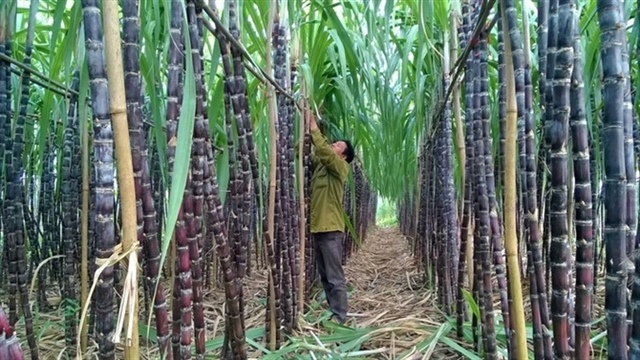
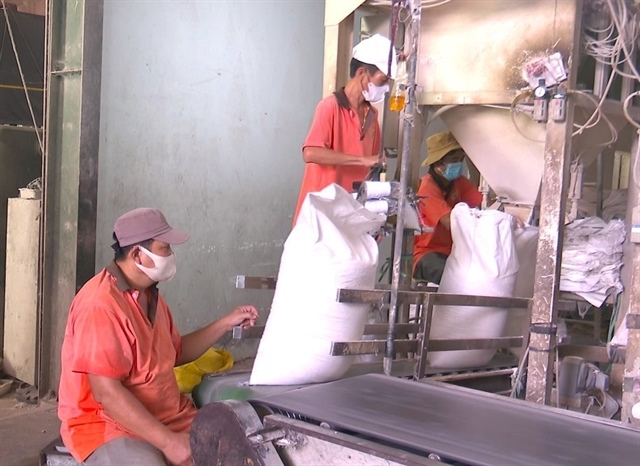
The country had processed approximately 13.3 million tonnes of sugarcane and produced nearly 1.3 million tonnes of sugar by the end of the 2025–2026 season. — VNA/VNS Photo |
While the sugar industry previously focused on increasing cane-growing areas and restoring production following a period of declining cultivation, it is now shifting its focus to improving farming quality to build a sustainable competitive advantage.
Chairman of the Vietnam Sugarcane and Sugar Association (VSSA) Nguyễn Văn Lộc said that the country had processed approximately 13.3 million tonnes of sugarcane and produced nearly 1.3 million tonnes of sugar by the end of the 2025–2026 crushing season.
This resulted in abundant supply at a time when market demand remained sluggish, increasing inventory pressure and intensifying competition, he said.
The domestic sugar market continues to face significant challenges due to abundant supply, low prices, and pressure from imported sugar and sugar of unknown origin. Across Asia, domestic sugar prices in many countries remain considerably higher than in Việt Nam.
Spot white sugar prices in China have continued to edge up. Converted into Vietnamese đồng, the average sugar price in the Philippines stands at around VNĐ28,177 (US$1.08) per kilogramme, equivalent to 167 per cent of Việt Nam's average price. Indonesian prices are approximately VNĐ27,873 per kilogramme, or 165 per cent, while China averages about VNĐ19,434 per kilogramme, or 115 per cent of Việt Nam's level.
By comparison, the average sugar price in Việt Nam is only around VNĐ16,892 per kilogramme. Domestically produced white sugar currently sells for approximately VNĐ16,000–16,600 per kilogramme, while refined sugar is priced at VNĐ17,000–17,600 per kilogramme. Even so, these prices are not competitive with those of smuggled sugar.
The sugar industry is among the sectors facing the greatest challenges, according to Lộc. These pressures have compelled both businesses and farmers to seek new ways to survive. As a result, the industry has increasingly adopted green and circular economy solutions.
"The ultimate goal of these innovations is to improve productivity and reduce production costs. That is why the industry is placing greater emphasis on developing new cane varieties, expanding mechanisation and applying advanced technologies rather than simply increasing cultivation areas," he said.
Statistics from the VSSA show that sugar output from sugarcane in the 2024–2025 crop yeari ncreased for four consecutive seasons, reaching around 180 per cent of the 2020–2021 level.
Sugarcane purchase prices also rose for five consecutive seasons, reaching approximately 150 per cent of the 2019–2020 level. Collaboration between sugar companies and cane growers has continued to strengthen, supporting the livelihoods of around 220,000 farming households. Notably, Việt Nam's sugar yield per hectare has surpassed that of many Southeast Asian countries.
Cao Anh Đương, director of the Sugarcane Research Institute under the Ministry of Agriculture and Environment, told Đại Đoàn Kết (Great Unity) newspaper that achieving better results would require raw material areas to be reorganised in a comprehensive and coordinated manner.
He said that restructuring these production areas would not merely be about introducing new cane varieties or investing in additional machinery, but about reorganising the entire production system, from cane varieties, cultivation practices and infrastructure to data systems and integration with sugar mills. Without high-quality cane-growing areas, sugar mills could not remain competitive, he said.
Đương also pointed out that several constraints continued to hinder the development of sugarcane-growing areas.
Production remains fragmented, with scattered landholdings making mechanisation difficult, according to Đương. Cane varieties are not yet sufficiently uniform, while disease-free planting materials remain limited.
Labour, harvesting and transportation costs continue to rise, and data on cultivation areas, production forecasts and harvesting schedules are still poorly integrated with the needs of sugar mills. Unless these bottlenecks are addressed, enhancing the competitiveness of the entire value chain will remain difficult.
Industry experts also believe that the restructuring of cane-growing areas should be based on five key pillars: developing improved varieties and disease-free planting material systems; promoting low-emissions cultivation practices; adapting production to climate change across different ecological zones; managing cane-growing areas through data-driven systems; and expanding mechanisation alongside agricultural service development.
These measures all share the common objective of producing more sugar from the same cultivated area while reducing production costs and greenhouse gas emissions.
In addition to ensuring a stable supply of raw materials, well-managed cane-growing areas will also create greater opportunities for developing higher value-added products.
As the quality of raw materials improves, sugar companies will be better positioned to maximise the value of bagasse, molasses and other by-products by producing biomass power, bioethanol, organic fertilisers, and a wide range of other value-added products.
This reflects the development model adopted by sugar industries in many countries, where the value of sugarcane is measured not only by sugar output, but also by its capacity to generate multiple products from the same raw material.
- 08:46 13/08/2026