Smarter, greener, and resilient IPs
Smarter, greener, and resilient IPs
The next wave of foreign investment will be won by industrial ecosystems that are smarter, greener, and more resilient, industry leaders have said.
Vietnam Industrial Property Forum 2026: Opportunities Amid Uncertainty
High-level conference sessions featuring leading Vietnamese and international speakers will discuss the outlook and future direction of Vietnam’s industrial property market.
There will also be recognition of organisations demonstrating leadership in green industrial development; an exhibition showcasing products, services, projects, and innovative eco-IP models; and investment networking activities and industrial site visits to exemplary developments.
Time: 1–8pm, August 26, 2026
Venue: The Reverie Saigon, Ho Chi Minh City
Organisers: Vietnam Investment Review in partnership with the Vietnam Industrial Real Estate Association
Please visit vipf.vir.com.vn for details
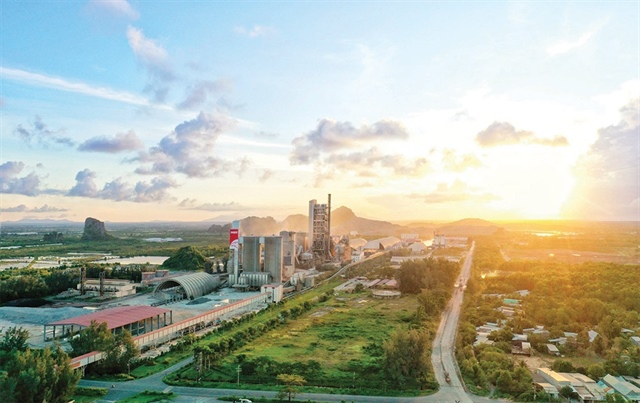
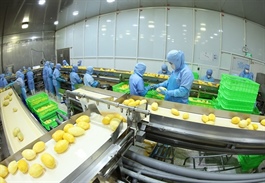
INSEE high-tech ecocycle factory in An Giang province, Photo: Le Toan |
Speaking at a late July forum on developing smart and eco-industrial parks (eco-IPs) organised by the Vietnam Chamber of Commerce and Industry in Dong Nai, Mickaël Driol, CEO of Mekong Partners, said that Vietnam’s competitive advantage in attracting foreign direct investment is entering a new phase of transformation.
“Vietnam can no longer rely solely on low labour costs, a strategic location, and incentives to attract investors. In the coming years, the ability to meet green standards, manage emissions, and develop industrial ecosystems will become the key competitive advantages,” Driol said.
He noted that green compliance and supply chain resilience have become prerequisites for joining global value chains rather than costs to manage.
“New EU regulations such as the Carbon Border Adjustment Mechanism (CBAM), the EU Deforestation Regulation, and stricter traceability requirements mean investors increasingly evaluate companies based on emissions data and Scope 3 emissions,” he added.
While Vietnam remains well positioned to benefit from global supply chain realignment thanks to strong trade growth and robust foreign investment inflows, Driol stressed that supply chain resilience and market access now matter as much as cost competitiveness in decisions.
“Against this backdrop, eco-IPs would become the new benchmark for industrial development. Eco-IP certification is a strategic tool to lower operating costs, comply with CBAM, and attract international financiers,” he added.
Driol proposed a next-generation IP model centred on decarbonisation, digitalisation, and connectivity by integrating renewable energy, smart grids, real-time emissions monitoring, industrial symbiosis, and green logistics into a unified ecosystem.
Talking with VIR, Hardy Diec, COO of KCN Vietnam, said sustainability criteria are playing an increasingly important role in site selection decisions.
“Green development is becoming a key component of the competitive advantage of both IPs and manufacturers,” Diec said. “As environmental, social, and governance requirements and emissions standards become more deeply embedded in global supply chains, choosing industrial projects with a strong sustainability focus will enable businesses to operate more efficiently while meeting the expectations of international customers.”
According to industry experts, major international investors are seeking a green industrial ecosystem in which factories are designed and operated to meet smart standards from the outset.
This view was echoed by Bui Tan Hung, head of Gas and Renewables at TotalEnergies. He said the mindset of investors has shifted markedly: rather than focusing primarily on land costs or logistics, their first question is now whether reliable access to clean energy is available.
“Despite growing demand, however, the rollout of rooftop solar systems in IPs continues to face significant obstacles. These include conflicts of interest among stakeholders and the lack of electricity operation licences held by some IP infrastructure developers,” Hung said at a Solar & Storage Live event in July in Ho Chi Minh City.
Hung added that ensuring access to clean electricity, together with implementing direct power purchase agreements for industrial customers, remains one of the sector’s most pressing challenges.
Nguyen Kim Long, Standing Vice Chairman of Dong Nai People’s Committee, said that green transformation and emissions reduction are urgent priorities that must be addressed today.
He noted that with its large industrial base, strategic location, abundant land resources, and well-developed infrastructure, Dong Nai is well positioned to become a national leader in the development of smart, eco, and high-tech IPs.
“However, these advantages will only translate into sustainable growth if they are matched by new thinking, new approaches, and close coordination among government authorities, IP developers, manufacturers, financial institutions, research organisations, and the wider community,” Long said.
In Vietnam, the transition towards eco-IP based on international standards began in 2014. So far, five IPs have been selected as pilot projects: DEEP C in Haiphong, Amata in Dong Nai, Hiep Phuoc in Ho Chi Minh City, Hoa Khanh in Danang, and Tra Noc 1 and 2 in Can Tho.
Gene King, CIO, BW Industrial Development We see Resolution No.10-NQ/TW as one of the most consequential policy shifts for industrial real estate since Vietnam’s original wave of foreign direct investment (FDI) liberalisation. This aligns closely with what we have already been seeing on the ground: FDI is increasingly flowing into higher-value sectors such as electronics, semiconductors, AI infrastructure, and advanced manufacturing. At BW Industrial Development, high-value-added industries already account for nearly half of our ready-built factory leased area. Moreover, demand from homegrown manufacture in global supply chains is also emerging. For industrial real estate specifically, we believe this changes what “investment-ready” means. We have long said that long-term competitiveness depends not just on infrastructure, but on reliable power, a strong supplier network, workforce availability, and the government’s ability to deliver infrastructure projects on schedule. Resolution 10 formalises this same logic at the national level, tying Vietnam’s FDI targets directly to infrastructure upgrades, green and digital economy development, and stronger domestic links. The new resolution is closely aligned with our existing strategy. We believe developers who have already invested in higher-spec, power-ready facilities will be best positioned to capture the more selective, higher-value FDI this policy is designed to attract. This resolution should strengthen Vietnam’s investment environment and accelerate the industrial real estate market’s transition towards more integrated and technology-enabled industrial ecosystems. Resolution 10’s push for higher localisation also mirrors what we’re already seeing among our tenants, as Tier 1 and Tier 2 suppliers increasingly follow major manufacturers into Vietnam and build more complete supply chains here, rather than relying solely on imports. BW still has a nearly 200-hectare industrial land bank ready for development in our nationwide pipeline, giving us room to rapidly respond to any demand shift, and we’re scaling up our war chest through partnerships like a recent $120 million joint venture to address the continuing inbound facility demand from electronics, automotive, and other high-value industries. We’re also watching land constraints closely in hubs like former Binh Duong and Dong Nai province, where development timelines tend to run longer than in some regional peers, which is exactly why staying ahead on land matters. At the product level, we will continue to develop high quality, universal-spec, flexible facilities with environmental, social, and governance embedded in the base design. This includes LEED-ready specifications, rooftop solar, and multi-storey design that improve land-use efficiency. We are also investing in infrastructure ahead of demand. Our MoUs with BV Power and VSSES, for example, are designed to provide scalable power infrastructure at BW Supply Chain City for future hyperscale data centres and advanced manufacturing users. |
- 15:35 10/08/2026