Khánh Hòa eyes pioneering role in Việt Nam's halal economy
Khánh Hòa eyes pioneering role in Việt Nam's halal economy
Nguyễn Huy Toàn of Halal Hub Việt Nam JSC, which serves as a platform to promote halal-certified businesses, speaks to Việt Nam News about how the province is building a halal ecosystem and the opportunities this creates for local businesses.
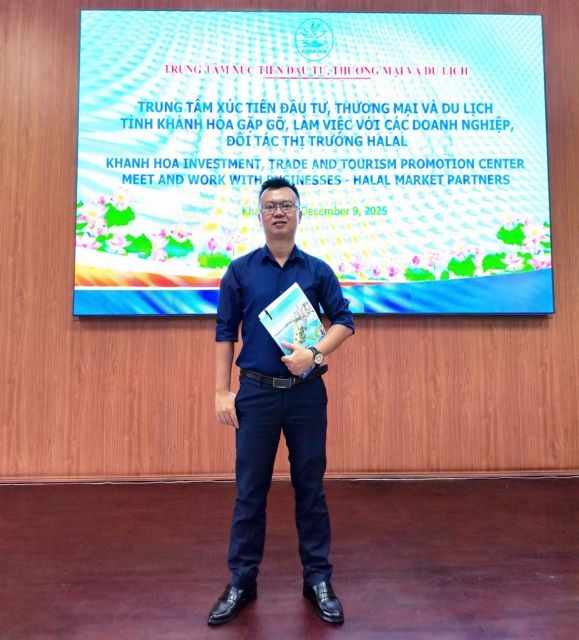
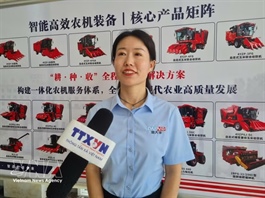
Nguyễn Huy Toàn, chief communications officer of Halal Hub Việt Nam JSC, says Khánh Hòa has the potential to become a pioneer in Việt Nam's halal economy. — VNS Photo |
Khánh Hòa is positioning itself to tap into the rapidly growing global halal market. Nguyễn Huy Toàn of Halal Hub Việt Nam JSC, which serves as a platform to promote halal-certified businesses, speaks to Việt Nam News about how the province is building a halal ecosystem and the opportunities this creates for local businesses.
Could you share your perspective on the current halal market in Khánh Hòa Province, including services and production?
In my view, the halal market in Khánh Hòa is still at an early stage, but it offers immense potential for development.
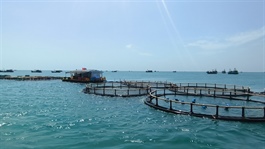
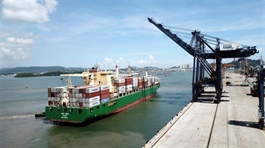
The province has distinct advantages that are hard to find elsewhere, including its strategic location, deep-water port infrastructure, international airport, and established strengths in tourism, seafood and agricultural products.
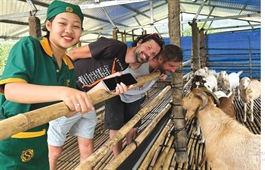
The province is investing heavily in developing Muslim-friendly tourism.
However, the number of accommodation establishments and restaurants meeting halal or Muslim-friendly standards remains limited, even as demand from visitors from Malaysia, Indonesia, the Middle East, and other Islamic countries continues to grow steadily.
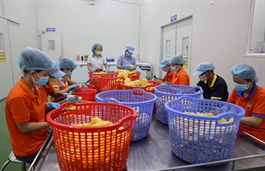
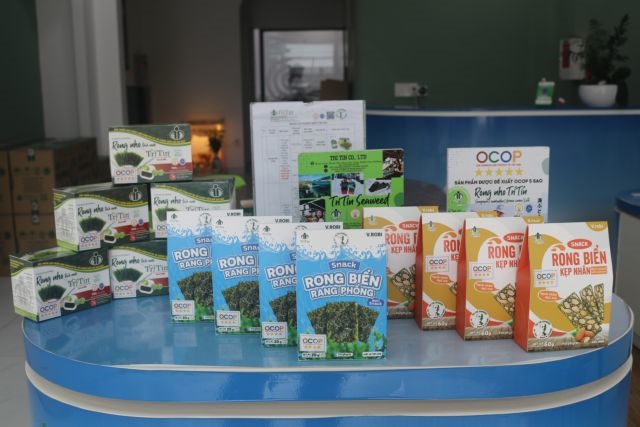
On the production side, Khánh Hòa has industries well suited to halal standards, including seafood, edible bird's nest, agricultural products, processed food, beverages and medicinal products.
These sectors have strong potential to compete globally if they obtain halal certification.
Although some local businesses have yet to fully tap into this export market, I believe that, with the right support, Khánh Hòa could become a pioneer in Việt Nam's emerging halal economy.
How do you assess the potential for attracting investment from key Islamic markets such as Malaysia, Indonesia and the Middle East into Khánh Hòa?
I believe it is very promising.
Countries such as Malaysia, Indonesia, the UAE, Saudi Arabia and Qatar are not only looking to expand bilateral trade but also actively seeking long-term investment opportunities in politically stable, high-growth markets.
Việt Nam, particularly Khánh Hòa Province, meets many of these requirements, thanks to its strategic location, steadily improving business climate, and extensive network of free trade agreements.
Investors from halal countries bring not only capital but also technology, management experience, international halal standards and global distribution networks.
These factors can help Vietnamese businesses enhance their competitiveness, better meet the requirements of international markets and participate more deeply in the global halal value chain.
Beyond tourism, Khánh Hòa has significant potential to attract foreign direct investment into halal food processing, cold-chain logistics, aquaculture, renewable energy, industrial parks and supply chain support services.
Nguyễn Huy Toàn, chief communications officer of Halal Hub Việt Nam JSC, says Khánh Hòa has the potential to become a pioneer in Việt Nam's halal economy. — VNS Photo |
What advantages and challenges do local businesses seeking to meet halal standards face?
Khánh Hòa's greatest advantage is its strong foundation in manufacturing and exports.
Many local businesses already comply with international standards such as HACCP (Hazard Analysis and Critical Control Points), ISO (International Organisation for Standardization), and BRC (British Retail Consortium), making the transition to halal certification much easier than starting from scratch.
But there remain major challenges.
First, many businesses still regard halal as merely a certificate rather than a comprehensive management system covering raw materials, production lines, hygiene, traceability and supply chain integrity.
Building a culture of halal compliance throughout the entire business is the key factor in meeting the requirements of international markets.
Second, there is a shortage of well-trained halal experts, inspectors and officials, particularly those with a thorough understanding of the requirements of individual markets.
Third, each country has its own regulations and systems for recognising halal certification.
Businesses therefore need to choose a certification body recognised in their target market to avoid unnecessary costs and delays.
Furthermore, investment in factories, production lines, management systems and maintaining halal requirements also demands significant financial resources, particularly for small and medium-sized enterprises.
Businesses should also proactively build market access strategies and connect with importers and international partners, since halal certification is a necessary but not sufficient condition for products to penetrate and grow sustainably in halal markets.
The provincial authorities are promoting policies to expand the market and develop a halal ecosystem. In your view, how will these measures benefit local businesses?
I believe these support policies will have a significant impact if they are implemented in a coordinated manner and aligned with businesses' actual needs.
Support should not be limited to helping businesses obtain halal certification. It should also include workforce training, technical consultancy, trade promotion, investment facilitation, and place branding to build a complete ecosystem.
When businesses recognise the market potential, secure partners, and receive concrete orders, they will be more confident about investing in upgraded production lines, improving processes and meeting international standards.
Furthermore, if Khánh Hòa continues to promote Muslim-friendly tourism, expand halal services and develop halal-focused industrial, logistics and production clusters, the province will gain a clear competitive advantage over many other provinces in Việt Nam.
- 09:52 08/08/2026