Finance ministry moves to curb inflation pressure after wage hike
Finance ministry moves to curb inflation pressure after wage hike
Speaking on Monday at the Government's regular press conference for July, Deputy Minister of Finance Nguyễn Đức Chi said fears that prices would rise ahead of wages have eased in recent years following successive wage adjustments.
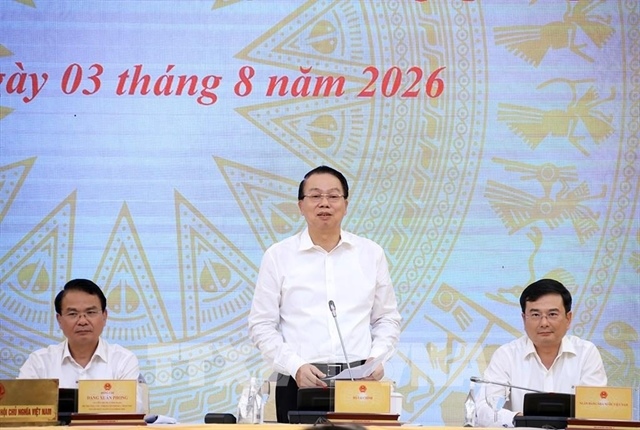
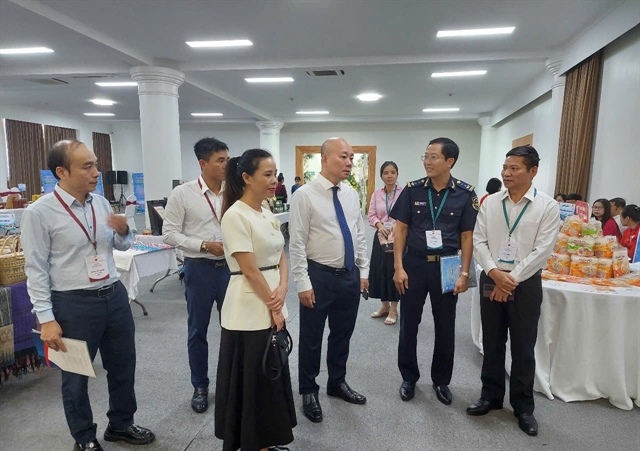
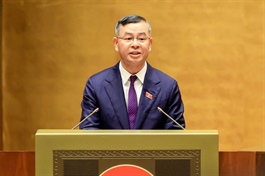
Deputy Minister of Finance Nguyễn Đức Chi answers questions from reporters at the Government's regular press conference. — VNA/VNS Photo |
The Government has introduced a range of fiscal and price management measures to keep inflation in check following the latest public sector wage increase while maintaining macroeconomic stability and supporting economic growth, said Deputy Minister of Finance Nguyễn Đức Chi.
Speaking on Monday at the Government's regular press conference for July, the deputy minister said fears that prices would rise ahead of wages have eased in recent years following successive wage adjustments.
"Following the wage increase on July 1, market developments have remained stable. Compared with previous adjustments, society has responded more rationally, so the inflationary pressure from higher wages is no longer as significant as it once was," he said.
Despite this, the Government continued to implement coordinated fiscal and monetary measures to contain inflation and support sustainable growth.
The Government had extended a range of tax relief measures, including the two-percentage-point reduction in value-added tax (VAT), agricultural land use tax exemptions and deferred tax payments. Reductions and exemptions for dozens of administrative fees and charges had also been maintained to ease costs for businesses and households.
To stabilise fuel prices, the Ministry of Finance had proposed a series of tax measures, including lower import tariffs and tax reductions aimed at cushioning the impact of global oil price fluctuations.
Chi noted that during the recent period of volatility in world oil prices caused by tensions in the Middle East, the State budget advanced about VNĐ8 trillion (US$306 million) to the petroleum price stabilisation fund to enable timely market intervention.
The ministry would continue working with the Ministry of Industry and Trade and other agencies to develop scenarios for managing prices, taxes and fees in response to domestic and global market developments. The Government was also carefully managing prices of State-regulated goods and services, including healthcare and education, as part of its broader inflation-control strategy.
These measures were intended not only to stabilise prices but also to ensure that public employees fully benefit from salary increases while businesses and households continue to receive support through tax and fee reductions, said Chi.
Growth measures to support double-digit target
Regarding the Government's economic growth target, Chi said the economy expanded by 8.18 per cent in the first half of this year, providing a solid foundation for the rest of the year. However, achieving double-digit growth remained challenging amid continued uncertainties in both the global and domestic economy.
The Ministry of Finance had worked with relevant ministries and agencies to prepare a range of growth scenarios, enabling the Government to respond flexibly to changing economic conditions during the second half of the year.
On fiscal policy, the Government would continue pursuing a targeted expansionary approach by extending tax payment deadlines and land rental payments to improve cash flow for businesses and individuals. Fuel-related tax policies would also be adjusted flexibly in line with global price movements.
The ministry had completed the allocation of additional central budget revenue collected last year and the medium-term public investment plan for 2026–2030, allowing ministries, localities and projects to accelerate public investment disbursement. It was also preparing resources for the planned increase in the statutory base salary from 2026.
For next year, the Government aims to increase State budget revenue by at least 10 per cent compared with 2025, creating additional fiscal space for development investment while maintaining major economic balances.
Chi said ministries and local authorities had also been instructed to maximise existing resources, accelerate economic restructuring and promote science and technology, innovation and digital transformation as new long-term drivers of growth.
At the same time, they would be required to implement detailed action plans, clearly assign responsibilities and strengthen accountability to ensure effective policy implementation.
"We are fully confident that, with the Government's concrete policy measures and detailed growth scenarios, Việt Nam will move closer to its goal of achieving double-digit economic growth in 2026," Chi said.
- 16:26 04/08/2026