July CPI eases on lower fuel and food prices but risks remain
July CPI eases on lower fuel and food prices but risks remain
Despite the monthly decline, CPI was still up 3.08 per cent from December 2025 and 4.45 per cent from July last year.
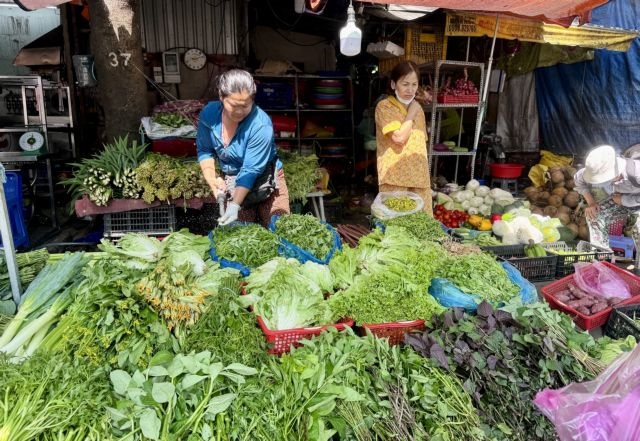
A small trader selling vegetables in Phước Long market, HCM City. July CPI fell 0.12 per cent on lower fuel and food prices. — VNA/VNS Photo Hương Giang |
The consumer price index (CPI) edged down slightly in July on lower fuel and food prices, but inflationary pressure remained a concern for the rest of the year, the National Statistics Office (NSO) said.
According to NSO’s socio-economic report released on August 3, the CPI fell 0.12 per cent in July, after rising continuously in previous months, due to lower petrol prices, abundant food supplies and cooling housing-related costs.
Of the 11 major groups of goods and services in the CPI basket, three recorded price declines while eight saw increases during the month.
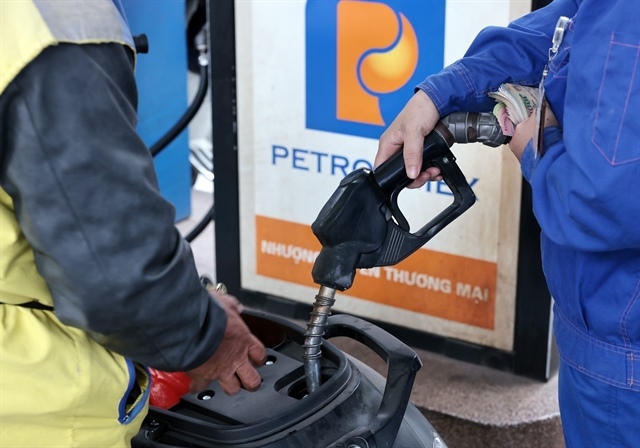
The transport group posted the sharpest decline, falling 2.02 per cent and pulling overall CPI down by 0.2 percentage points, as domestic petrol prices dropped 4.35 per cent and diesel prices fell 9.18 per cent following global fuel price movements.
Prices of food and catering services decreased 0.07 per cent, contributing to lowering overall CPI by 0.03 percentage points. The NSO attributed the decline to abundant agricultural supplies, which helped food prices fall 0.5 per cent and foodstuff prices drop 0.07 per cent.
The housing, electricity, water, fuel and construction materials group dropped 0.07 per cent, reducing CPI by 0.02 percentage points. Gas prices fell 11.41 per cent in line with global trends, while kerosene prices dropped 1.19 per cent.
Price increases in other categories were mainly driven by higher public service costs and stronger tourism demand during the summer holiday season.
Prices of other goods and services recorded the largest increase by 1.96 per cent, mainly due to a 7.9 per cent rise in health insurance contributions following an adjustment to the new base salary. Culture, entertainment and tourism prices increased 0.52 per cent.
Pressure remains
A small trader selling vegetables in Phước Long market, HCM City. July CPI fell 0.12 per cent on lower fuel and food prices. — VNA/VNS Photo Hương Giang |
Despite the monthly decline, CPI was still up 3.08 per cent from December 2025 and 4.45 per cent from July last year.
The average CPI in the first seven months rose 4.39 per cent year-on-year, driven mainly by housing, food and transport costs, indicating that inflationary pressure remained elevated, the NSO said.
Housing, electricity, fuel and construction materials increased by 6.72 per cent, contributing 1.53 percentage points to overall CPI growth in the period. Food and catering services prices rose 4.77 per cent, contributing 1.71 percentage points, while transport prices increased 5.01 per cent, adding 0.5 percentage points.
The NSO said CPI increased steadily from January to May before easing in June and July, with year-on-year inflation peaking at 5.6 per cent in May.
Core inflation, which excludes volatile fresh food, energy, and state- managed price items, rose 0.33 per cent in July from the previous month and 4.63 per cent year-on-year. Average core inflation in the first seven months increased 4.19 per cent.
To keep average annual CPI growth at around the Government’s target of 4.5 per cent, monthly CPI increases from now until the end of the year would need to be limited to only about 0.2 per cent compared with the previous month, the NSO said, adding that this would create significant challenges for economic management and inflation control.
Bùi Minh Giáp, chief economist at the Asian Development Bank (ADB) in Việt Nam, was quoted by Thời Báo Tài Chính Việt Nam (Vietnam Financial Times) as saying that coordination between fiscal and monetary policies would be important in the remaining months of the year.
Monetary policy should remain flexible but cautious, closely monitoring inflation, exchange rates, liquidity and credit quality, he said. Credit support for production, business activities and productivity-enhancing sectors remained necessary but should be implemented selectively to avoid increasing risks to the financial system.
Fiscal policy should take a more proactive role, but the focus should not only be on faster disbursement, but also on more targeted and effective spending, he said.
He said public investment should be accelerated in areas with strong spillover effects, such as transport infrastructure, logistics, energy, power grids, digital infrastructure, climate adaptation, skills development and healthcare, which could support short-term growth while improving productivity and competitiveness over the longer term.
The NSO also said that gold market cooled off in July after a strong rally as the US Federal Reserve maintained a cautious monetary policy and investors took profits. Average global gold prices in July stood at US$4,086 per ounce, down 4.62 per cent from June.
Domestic gold prices fell 3.02 per cent over the previous month and 5.66 per cent from the end of 2025.
However, average gold prices in the first seven months remained 51.86 per cent higher than in the same period last year.
- 08:04 04/08/2026