92 organisations and businesses register for carbon exchange system
92 organisations and businesses register for carbon exchange system
92 organisations and businesses, concentrated steel, cement and thermal power, have registered to participate in the carbon credit deposit and settlement system.
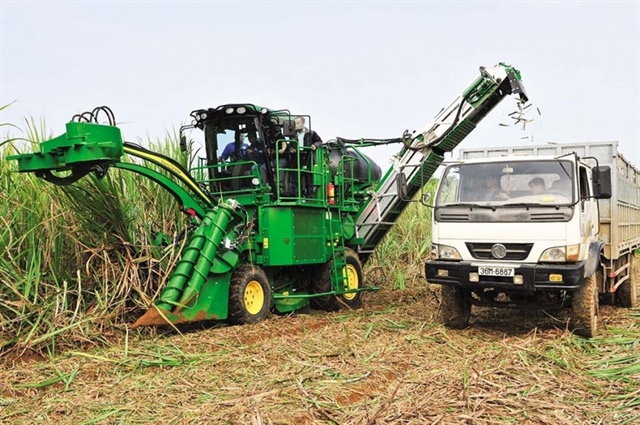
92 organisations and businesses registered to participate in the market. Photo: baodautu.vn |
Besides this, the carbon credit deposit and settlement system recorded initial results with eight securities companies as members and over 4,500 tonnes of carbon deposited.
Ta Thanh Binh, general director of the Vietnam Securities Depository and Clearing Corporation (VSDC), said, “After the issuance of Decree No.29/2026/ND-CP on the carbon exchange, VSDC coordinated with the Hanoi Stock Exchange (HNX) to implement tasks related to operating the market. To date, eight securities companies have registered to become depository members. The system also opened 20 accounts for market participants, including 14 accounts for domestic organisations and six accounts for foreign units.”
Among 92 organisations registered to join the carbon credit exchange, many businesses have invested in energy saving and emission mitigation, but have not yet recognised the potential for generating carbon credits from these activities, thus missing out on a potential revenue stream.
“This is one of the issues identified in a 2025 survey conducted with the Department of Climate Change under the Ministry of Agriculture and Environment among businesses in sectors with the potential to generate carbon credits in Vietnam. Many businesses have implemented energy-saving or emission-reduction solutions, but are unsure whether these can be linked to carbon credit projects, missing opportunities to convert reduced emissions into additional revenue,” said Pham Lien Anh, head of the Vietnam, Laos, and Cambodia Economic Research and Reform Advisory Program at the International Finance Corporation (IFC), on August 14.
“To participate in the carbon market, businesses must first understand their emissions and have the capacity to measure, monitor, report, and verify (MRV) them. However, the MRV capacity of Vietnamese businesses remains limited, with data implementation and digitisation still at an early stage. Businesses must then identify projects that can generate carbon credits and determine which market to target – voluntary, compliant, domestic, or international under Article 6.2 of the Paris Agreement.
Lien shared that the Department of Climate Change and IFC are preparing a handbook to provide practical guidance for businesses in developing projects.
According to the HNX, the top priority is to ensure the trading system operates safely and smoothly and remains integrated with Vietnam Securities Depository and Clearing Corporation and the national registration system.
HNX plans to upgrade the platform to add online trading channels and make it easier for members and clients to participate. The exchange also plans to work with regulators to raise awareness among businesses and gradually create genuine demand for carbon trading.
Under Vietnam's roadmap, 2026-2028 is the pilot phase for refining regulations, evaluating market performance, expanding participation, and completing technical infrastructure. The carbon market is expected to move into full operation from 2029 after the pilot period is reviewed.
- 09:24 21/08/2026