Surges in fruit, vegetable imports put pressure on local produce
Surges in fruit, vegetable imports put pressure on local produce
Việt Nam’s fruit and vegetable imports rose nearly 30 per cent year on year to almost US$1.6 billion in the first half of 2026, outpacing export growth and reflecting strong domestic demand for imported produce.
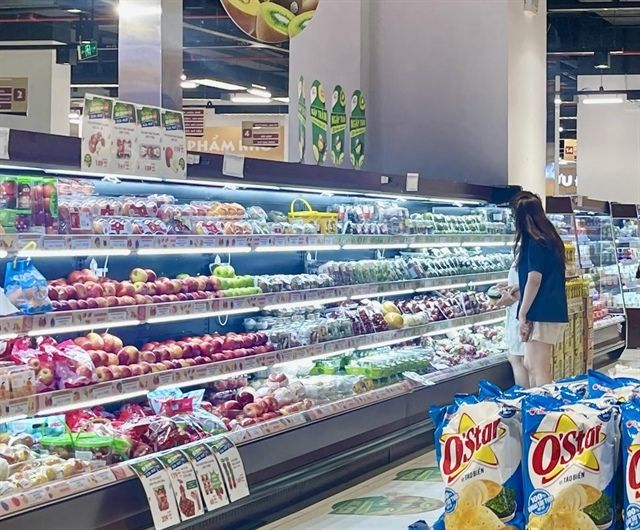
Imported fruit at a supermarket in Hà Nội. — Photo daidoanket.vn |
A sharp rise in fruit and vegetable imports into Việt Nam has been intensifying competition for domestic produce, as consumers increasingly turn to cheaper and more diverse overseas goods.
Việt Nam imported nearly US$1.6 billion worth of fruit and vegetables in the first half of 2026, up almost 30 per cent year on year, according to preliminary data from the nation's customs department.
This figure outpaced the country’s 14 per cent export growth of these products, highlighting robust domestic demand for imported fresh produce.
Imports reached more than $270 million in the first 20 days of June, up 14.5 per cent from May, signalling sustained momentum in shipments even as local markets entered peak harvest season.
China remained Việt Nam’s largest supplier, accounting for about 39 per cent of total imports in the first five months of 2026. Shipments from China rose nearly 49 per cent year on year to $503 million, supported by lower costs, geographical proximity and complementary seasonal supply. Key products include mushrooms, garlic, onions and apples.
Other suppliers, including the US, Australia, New Zealand, South Africa and South Korea, have expanded their presence in Việt Nam’s retail channels, particularly in supermarkets and premium grocery chains targeting urban consumers.
Import growth has been supported by tariff cuts under trade agreements such as the EU-Việt Nam Free Trade Agreement, the Comprehensive and Progressive Agreement for Trans-Pacific Partnership and the ASEAN-China Free Trade Agreement. These agreements have reduced duties on a wide range of agricultural products, according to the Vietnam Fruit and Vegetable Association (Vinafruit).
Việt Nam lowered import tariffs on US cherries from 10 per cent to 5 per cent in 2025, while tariffs on US apples fell from 8 per cent to 5 per cent. Many Chinese fruit imports also enter duty-free under ASEAN-China trade rules when origin requirements are met.
Improving cold-chain logistics and rising competition among importers have further reduced distribution costs, making imported fruit more affordable for mainstream consumers.
Economists say the surge in imports is exposing structural weaknesses in Việt Nam’s domestic fruit sector, particularly in post-harvest handling, product consistency, branding and year-round supply capability.
Vinafruit Deputy Secretary General Nguyễn Văn Mười said consumers are increasingly shifting toward fruit with certified food safety standards and traceable origins, reflecting rising incomes and greater health awareness.
He added that this shift also raises competitive pressure on domestic producers, who will need to invest more heavily in quality, packaging, branding and supply chain efficiency to maintain market share, as imported fruit becomes more affordable and widely available.
Retailers say Vietnamese consumers now enjoy access to a broader range of imported fruits than in previous years, as Việt Nam continues to expand trade with markets including Japan and South Korea alongside traditional suppliers such as China, the US and Australia.
US-grown grape, including green, red and black varieties, are currently sold at VNĐ130,000–250,000 ($5.10–$9.80) per kg, down 10–15 per cent from a year earlier.
Australian mandarin, once priced as high as VNĐ500,000 per kg, now sell for VNĐ120,000–170,000, reflecting a broader decline in imported fruit prices across major retail channels.
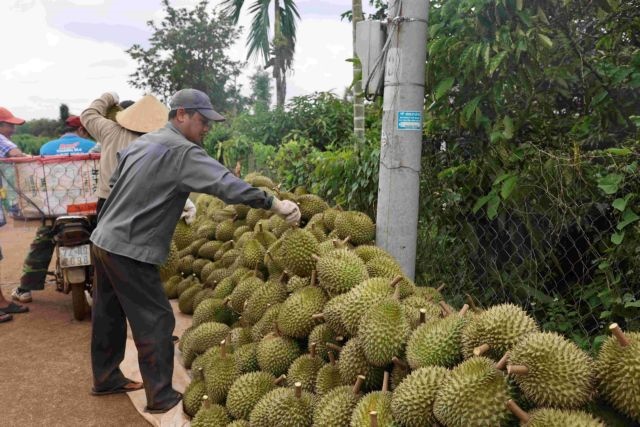
Imported fruit at a supermarket in Hà Nội. — Photo daidoanket.vn |
Domestic fruit prices have also eased as supply peaks across multiple growing regions. Mangosteen and durian, which previously sold for VNĐ80,000–100,000 per kg, are now commonly priced around VNĐ50,000 per kg. Mangosteen currently ranges between VNĐ40,000–60,000, while durian sells for VNĐ50,000–65,000 per kg, Đại đoàn kết (Great Unity) newspaper reported.
Small traders in Hà Nội attribute the decline largely to overlapping harvest seasons, which have increased produce supply across southern provinces.
Ngô Thị Hạnh, a fruit trader at Thạch Đà Market in HCM City, was quoted by dantri.com.vn as saying that demand remains strong for imported fruits that are not produced domestically or are insufficiently supplied, including kiwifruit, grape, apple and sweet orange.
She added that imported brown pear, which previously sold for over VNĐ100,000 per kg, are now priced at VNĐ80,000–90,000, while supply sources have diversified across China, Thailand, the US and South Africa.
Phan Bảo Thy, communications director at HCM City's Kingfoodmart supermarket chain, said demand for imported fruit rose in double digits year on year, led by products from New Zealand, the US, Australia, South Korea and South Africa. Popular items include kiwifruit, apple, grape, orange and pear.
The retailer said prices for some imported fruit, including kiwifruit, apple and grape, have fallen by 5–15 per cent depending on origin and season.
Vietnamese consumers are now more frequently buying imported fruit as part of regular household consumption rather than limiting purchases to holidays or special occasions, Thy said.
At An Nam Gourmet, demand for premium imported fruit and vegetables rose 5–8 per cent, driven mainly by middle- and upper-income consumers.
Sales of imported apple increased 26 per cent in the first half of the year, followed by blueberry, cherry and grape. Imported vegetable such as broccoli and baby spinach also recorded double-digit growth.
- 09:31 16/07/2026