BSR steps up research into green hydrogen-based fuels
BSR steps up research into green hydrogen-based fuels
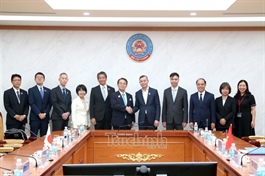
As Vietnam advances its energy transition, Binh Son Refining and Petrochemical JSC (BSR) is partnering with the German Development Agency (GIZ) to assess the potential of green hydrogen-based synthetic fuels to support Vietnam's decarbonisation goals.
|
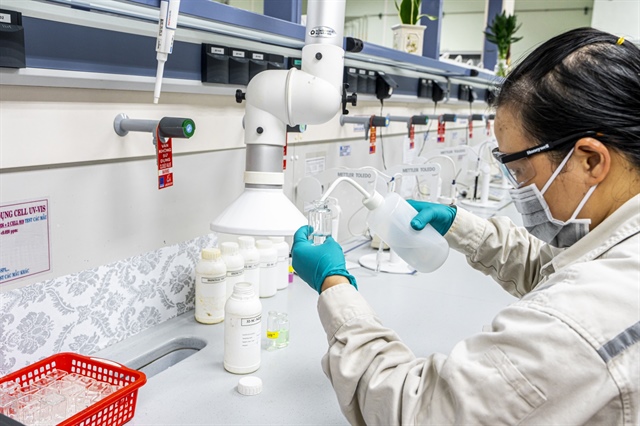
Green hydrogen is a crucial feedstock in the production of synthetic fuels such as e-sustainable aviation fuel (e-SAF) and e-methanol. Under their partnership, BSR and the German Development Agency (GIZ) will jointly research and develop a project for producing synthetic fuels like e-SAF or e-methanol to meet the rising demand of new fuels in the future.
e-SAF is a sustainable aviation fuel used in the aviation sector. As countries strengthen efforts to decarbonise air transport, demand for such aviation fuel is expected to increase significantly. Vietnam is also drafting a roadmap for the adoption of sustainable aviation fuel in commercial aviation.
Meanwhile, e-methanol is emerging as an alternative marine fuel. In marine vessels, new engines are being developed that can operate on both conventional fuel oil and methanol, allowing shipping companies to gradually reduce carbon emissions. Given the much larger global shipping fleet compared to the aviation sector, demand for e-methanol is expected to grow rapidly.
|
For e-methanol, two technology pathways are currently attracting the attention of major global investors. The first is the Power-to-Liquids (PtL) pathway, which utilises renewable electricity to produce green hydrogen before synthesising it into e-fuels. The second relies on biomass as the primary feedstock.
Tran Hai Ninh, general director of BSR Innovation Centre, said, "Vietnam has significant biomass potential, with abundant raw materials including rice straw, husks, and wood waste. This creates opportunities to combine agriculture and energy to develop a new value chain while supporting the production of low-carbon fuels."
"The wider application of these fuels in the aviation and maritime sectors would help reduce greenhouse gas emissions and contribute to Vietnam’s long-term decarbonisation efforts," he added.
The project by BSR and GIZ is currently at the pilot stage, with a focus on research and technology demonstration. The two sides will assess technology based on its potential for practical application and scalability, rather than immediate commercial deployment.
According to preliminary calculations and findings from international researchers and major investors, the production cost of green fuels remains higher than that of conventional fuels. Therefore, achieving commercialisation and large-scale production will depend on several decisive factors.
Ninh pointed out the first factor being a stable supply of renewable energy. For the PtL pathway, this requires large-scale wind power projects. With a long coastline and strong wind power potential, Vietnam can tap into this technology.
The second factor is consistent product quality, and the third is competitive production costs. These three factors will determine whether these new fuels can be commercialised and produced at scale, he said.
|
BSR’s research and assessments also show that while there is demand for green hydrogen in Vietnam, its commercial adoption is primarily constrained by cost. The production cost of green hydrogen remains significantly higher than that of grey or brown hydrogen produced from conventional sources, making it the biggest barrier to widespread deployment.
From a chemical perspective, green, grey and brown hydrogen are essentially identical. However, from a technical standpoint, if hydrogen is produced at a centralised facility, its storage and transportation become major challenges, according to Ninh.
“While hydrogen production technologies are advancing, standards and infrastructure for storage and transportation remain underdeveloped. As a result, the lack of technical standards, together with high costs, remains one of the key barriers to the large-scale deployment of green hydrogen,” Ninh said.
To support the development of new fuels, Vietnamese ministries and government agencies are drafting policy mechanisms covering both investment incentives and raw material supply. BSR expects a roadmap for these policies is expected to be put forward by the end of this year or next year.
While a national roadmap has yet to be finalised, BSR has already developed its own strategic roadmap. However, the company is seeking stronger government support to ensure its strategy is commercially viable and can be successfully implemented.
At the same time, end users are also seeking supportive policies. For example, airlines such as Vietnam Airlines and Vietjet have proposed sector-specific mechanisms to support the adoption of sustainable aviation fuel.
- 15:31 13/07/2026