Science-driven solutions key to building low-emission rice sector: experts
Science-driven solutions key to building low-emission rice sector: experts
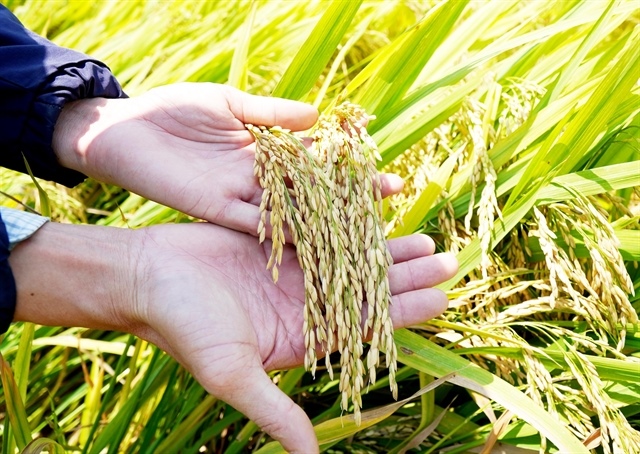
Rice production supports more than 3.5 billion people worldwide, with Asia accounting for 90 per cent of global output. Việt Nam harvested about 43.5 million tonnes of paddy and exported 8.3 million tonnes of rice in 2023.
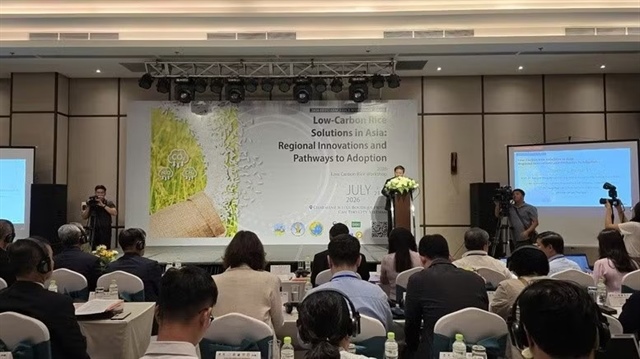
Participants at the workshop. —VNA/VNS Photo |
Scientists, policymakers and agricultural experts from across Asia have called for stronger cooperation to bring scientific innovations directly to farmers, saying this is essential to building a low-emission, climate-resilient rice sector while safeguarding food security and improving rural livelihoods.
The message was highlighted at the international workshop "Low-Emission Rice Solutions in Asia: Regional Innovations and Pathways to Adoption," held in the Mekong Delta city of Cần Thơ from July 22-24. Organised by the Vietnam Academy of Agricultural Sciences (VAAS) and its partners, the event gathered more than 100 delegates, including researchers from over 10 Asian countries.
Opening the workshop, VAAS director general Nguyễn Hồng Sơn said rice remains central to Asia's agriculture, economy and culture, providing food and livelihoods for billions of people. However, the sector faces growing pressure from climate change while also being required to reduce greenhouse gas emissions, particularly methane.
According to workshop data, rice production supports more than 3.5 billion people worldwide, with Asia accounting for 90 per cent of global output. Việt Nam harvested about 43.5 million tonnes of paddy and exported 8.3 million tonnes of rice in 2023.
The challenge today is not simply to produce more rice, but to produce it more sustainably, with lower emissions, greater climate resilience, more efficient use of natural resources and higher incomes for farmers, Sơn said.
He stressed that advances in science and technology, including climate-resilient rice varieties, improved water management, mechanised sowing, straw management, digital monitoring and carbon finance, are creating opportunities for transformation.
However, he noted that scientific breakthroughs can only deliver real impact if farmers adopt them on a large scale through effective extension services, supportive policies, market incentives and digital technologies.
Researchers from the International Rice Research Institute (IRRI) said rice cultivation is one of the largest sources of agricultural methane emissions, but also offers considerable mitigation potential through improved farming practices.
Methane is generated by microorganisms in flooded rice fields under oxygen-free conditions, with emissions increasing when fresh rice straw or manure is incorporated into the soil. Nitrous oxide emissions, meanwhile, rise with excessive nitrogen fertiliser use, making integrated management of water, fertiliser and crop residues critical.
Studies presented at the workshop showed that global rice production could reduce greenhouse gas emissions by up to 36 per cent, compared with mitigation potentials of 9 per cent in livestock and 3 per cent in other croplands.
Measures such as growing short-duration rice varieties, adjusting straw incorporation, applying alternate wetting and drying irrigation, and improving nutrient management could cut methane emissions by as much as 65 per cent.
The IRRI also introduced the AFACI Rice Seed Replication (RSR) project, which aims to strengthen seed systems and accelerate the adoption of climate-resilient rice varieties across 10 member countries between 2025 and 2029.
Participants said Việt Nam's Government-backed project to develop one million hectares of high-quality, low-emission rice offers a valuable opportunity to reorganise production along sustainable value chains, integrating improved varieties, cultivation practices, post-harvest technologies, digital monitoring, carbon credits and branding.
They agreed that low-emission rice production can only be scaled up when technological innovation is accompanied by economic incentives, market demand and stronger farmer capacity, enabling green growth to become a long-term driver of Việt Nam's rice industry.
- 07:51 24/07/2026