Preparing cooperatives for modern retail
Preparing cooperatives for modern retail
Long-term support is helping farming cooperatives improve products, meet retail standards and secure lasting market access.
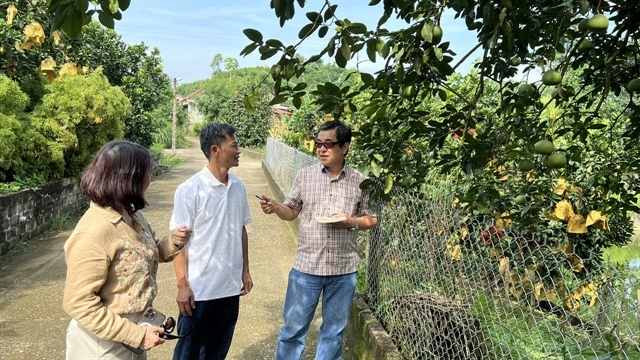
An expert from the Community Livelihood Programme's organising committee discuss cultivation practices with representatives of the Đại Minh grapefruit cooperative in Yên Bái Province during a field visit. — VNS Photo Mai Hương |
As modern retailers seek deeper engagement in agricultural supply chains, community livelihood programmes are becoming a more common way to connect small farmers to the supermarket shelves.
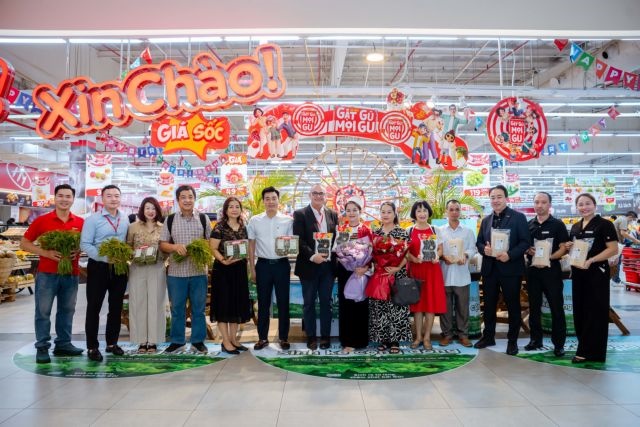
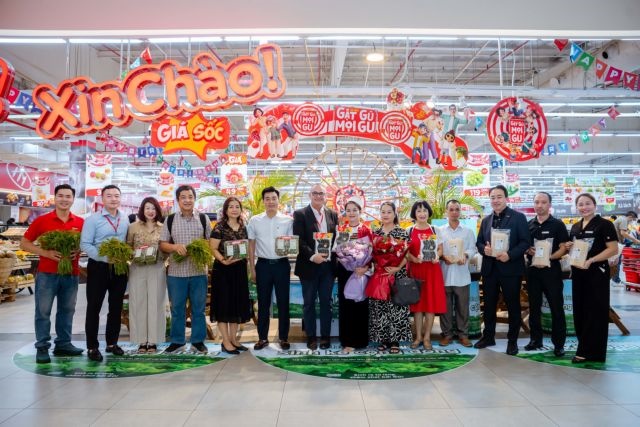
Last week, Central Retail Vietnam expanded its own initiative, including five new livelihood projects involving cooperatives producing vegetables, mushrooms, noodles and processed foods.
The expansion brings the Thai retailer's Community Livelihood Programme to 10 projects, supporting nearly 300 farming households across the country.
Since its launch in 2017, the initiative has benefited nearly 2,000 households by providing market access for products ranging from fresh vegetables to local specialties.
The programme targets farming households in remote areas earning less than VNĐ7 million (US$269) a month and with limited opportunities to access modern retail channels.
"We bring individual farming households together under cooperatives so they can supply sufficient volumes for supermarkets," Nguyễn Thị Bích Vân, head of communications at Central Retail Vietnam, told Việt Nam News.
The programme follows Central Retail's Creating Shared Value (CSV) strategy, with retail and technical experts helping cooperatives improve production, packaging, branding and business management. Where needed, specialists are sent directly to farming communities to address technical challenges.
Even the fastest cooperatives typically need around five years before they are ready to 'graduate', according to Vân.
They then become independent suppliers, delivering products directly to Central Retail instead of relying on programme support.
"Graduation means they are strong enough to stand on their own," she added.
Central Retail Vietnam's Fresh Food procurement division said it bought 101 tonnes of agricultural products worth more than VNĐ1.7 billion (US$64,800) in the first half of this year, providing a stable source of income for 291 households.
The initiative is part of a growing trend among retailers to work more closely with farmers and cooperatives, helping them improve production while securing more reliable domestic supply chains.
An expert from the Community Livelihood Programme's organising committee discuss cultivation practices with representatives of the Đại Minh grapefruit cooperative in Yên Bái Province during a field visit. — VNS Photo Mai Hương |
Bùi Thị Mơ, director of the Mơ Đức Organic Agriculture Cooperative which produces snail products in Hòa Bình Province, said the greatest benefit is certainty.
With a reliable retail partner, the cooperative is confident enough to expand its snail farming areas and processing facilities while bringing more local households into its production network.
Her ambitions, however, go beyond increasing output.
She hopes the cooperative can create more stable jobs for ethnic minority women in her community, allowing them to remain close to home instead of leaving for work in industrial zones and being separated from their children.
"Having a stable outlet gives us the confidence to invest and expand production," she told Việt Nam News.
"It also creates opportunities for more women in the area to earn an income without having to leave their families behind."
Still, market access alone is not enough.
Hoàng Thanh Nghị, representing the Đại Minh grapefruit cooperative with 300 households in Yên Bái Province, said sustainable livelihoods would require close cooperation between government agencies, businesses, researchers and farmers – a model widely known in Việt Nam as the 'four-party linkage'.
Local authorities would help identify suitable communities and facilitate training programmes. Scientists and agricultural experts would provide technical guidance, while businesses would create market opportunities and support supply chain development.
Farmers, meanwhile, must continuously improve production quality and maintain standards.
"What we need is a partnership between the Government, businesses, scientists and farmers. If we can build the Đại Minh grapefruit brand together, more local people will see the value of joining the supply chain," Nghị said.
An expert from the Community Livelihood Programme's organising committee discuss cultivation practices with representatives of the Đại Minh grapefruit cooperative in Yên Bái Province during a field visit. — VNS Photo Mai Hương |
He acknowledged that challenges remain, including rising production costs, oversupply during harvest seasons and difficulties meeting export standards.
According to industry observers, while programmes like these improve market access, long-term competitiveness still depends on improving quality, productivity and branding.
Besides Central Retail Vietnam, other companies have adopted similar models.
WinCommerce helps farmers meet VietGAP and WinEco standards before supplying the WinMart network, while Saigon Co.op connects agricultural cooperatives with its supermarkets.
TH Group and Vinamilk have also built long-standing contract farming partnerships that provide technical support alongside long-term purchasing agreements.
Similar models have been adopted internationally.
Nestlé's Nescafé Plan supports coffee farmers in countries including Việt Nam through technical assistance and long-term sourcing, while Walmart's Inclusive Sourcing programme helps smallholders and underrepresented businesses become suppliers to its retail network.
According to Trần Thị Phương Lan, chairwoman of the Vietnam Retailers Association, although retailers may adopt different approaches, they share the same objective of helping producers become more competitive rather than simply providing another sales channel.
"Farmers and cooperatives also need to change," she said.
"They need to understand market demand, comply with standards such as VietGAP, GlobalGAP or organic certification, improve product quality and presentation, and work closely with retailers to ensure stable supply."
- 10:11 27/07/2026