Companies chart a new course to global markets
Companies chart a new course to global markets
Across different industries, a growing number of Vietnamese enterprises are demonstrating that competing globally is no longer simply about producing at lower costs.
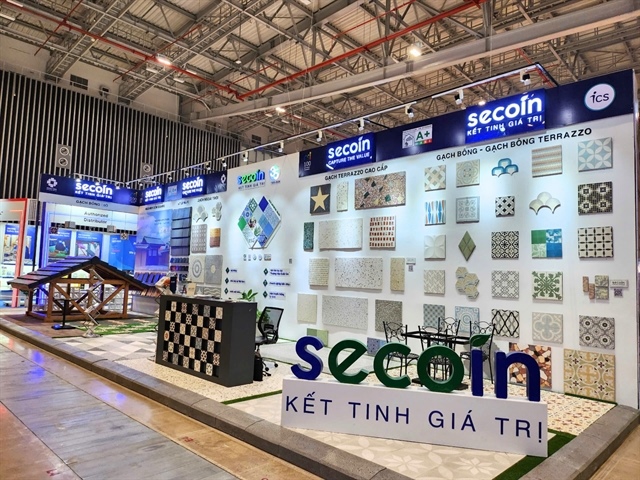
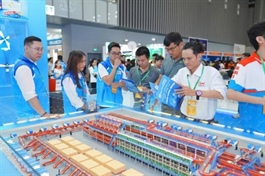
A booth of Secoin at an exhibition in HCM City. — Photo secoin.com |
For decades, Vietnamese companies have believed that the surest way to reach global markets was to build a reputation as reliable manufacturers, producing everything from furniture and textiles to construction materials and industrial products for some of the world's largest brands.
That strategy helped turn Việt Nam into one of the world's leading export economies. But as global competition intensifies and overseas markets become increasingly demanding, manufacturing capacity alone is no longer enough.
Across different industries, a growing number of enterprises are demonstrating that competing globally is no longer simply about producing at lower costs.
It is about creating products that meet the world's highest technical requirements while building brands that carry their own identity.
Their experiences also reflect a broader transformation taking place in Việt Nam as the country, in line with Resolution No. 57-NQ/TW on breakthroughs in science, technology, innovation and national digital transformation, increasingly views innovation, design and technology as strategic assets for moving beyond contract manufacturing and capturing greater value in global markets.
From manufacturer to global brand
Few companies illustrate this transition more clearly than Secoin.
Established 37 years ago and building on more than a century of traditional craftsmanship, the company exports decorative construction materials to around 60 countries from nine factories in Việt Nam. Rather than competing through scale, it has positioned itself as a niche global brand built on artistic design and Vietnamese identity.
For Đinh Hồng Kỳ, chairman of Secoin and vice chairman of the HCM City Union of Business Associations (HUBA), the biggest challenge facing Vietnamese businesses is no longer product quality.
"Vietnamese enterprises do not lack good products. What is lacking is the way of telling a valuable story," he said.
Although Việt Nam has become one of the world's leading exporters, many manufacturers still depend on outsourcing and original equipment manufacturing (OEM), limiting value creation.
Kỳ believes the problem extends beyond production capacity.
"Vietnamese enterprises do not lose in capacity but lose in the ecosystem," he said, citing institutional bottlenecks, rising compliance costs, increasingly stringent ESG, carbon and traceability requirements, weak branding and reliance on intermediary markets.
Those challenges are becoming more pressing as the EU, the US and other developed markets tighten sustainability standards. Green manufacturing, supply-chain transparency and responsible sourcing are no longer optional — they have become prerequisites for market access.
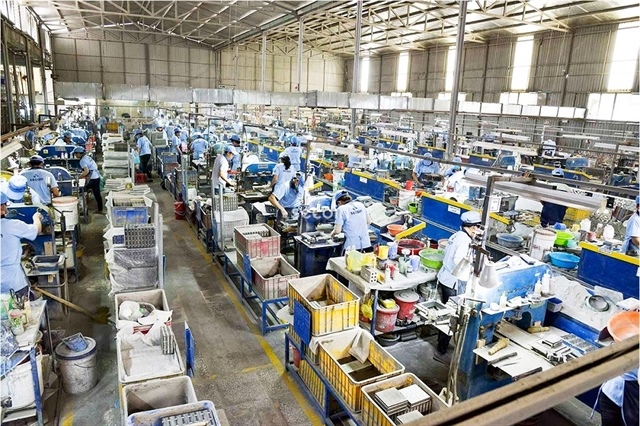
A booth of Secoin at an exhibition in HCM City. — Photo secoin.com |
In response, Secoin has built its international strategy around the Q.U.A.D.E. model, focusing on product quality, uniqueness, authenticity, environmental friendliness and user safety. The company has also moved steadily up the value chain, from OEM manufacturing to original design manufacturing (ODM) and ultimately its own global brand.
For Kỳ, design has become the 'R&D of the material industry,' while sustainability is increasingly a commercial requirement rather than a corporate responsibility initiative.
"Green equals market access, not just common reporting standards (CSR)," he said.
Beyond innovative products, Secoin aims to sell complete solutions that combine design, culture, international standards and storytelling. Its broader ambition also reflects what Kỳ believes should be the next stage of Việt Nam's economic development.
"It can't just be 'Made in Vietnam'," he said. "It must be 'Designed and Branded in Vietnam'."
Technology becomes the passport
If Secoin demonstrates how design and branding create international value, Q&T Hi-tech Polymer offers another model of global competitiveness: one driven by advanced technology.
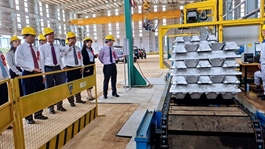
The company has become one of the few businesses worldwide capable of producing specialised polymer substrates for high-security banknotes, helping Việt Nam reduce its dependence on imported materials.
According to Nguyễn Đức Cường, Chairman of the National Banknote Printing Plant of Vietnam, extensive testing confirmed that Q&T's substrates meet stringent technical, durability and security standards while remaining compatible with existing production systems.
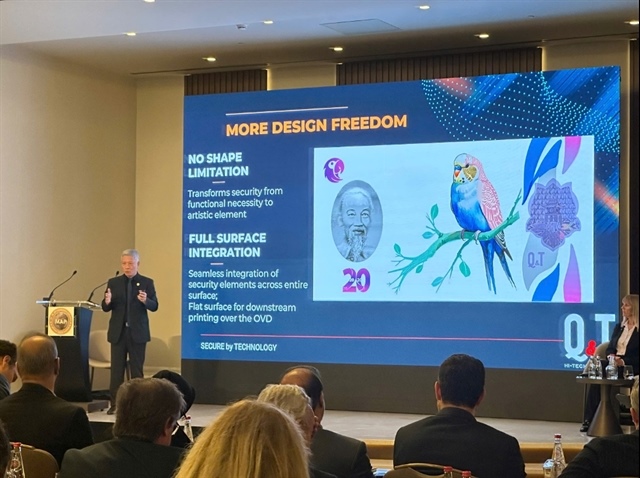
The materials also incorporate advanced anti-counterfeiting features, including transparent windows, active imagery and three-dimensional security elements.
Those achievements have enabled the company to establish credibility at home before expanding overseas.
Q&T is now showcasing its innovations at leading international currency conferences while pursuing partnerships with central banks and monetary authorities worldwide.
Delegations from Africa and Latin America have visited the company's facilities to explore cooperation in polymer banknote production, recognising Việt Nam's ability to provide integrated solutions covering both polymer substrate manufacturing and high-security banknote printing.
A booth of Secoin at an exhibition in HCM City. — Photo secoin.com |
For Chairman Lương Ngọc Anh, international expansion depends on continuous innovation.
The company has developed security technologies that embed multiple optical security devices directly into polymer substrates, improving durability and resistance to humidity, ultraviolet exposure, chemicals and physical wear.
Ngọc Anh affirmed Q&T's confidence that its technology can meet the requirements of central banks worldwide.
He added that Việt Nam had progressed from relying on imported polymer technology to achieving technological self-reliance and was now preparing to support overseas partners in banknote design, production and investment where suitable cooperation opportunities arise.
The experiences of both Secoin and Q&T point to a common pattern.
Rather than relying on lower production costs, both companies have invested in proprietary technology, research and development, design capabilities and differentiated products to compete internationally.
Their strategies also demonstrate that entering demanding overseas markets increasingly requires companies to satisfy technical standards long before products reach consumers.
That view is echoed by Dr Santiago Velasquez, Interim Senior Programme Manager for the MBA and Master of International Business programmes at RMIT Vietnam, who argued that international competitiveness would extend well beyond product quality alone.
A country's reputation is built through the interaction of exports, culture, governance, investment, tourism and people, according to Velasquez.
Success in one area reinforces the others, while weaknesses can reduce the value of otherwise competitive industries.
The objective is to create a 'competitive identity' that consistently signals quality, reliability and trust.
For Việt Nam, Velasquez believes an appropriate approach should focus on strengthening international trust through measurable performance rather than promotional campaigns alone.
He argued that investment in certification systems, quality infrastructure and internationally recognised standards would create greater long-term value than advertising because these elements would help enterprises overcome increasingly complex regulatory requirements in markets such as Europe and the US.
Institutional consistency, he added, would reduce perceived risks for both investors and international buyers.
The country's progress in green growth and digital transformation would also provide material for a stronger national brand narrative, while high-quality products could serve as ambassadors for Việt Nam's reputation abroad.
- 09:09 27/07/2026