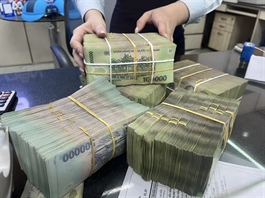
Lenders turn to high-yield certificates of deposit to shore up liquidity
Lenders turn to high-yield certificates of deposit to shore up liquidity
Banks are offering certificates of deposit with yields of up to 9 per cent as funding competition intensifies, with robust credit growth outpacing deposit mobilisation and keeping liquidity pressures elevated.
VPBank has raised interest rates on certificates of deposit with maturities ranging from one to six months, while lowering the minimum investment amount from $4,000 to $400.
Specifically, customers purchasing certificates with a face value of $400 and maturities of one to six months are offered interest rates ranging from 6.2 per cent to 7.8 per cent per year.
For investments of $4,000 or more with the same maturities, interest rates range from 7.3 per cent to 9 per cent annually. Rates gradually decline for longer-term certificates.
|
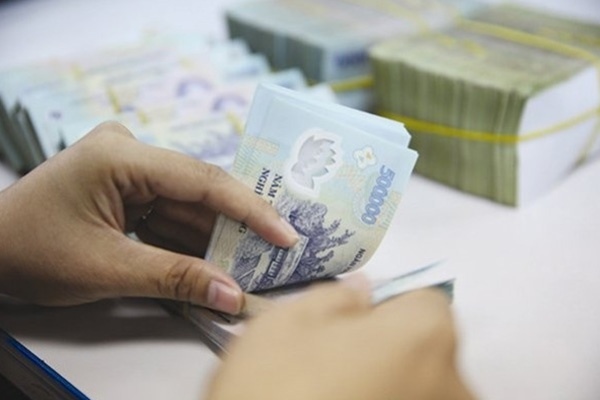
At ACB, certificates of deposit with maturities from one to five months are offered at interest rates ranging from 6.5 per cent to 7.2 per cent per year for investments starting from $400.
MB has introduced certificates of deposit with a minimum investment of just $8, offering an annual interest rate of 1.8 per cent for maturities starting from one day, and 7 per cent per year for three- to six-month terms. Meanwhile, MSB is offering interest rates of up to 8.8 per cent per year for larger investment amounts.
BVBank is also offering online certificates of deposit through its banking application, requiring a minimum investment of $400. Interest rates for six- to 12-month maturities currently stand at 8.2 per cent per year.
Certificates of deposit have become an increasingly important funding channel as banks compete aggressively to attract deposits. Many bank staff are encouraging customers to purchase certificates of deposit instead of placing funds in short-term savings accounts.
For conventional deposits with maturities from one month to under six months, the State Bank of Vietnam caps deposit interest rates at 4.75 per cent.
Certificates of deposit, however, are not subject to this ceiling, allowing short-term products to offer yields that are 2 to 3 percentage points higher than ordinary savings deposits with comparable maturities.
According to analysts at FiinRatings, banks' funding needs are likely to remain elevated in the second half of this year, as the gap between deposit mobilisation and credit growth is unlikely to narrow in the near term.
Additional tier 2 capital will also be required to meet regulatory capital adequacy requirements and support liquidity needs.
Analysts at ACBS likewise believe that competition for funding and the need to balance credit expansion have prompted banks to accept higher issuance costs.
Banks then need to raise bond yields to attract capital, while regulators continue to monitor deposit interest rates closely and require credit institutions to comply with the ceiling on savings deposit rates.
The State Bank of Vietnam said, as of June 26 total outstanding credit across the banking system had exceeded $798.8 billion, up 7.41 per cent from the end of 2025 and 18.1 per cent compared with the same period of 2025.
Deposit growth, however, has lagged credit expansion. Earlier data showed that, as of June 15, credit growth was still 2 per cent higher than deposit growth.
Against this backdrop, the government and relevant ministries have coordinated measures to address liquidity challenges in the banking system. In response to slow public investment disbursement and rapidly rising Treasury deposit balances, the government issued Resolution 168, allowing the Ministry of Finance to determine the amount of temporarily idle state treasury funds that can be placed as term deposits at commercial banks.
The permitted level may exceed half of temporarily idle treasury funds, compared with the current statutory ceiling of 50 per cent.
Earlier, the State Bank of Vietnam also issued Circular No.25/2026/TT-NHNN, allowing commercial banks to include 20 per cent of outstanding term deposits from the State Treasury in the denominator when calculating the loan-to-deposit ratio.
Following the issuance of Resolution 168, the central bank said it will continue studying adjustments to strengthen liquidity support for the banking system.
- 14:00 28/07/2026