Việt Nam moves to boost supplementary pension funds
Việt Nam moves to boost supplementary pension funds
By the end of 2025, only four fund management companies had been licensed to manage supplementary pension funds: Dragon Capital Vietnam, SSI Asset Management, MB Capital and Vietcombank Fund Management Company, Ministry of Finance data shows.

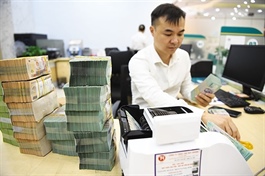
Despite recent growth, Việt Nam's supplementary pension fund market remains small. — Photo chinhphu.vn |
Việt Nam's new decree on supplementary pension insurance and proposed amendments to personal income tax policies are expected to support the development of the country's pension fund market, helping diversify the social security system and attract long-term investment capital, officials and experts have said.
The Government recently issued Decree 85/2026/NĐ-CP on supplementary pension insurance, replacing Decree 88/2016/NĐ-CP after nearly a decade of pilot implementation. The decree is seen as a step toward implementing the 2024 Social Insurance Law and establishing a clearer legal framework for the development of a supplementary pension pillar alongside the mandatory social insurance system.
Decree 85 may signal a stronger shift toward a market-oriented approach to supplementary pension funds.
During the drafting process, the Ministry of Finance proposed requiring a portion of participants' contributions be used to purchase annuity insurance products that would guarantee a minimum payout upon retirement. The provision was later removed amid concerns that it conflicted with the voluntary and market-based nature of pension funds, and could increase costs and create potential disputes.
Instead, the decree places greater emphasis on transparency and risk disclosure. Fund management companies, distributors and consultants are prohibited from marketing supplementary pension products in ways that could be confused with the State pension system or commercial life insurance products.
This measure is intended to reduce the risk of participants mistakenly viewing supplementary pension funds as products offering guaranteed returns.
The decree also adopts a more flexible investment framework. Rather than requiring all corporate bonds held by pension funds be backed by collateral or payment guarantees, as initially proposed, the new rules allow funds to invest in listed corporate bonds that have been assessed by independent credit rating agencies.
According to Phạm Thị Thanh Tam, deputy director of the Department of Financial Institutions under the Ministry of Finance, the development of supplementary pension funds is necessary to achieve two goals simultaneously: enhancing social security and mobilising resources for sustainable economic growth.
A small market
Despite recent growth, Việt Nam's supplementary pension fund market remains small.
By the end of 2025, only four fund management companies had been licensed to manage supplementary pension funds: Dragon Capital Vietnam, SSI Asset Management, MB Capital and Vietcombank Fund Management Company, Ministry of Finance data shows.
The four firms managed seven supplementary pension funds with total net assets exceeding VNĐ2.2 trillion (US$84 million) and nearly 28,600 participants, more than 42 times the level recorded five years earlier.
However, Associate Professor Dr Trần Thị Thanh Nga from the Academy of Finance said the sector remains in its infancy when measured against the size of Việt Nam's economy, labour force and long-term financing needs.
The asset base is small, participation is limited, and supplementary pension funds have yet to become a widely used savings channel for workers, Nga told thoibaonganhang.vn.
Deputy director of Ho Chi Minh City Social Security Trần Dũng Hà agreed, saying participation levels remain modest after nearly 10 years of implementation, suggesting that both employers and employees are still cautious about the model.
Hà added that the current framework appears to focus mainly on well-performing enterprises, while workers can only participate through their employers. This is a bottleneck that needs to be addressed if participation is to expand.
Supplementary pension funds could also play a broader role beyond strengthening social security by providing a source of long-term capital for the economy.
While banks continue to supply most medium- and long-term financing, a larger pension fund industry could help create a new class of institutional investors in the capital market.
Taxes, trust key to pension fund growth

Despite recent growth, Việt Nam's supplementary pension fund market remains small. — Photo chinhphu.vn |
Despite these regulatory changes, Nga said a lack of adequate tax incentives could be an obstacle to expanding participation.
Under current regulations, contributions to supplementary pension funds are deductible from taxable income up to VNĐ1 million ($38) per month. This threshold has remained unchanged for years and is increasingly seen as insufficient, as incomes and living costs rise.
In a draft amendment to personal income tax regulations, the Ministry of Finance has proposed raising the deductible contribution limit to VNĐ3 million per month to encourage long-term retirement savings and help ease future social security pressures.
However, according to Nga, stronger incentives may be needed if supplementary pension funds are to gain broader acceptance.
She noted that in many countries, supplementary pension systems are supported by meaningful tax incentives, convenient participation mechanisms and investment products tailored to different stages of a worker's career.
Increasing public confidence could also be critical to the sector's long-term development.
Many Vietnamese still favour traditional forms of wealth preservation, such as bank deposits, gold and real estate, over locking up savings for decades. At the same time, the country's supplementary pension fund industry remains relatively new and has yet to establish a strong track record of long-term wealth accumulation.
Building trust through greater transparency, reasonable management fees and stable long-term investment performance could be essential to attracting broader participation and creating a meaningful source of long-term capital for Việt Nam's financial markets.
- 09:08 11/06/2026