Industry 4.0 opens new growth frontiers for Ho Chi Minh City
Industry 4.0 opens new growth frontiers for Ho Chi Minh City
As traditional growth drivers gradually lose momentum, Ho Chi Minh City is looking to Industry 4.0 and smart supply chains as new engines to sustain its economic expansion.
According to Hoang Quang Phong, vice chairman of the Vietnam Chamber of Commerce and Industry, the Fourth Industrial Revolution, coupled with the rapid AI and automation, is bringing about profound and far-reaching changes to the global economy.
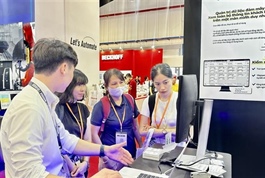
"The impact of this new wave of technology extends well beyond manufacturing. It is reshaping market structures, consumer behaviour, corporate governance, and even the way public institutions operate," Phong said at a forum on Industry 4.0 and smart supply chains in Ho Chi Minh City on June 17.
For Vietnam, this presents a significant opportunity to improve labour productivity, enhance the competitiveness of traditional industries, and expand access to international markets through digital platforms.
"Industry 4.0 is opening up new room for growth in the digital economy, smart manufacturing, and intelligent services, while accelerating the transformation of industries ranging from manufacturing, agriculture, and tourism to logistics, finance and banking, robotics, and many others," Phong said.
According to him, technology adoption also enables businesses to optimise production costs, improve operational efficiency, and generate benefits for all stakeholders, including the government, enterprises, and consumers.
"Against this backdrop, Industry 4.0 will become a fundamental pillar underpinning the next phase of growth for Vietnam's industrial sectors," he said.
Nguyen Thanh Trung, deputy director of Ho Chi Minh City Department of Finance, said the city's target of achieving growth of more than 10 per cent in 2026 requires it to sustain an economy valued at more than VND3 quadrillion (around $115.3 billion) and restructure its growth model towards one driven by science, technology, and innovation.
To this end, the city has identified two parallel groups of growth drivers. The first comprises traditional engines, including removing administrative delays, accelerating public investment disbursement, stimulating consumption, and supporting businesses in restoring production.
The second focuses on emerging growth drivers, such as expediting regional connectivity infrastructure projects including Ring Road No.3, Metro Line No.2, and Can Gio International Port; developing logistics services; building an international financial centre in Thu Thiem; and studying the establishment of a free trade zone.
"Within this strategic direction, industrial development linked to supply chain building is viewed as both a traditional growth driver and a new engine of growth," Trung said.
He added that Ho Chi Minh City has already rolled out several programmes to support logistics development, transport infrastructure expansion, and the establishment of business linkages based on industry clusters and value chains through 2030. At the same time, the city has tasked relevant agencies with formulating its Industrial Development Strategy to 2030, with a vision towards 2050.
From an international perspective, Mickaël Driol, CEO of Mekong Partners, observed that global supply chains are undergoing their most profound restructuring in decades, and competitive advantage is no longer defined by the ownership of more assets, but by the ability to manage complexity and operate more efficiently.
“Ho Chi Minh City has reached a scale large enough to transition from being an ‘industrial attraction hub’ to becoming an ‘industrial orchestrator’. Industrial parks are no longer competing primarily on land availability or investment incentives. Increasingly, cities are competing on their ability to reduce operational complexity,” Driol said.
“The key differentiator in the years ahead will be the ability to integrate data, logistics, administrative procedures, and infrastructure into a seamless operating environment. This will form the foundation for attracting the next generation of industrial investment,” he added.
Nguyen Trung Tin, deputy head of Ho Chi Minh City Export Processing and Industrial Zones Management Authority, shared a similar view, noting that following the expansion of the city's industrial development space, Ho Chi Minh City is now well positioned to build a regionally integrated ecosystem encompassing industry, logistics, and high technology.
“However, the traditional industrial development model is increasingly revealing its limitations, including shrinking land availability, mounting pressure on infrastructure, rising production costs, and increasingly stringent investor requirements relating to digital infrastructure, green energy, and smart supply chains,” Tin said.
In response, the city is pursuing a strategy to restructure its export processing zones and industrial parks along greener, more digitalised, and circular development models. Priority will be given to attracting high value-added industries such as electronics, semiconductors, precision engineering, automation, data centres, and supporting industries.
At the same time, stronger linkages between foreign-invested enterprises and domestic companies are expected to help raise the participation of Vietnamese businesses in global value chains.
“Ho Chi Minh City is currently promoting financial support mechanisms to help businesses transition towards greener operations, while investing in logistics infrastructure and digital data systems. The city is also rolling out a digital transformation initiative across export processing zones and industrial parks for the 2026–2027 period,” he added.
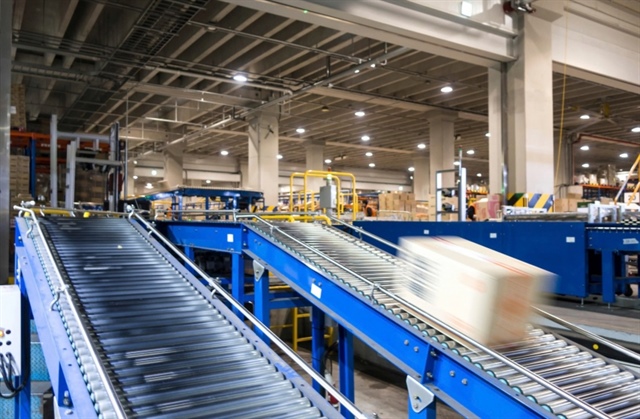
Photo: Cushman & Wakefield Vietnam |
- 16:05 18/06/2026