Railway administrative procedures amended to support investment
Railway administrative procedures amended to support investment
New railway industry regulations are expected to streamline administrative procedures and boost business and investment activities in the sector.
The Ministry of Construction issued Decision No.933/QD-BXD on June 16, announcing amended and abolished administrative procedures in the railway sector, effective from July 1.
The decision promotes decentralisation of responsibility for handling administrative procedures to chairmen of people's committees. These include issuing and re-issuing certificates of registration for railway vehicles; reviewing and issuing train driver licences; issuing construction, renovation, and upgrading permits for level crossings; abolishing level crossings; and extending such permits.
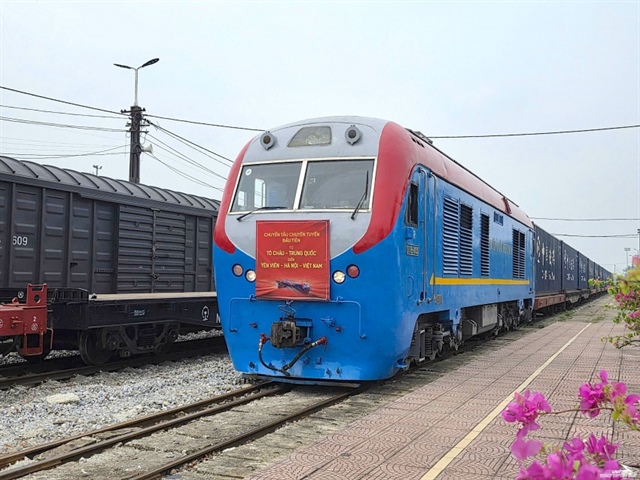
Photo: VNR |
At the same time, to improve management efficiency and ensure convenience for businesses and individuals in doing procedures, during the transitional period of decentralisation, the MoC also stipulates that the Vietnam Railway Authority is allowed to continue handling these procedures in cases where the people's committee does not yet have the conditions to do and submits a written request.
However, this will only be implemented for a maximum of 24 months from the effective date of the Railway Law 2025. That is, from January 1, 2028, the chairman of the people's committee will be the sole authority with the power to handle administrative procedures in the railway sector.
Vietnam’s railway industry is attracting growing attention from domestic and international businesses.
On June 12, in Dushanbe, Republic of Tajikistan, Vietnam Railways (VNR) and Tajikistan Railways signed an MoU to strengthen and increase the volume of international rail freight transport between the two countries. This event marks a significant milestone, creating a logistics corridor directly connecting Southeast Asia with the promising Central Asian countries.
Tajikistan, located in the heart of Central Asia, serves as a key trade gateway to access large markets such as Iran and Afghanistan. The collaboration between Vietnam Railways and Tajikistan Railways in organising international intermodal transport will help Vietnamese goods and products penetrate deeper into the vast Central Asian markets.
The MoU focuses on strategic provisions aimed at optimising the logistics supply chain, including increasing transportation output, sharing a list of export product sources, maintaining a smooth flow of information, and supporting new initiatives.
On June 11, a delegation from the consulting and design company of the German National Railways Corporation had a meeting with VNR in Hanoi to discuss cooperation possibilities in developing workers for the railway and high-speed rail industries.
They also focused discussion on Vietnam's strategic priorities in railway infrastructure; Vietnam's need to find foreign partners for consulting, design, implementation, and operation of projects; and prospects for technology transfer and the development of domestic value chains to ensure sustainable growth for the industry.
In May, a delegation of French businesses on railway investment and business opportunities met with Vietnamese Deputy Minister of Construction Nguyen Tuong Van in Hanoi to seek a long-term partnership with Vietnam in building a modern and sustainable railway transport ecosystem for future generations, while also exploring Vietnam's major priorities in infrastructure development, investment mechanisms, financial resources, and the participation of French businesses in railway projects.
The deputy minister stated that in the coming period, Vietnam and France still have much room for cooperation in areas such as training staff for electrified railway systems, technology transfer, railway industry development, building technical standards and regulations, as well as sharing experience in managing and operating modern railway infrastructure.
At home, THACO, Vingroup, and others have expressed interest in railway projects. In particular, VinSpeed High-Speed Railway Investment and Development under Vingroup kicked off the construction of the Hanoi-Quang Ninh high-speed railway in April, with total investment exceeding VND147 trillion (over $5.6 billion).
The 120.2 km line spans Hanoi, Bac Ninh, Haiphong, and Quang Ninh. It features a double-track system with a 1,435 mm gauge, full electrification, and a maximum speed of 350 km/h, except for the section through Hanoi where speeds are limited to 120 km/h.
Meanwhile, on June 11, THACO and South Korea’s Hyundai Rotem signed a specific agreement for technology transfer and localisation of metro rolling stock in Vietnam.
This agreement represents the next step in implementing the technology transfer roadmap, workforce training, component localisation, and the manufacturing of locomotives and rolling stock in Vietnam.
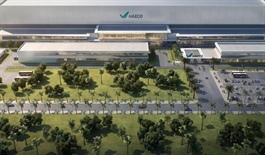
THACO is implementing a 320ha railway and multipurpose mechanical industrial complex within the 786ha mechanical engineering and supporting-industry industrial park in Ho Chi Minh City. The complex is planned as an integrated production model with modern technologies, high automation, and smart control to produce locomotives and railcars.
- 16:18 18/06/2026