Global shocks and tightening cash for Vietnamese business
Global shocks and tightening cash for Vietnamese business
While geopolitical tensions may be easing, PwC Vietnam has warned that Vietnamese companies should use the current window of relative calm to strengthen liquidity, rather than wait for market conditions to fully normalise.
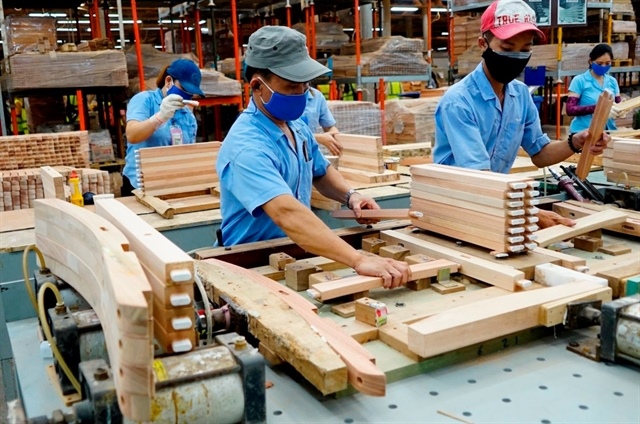
Vietnamese businesses are entering the second half facing a more complex operating environment, as higher energy costs, tighter liquidity, and persistent supply chain disruptions converge at the same time.
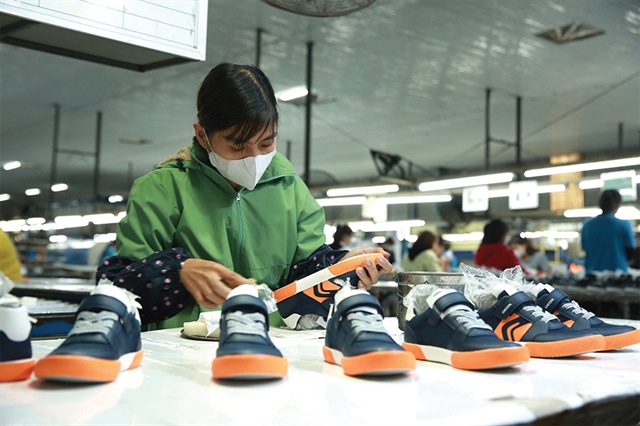
Companies have been urged act now before the next disruption forces plans to change, Photo Le Toan |
Pratiksha Bhanti, senior manager of Deals - Transformation at PwC Vietnam, said the firms performing best in volatile environments are often those that act fastest.
“What separates winners from laggards is not understanding what needs to be done; it is execution speed. The playbook is straightforward: tighten collections, optimise inventory, hedge exposures and improve cash visibility. But timing is critical,” said Bhanti. “Companies need to act while the pressure is real and the business case is undeniable. Once markets stabilise and the urgency fades, the organisational will to change often disappears with it. We are already seeing material differences between firms that moved decisively in recent months and those that are still planning.”
According to PwC Vietnam, the greatest risk is not any single shock but the cumulative effect of multiple pressures arriving simultaneously, squeezing margins, cash flow and access to funding.
“The mechanics are straightforward but compounding. Input and logistics costs have risen sharply, and even as oil prices ease from their peak, shipping routes remain longer and fuel surcharges persist. At the same time, credit conditions are tightening: borrowing is becoming more expensive, while customers facing similar pressures are ordering less and paying later,” said Mohammad Mudasser, director with PwC’s Deals Advisory, in comments to VIR on June 17.
The result, he said, is a stretched cash-conversion cycle, with more cash tied up in receivables and inventory just as external funding becomes harder to obtain. For manufacturers, retailers, and logistics firms, this combination is placing sustained pressure on liquidity.
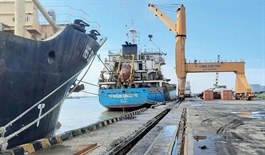
The warning comes against a backdrop of continuing uncertainty in global markets. When Vietnamese companies prepared their 2026 business plans at the start of the year, oil was trading at around $66 per barrel. Brent crude later surged to as high as $117 amid escalating tensions in the Middle East that disrupted shipping routes through the Strait of Hormuz.
Although the US and Iran agreed to a ceasefire in mid-June, oil still hovering around $77 per barrel, well above levels seen at the beginning of the year, and Vietnam relying on imports for roughly 85 per cent of its crude oil needs, imported cost pressures are expected to persist into the second half of the year.
The strain is becoming visible. According to the National Statistics Office under Vietnam’s Ministry of Finance, core inflation rose 5.6 per cent on-year in May, while average inflation so far this year increased 4.04 per cent from a year earlier.
It also pointed to signs of a growing business retreat. Over the first four months, the number of businesses suspending operations reached 72,200, up 5.1 per cent on-year. More notably, the number of dissolved enterprises surged 98.7 per cent to nearly 15,200.
For Mudasser of PwC, the more important question is not how severe the external shock becomes, but how much liquidity companies can unlock internally.
“In our work with manufacturers, retailers and traders across Vietnam, we keep finding the same thing that a large share of a company’s cash is hiding in plain sight, locked inside ageing inventory, slow collections and exposures that no-one is actively hedging,” said Mudasser.
For a company with $100 million in annual revenue, reducing the cash-conversion cycle by just five days can immediately free up roughly $1.4 million in working capital, he explained. “This is the crux. The shock itself is largely external and beyond anyone’s control. But the response of how quickly cash is freed during this transition window, how exposures are hedged before normalisation, and how clearly leaders can see their position, is entirely a matter of management,” he explained. “With supply chain recovery expected to take months, the question for Vietnamese businesses is not whether they should wait for full normalisation, but whether they act now or wait until the next disruption forces their hand, at a far higher cost.”
- 06:00 22/06/2026