Domestic businesses promote mergers to enhance competitiveness
Domestic businesses promote mergers to enhance competitiveness
No longer the exclusive domain of foreign funds, the M&A market has seen the rise of Vietnamese businesses with deals aimed at expanding the value chain, enhancing competitiveness and restructuring businesses, rather than simply buying and selling assets.

A development owned by One Capital Hospitality (OCH). OCH’s recent general meeting of shareholders approved a plan to raise VNĐ1.3 trillion to increase its ownership stake in IDS Equity Holdings – a company in the same industry also operating numerous resort properties. — Photo courtesy of the company |
A prime example is Ocean Group and its subsidiary, One Capital Hospitality (OCH). OCH’s recent general meeting of shareholders approved a plan to raise VNĐ1.3 trillion to increase its ownership stake in IDS Equity Holdings – a company in the same industry also operating numerous resort properties.
This strategy aims to acquire cash flow and market position, enabling the company to rapidly expand its scale amid the strong recovery of the tourism and resort industry.
In the essential infrastructure sector, Thủ Dầu Một Water Joint Stock Company (TDM) also announced plans to acquire shares in Phú Yên Water Supply and Drainage. Upon completion of the transaction, TDM will further expand its list of holdings in water-related businesses.
Previously, the company had invested trillions of Vietnamese đồng to acquire shares in several businesses, including Biwase, Cà Mau Water Supply, Cần Thơ Water Supply and Drainage, and Đồng Nai Water Supply.
At its 2026 annual general meeting, KIDO Group Joint Stock Company also said that M&As are one of its three strategic pillars, along with production and joint ventures, forming the foundation for the company to maintain growth, expand market share and increase competitiveness in the long term.
Another major player, Vietnam Oil and Gas Power Corporation - JSC (PV Power), also said that it is seeking M&A opportunities in the small and medium-sized hydropower sector to rapidly expand its power generation capacity.
While previously M&As were often considered the domain of foreign investment funds, now domestic listed companies are showing an increasingly prominent presence in the market, with ‘octopus tentacle’ strategies.
In 2025, the entire market saw 367 transactions with a total value of $8.7 billion, a 26 per cent increase compared to the previous year, demonstrating a strong recovery. Domestic companies led the market with 143 transactions, totalling over $4 billion.
Entering the first quarter of 2026, although the number of transactions decreased, the total value increased by 24 per cent, reaching $659 million. This reflects a clear upward trend in the average size of each transaction, along with improvements in quality.
Growth solutions
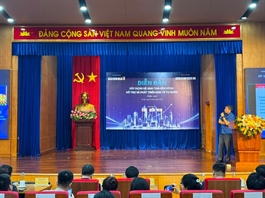
In the Vietnamese M&A market, chairman of Phú Thái Holdings Phạm Đình Đoàn said that Vietnamese businesses are currently facing simultaneous pressure in terms of capital, technology, management and scale amid rapidly changing AI and business models.
According to Đoàn, what businesses need now is not just financial resources, but also the ability to collaborate to avoid fragmented competition and self-destructive behaviour.
“M&As are no longer simply about buying and selling businesses. They need to be seen as a restructuring tool, a growth solution and a method of raising resources," Đoàn said.
Associate Professor Dr Ngô Trí Long from the Vietnam Financial Consulting Association agreed, noting that investors in the M&A market today are no longer hunting for cheap opportunities, but are seeking businesses with a solid operational foundation, a clear position in the value chain and the ability to create value immediately after the deal.
According to Long, M&As are shifting from an asset-driven mindset to a capability-driven mindset. Investors are both investing to own the business brand and to deeply penetrate the ownership structure, operational chain and growth strategy of Vietnamese companies.
Long thus believes that M&As are currently a clear indicator of long-term investment confidence. The sharp increase in capital contributions and share purchases – reaching above $7 billion by 2025 – shows that both domestic and foreign investors believe that the market still has room for expansion, and that macroeconomic policies are stable enough to protect the value of their investments for many years.
Despite its immense potential, the Vietnamese M&A market is still facing bottlenecks that need to be addressed from both the business and institutional perspectives.
The biggest obstacles are valuation discrepancies, limitations in information transparency, and governance standards of businesses, Long said.
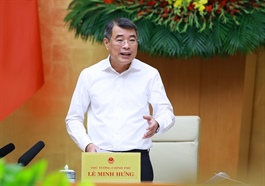
Meanwhile, Dr. Nguyễn Đức Kiên, Executive Vice President of the Vietnam Mergers and Acquisitions Association, said that building a complete, synchronised and robust legal framework for M&A activities is crucial.
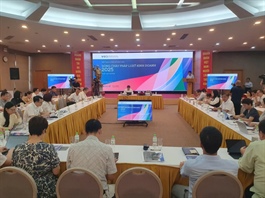
Kiên noted that a sustainable M&A ecosystem requires close cooperation between three pillars: businesses, investment funds and consulting organisations. The early development of standardised consulting criteria and independent evaluation of business performance will help all parties easily find common ground.
As the Vietnamese economy enters a new growth phase, the need for efficient capital utilisation and improved positioning in the global value chain becomes more urgent than ever. In many cases, M&As are no longer an option, but a necessary path to achieve that goal.
If current barriers are removed, M&As will not only be a channel for attracting capital, but will also become the most important driver for corporate restructuring and strengthening the economy during a period of rapid and sustainable development.
- 06:00 08/06/2026