Vietnam real estate market enters new development cycle with higher requirements
Vietnam real estate market enters new development cycle with higher requirements
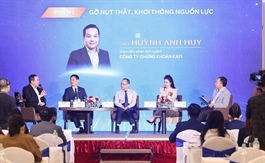
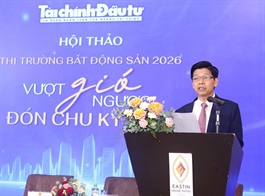
Vietnam’s real estate market is entering a new cycle marked by stricter requirements on financial capability, legal compliance, and product quality, forcing developers to adopt more cautious and practical strategies while strengthening brand credibility and reassessing capabilities, speakers said at the seminar “Real estate market 2026: Weathering Headwinds, Embracing a New Cycle,” on May 12.
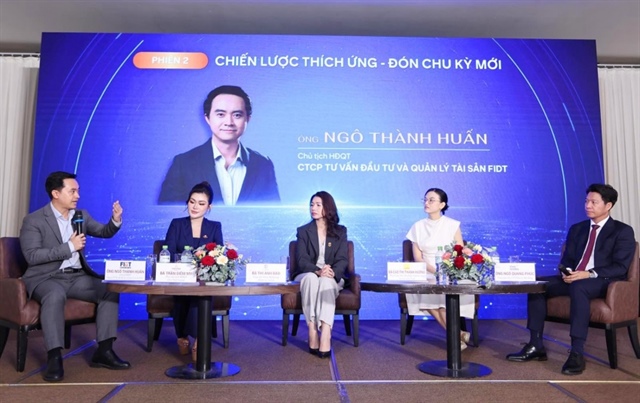
Vietnam’s real estate market enters a new development cycle |
The discussion session focused on a range of issues, including how developers are reshaping their strategies following the market’s consolidation phase, which property segments are likely to recover first, changing homebuyer behaviour, and the timing for businesses to accelerate expansion plans.

Tran Diem My, vice chairwoman of Five Star Group |
In the context of homebuyers increasingly prioritising quality of life, green spaces, and integrated amenities, the eco-urban model will become a market trend going forward.
Five Star Group's development strategy focuses not only on low-rise housing, but also on diversifying products to meet the needs of various customer groups. The product range includes townhouses, commercial properties, villas, mansions, and high-rise apartments from the mid-range to high-end segments.
Five Star Group currently owns and develops land in many locations, such as Ho Chi Minh City, Long An, Vung Tau, Dalat, Phan Thiet, and Phu Quoc. In the future, the group will focus on developing these land plots according to diverse models: eco-urban areas, international-standard 5-star resort complexes, and high-end beachfront resorts.
"We will implement projects targeting multi-generational families. This is not only a place where the elderly can relax and rest with their children and grandchildren, but also a convenient living environment for the younger generation with a complete ecosystem of amenities, a civilised community, and a space for the comprehensive development of children," said Tran Diem My, vice chairwoman of Five Star Group.
"We dedicate ample space for play, recreation, and development for young children, so they can grow up in a green, safe, and community-connected environment.
"The eco-city model will continue to be a suitable trend in the new phase of the real estate market, especially in the context of homebuyers increasingly concerned about quality of life, green spaces, and integrated amenities."
|
Thi Anh Dao, chief marketing officer of Masterise Group |
Thi Anh Dao, chief marketing officer of Masterise Group, said that a notable change was that the younger generation now buys a home not just to have a place to live, but to want a home that reflects their lifestyle, personality, and supports a more holistic living experience.
Buyers today are increasingly concerned about whether the home helps them live better, whether it creates connections with family, friends, and neighbours. They care about who their children will play with and what the community is like.
From this change, real estate businesses are also forced to change their product development and marketing strategies. While previously developers only needed to emphasise location or potential for price appreciation, now buyers demand more in terms of the actual living experience.
Therefore, the real estate market in this new cycle will no longer compete solely on location or price, but on the ability to create a sustainable living environment, an ecosystem of amenities, and quality of life for residents.
The current market challenge lies not only in developing residential areas far from the city centre, but more importantly, in creating enough appeal to convince buyers to relocate. This requires projects to possess unique amenities, architecture, services, and living experiences to compensate for geographical distance.
Based on this reality, Masterise pursues a product development strategy tailored to specific customer segments, as each group has different needs, lifestyles, and expectations. For each segment, we build appropriate quality standards while maintaining a unified brand philosophy.
The value of real estate comes not only from location or physical structures, but also from the community formed within the project. After the construction phase, the next crucial step is building community life through resident activities, a living culture, and connections among people sharing a similar lifestyle.
Cao Thi Thanh Huong, deputy director of Research at Savills Vietnam |
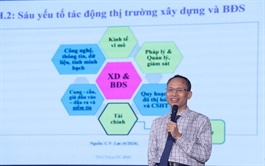
The real estate market is entering a phase of “natural selection” after years of rapid expansion, according to Cao Thi Thanh Huong, deputy director of Research at Savills Vietnam. Although Vietnam’s macroeconomic fundamentals remain solid - supported by stable GDP growth, improving credit conditions, and well-controlled inflation, the housing sector continues to face significant headwinds from high home loan interest rates and exchange rate volatility.
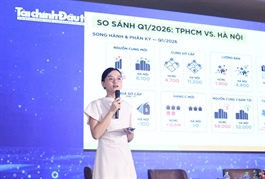
At the same time, the persistent mismatch between real demand and supply remains a major challenge in major urban centres. While Hanoi and Ho Chi Minh City each require approximately 50,000 new apartments per year to meet genuine housing needs, supply has struggled to keep pace with population growth. In the first quarter alone, Ho Chi Minh City launched fewer than 5,000 primary apartments, achieving an absorption rate of just 41 per cent.
Elevated price levels and limited supply are causing liquidity to become increasingly segmented across property categories. This is also driving both end-user demand and investment capital towards satellite urban areas, where housing is more affordable, and infrastructure continues to improve.
|
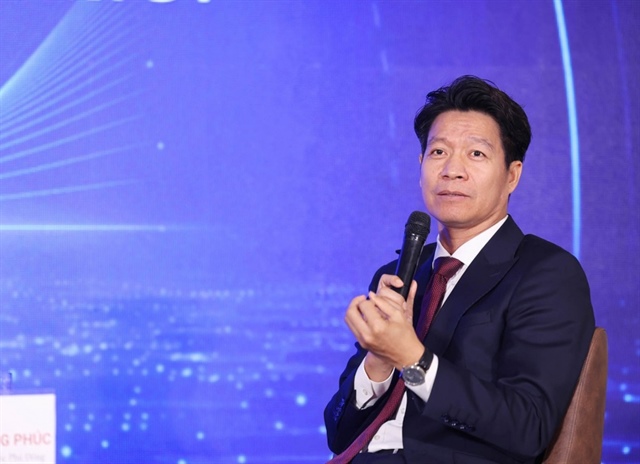
Ngo Quang Phuc, CEO of Phu Dong Group |
Affordable housing continues to enjoy strong demand, yet supply remains severely constrained due to prolonged bottlenecks in land availability, lengthy legal procedures, and low profit margins, said Ngo Quang Phuc, CEO of Phu Dong Group. This segment is not only the core focus of Phu Dong Group, but also a strategic priority for many developers amid rising genuine housing needs.
As land in prime central locations becomes increasingly unsuitable for reasonably priced projects, developers are shifting towards suburban and peripheral areas. However, securing land plots that meet planning requirements, offer viable pricing, and are suitable for development remains extremely challenging. Moreover, legal and approval processes that typically take three to five years continue to limit new supply significantly.
Nevertheless, rapid infrastructure development is creating substantial opportunities for the affordable housing segment, especially in satellite towns around Ho Chi Minh City. Improved transport connectivity is shortening travel times and gradually changing the long-standing perception that living far from the city centre is inconvenient.
- 18:00 12/05/2026