New evening peak-hour electricity pricing proposed to start in June
New evening peak-hour electricity pricing proposed to start in June
The National Power System and Market Operation Company Limited (NSMO) has proposed applying new electricity peak-hour pricing from June 1, as scorching weather and rising demand put mounting pressure on the grid, particularly in northern Việt Nam.
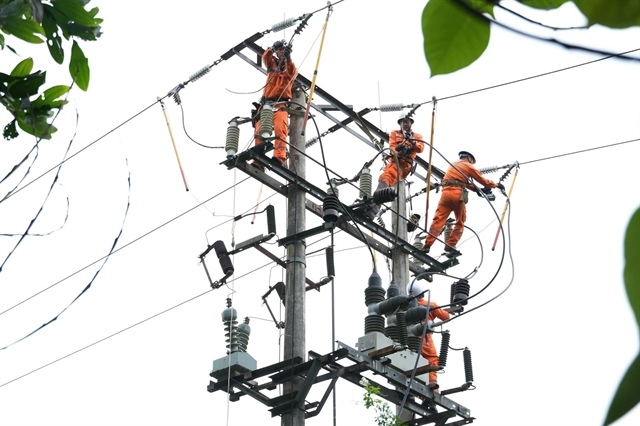
Workers from Vietnam Electricity Lạng Sơn check a transmission system. The NSMO forecasts that electricity demand in northern Việt Nam will approach 29,000MW during the May 23-27 heatwave, nearly 10 per cent higher than the previous record set on May 15. — VNA/VNS Photo |
Specifically, the proposed changes would apply peak-hour tariffs from 5.30pm to 10.30pm daily, except Sundays, while off-peak hours would run from midnight to 6am.
The proposal follows a Ministry of Industry and Trade decision issued in late April that redefined time-of-use electricity pricing with a shift of peak hours entirely to the evening, prompted by the increasing use of solar power during the day, though the new schedule has not yet been implemented nationwide.
Currently, peak hours are split into two periods, from 9.30 to 11.30am and from 5 to 10pm, while off-peak rates apply from 10pm to 4am.
Time-of-use pricing mainly applies to industrial and commercial customers, with around 1.25 million electricity meters nationwide currently operating under the mechanism.
NSMO said the new time-of-use pricing should be applied from June, as electricity demand has increasingly shifted to evening hours during prolonged heatwaves linked to El Niño conditions. Demand for electricity in the evening has surpassed demand during the daytime.
The national power system, especially in the north, is facing major operational challenges as electricity consumption continues to rise sharply and shift toward the evening peak period from 8 to 11pm, the company said.
For example, on May 15, nationwide power demand hit a record 54,654MW, up 8.6 per cent from a year earlier, while daily electricity consumption reached 1.152 billion kWh, nearly 10 per cent higher year-on-year.
Evening peak periods place additional strain on the system, because solar power generation is unavailable after sunset and many small hydropower plants face water shortages, NSMO said.
The NSMO forecast that electricity demand in northern Việt Nam will likely approach 29,000MW during the May 23-27 heatwave, nearly 10 per cent higher than the previous record set on May 15.
To maintain supply, the system may need to generate electricity from liquefied natural gas and oil-fired power plants, including Ô Môn, Thủ Đức and Cần Thơ.
Who is affected?
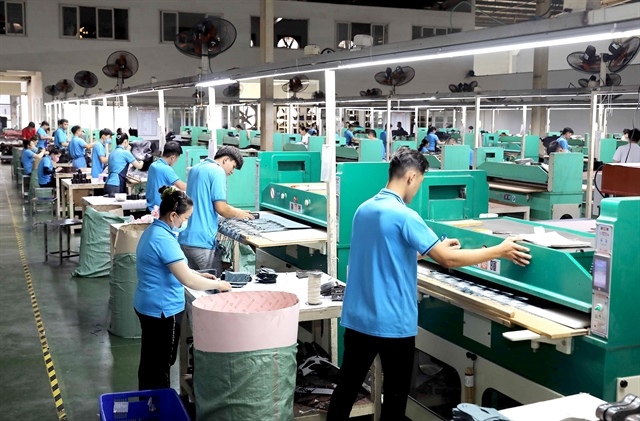
Workers from Vietnam Electricity Lạng Sơn check a transmission system. The NSMO forecasts that electricity demand in northern Việt Nam will approach 29,000MW during the May 23-27 heatwave, nearly 10 per cent higher than the previous record set on May 15. — VNA/VNS Photo |
Time-of-use electricity pricing is a key mechanism used to calculate retail power tariffs. Under the system, electricity prices are typically highest during peak hours and lowest during off-peak periods, in an effort to encourage consumers to shift usage away from periods of heavy demand.
The NMSO said the new pricing framework is expected to influence electricity consumption patterns among businesses and organisations to help ease pressure on the national grid during peak demand hours.
It also incentivises households and businesses to conserve electricity during periods of extreme heat to help ensure the safe operation of the power system and reduce energy costs for consumers.
As the time-of-use pricing mainly applies to industrial and commercial customers, residential consumers will not be directly affected because household electricity tariffs continue to be calculated under the existing tiered retail pricing structure.
Ngô Tuấn Kiệt, former director of the Institute of Energy Science, said the new peak-hour schedule would mainly affect manufacturers and industrial parks with high electricity consumption.
“The shift of peak hours to the evening will likely encourage businesses to invest more in battery storage systems so that daytime solar power can be used during the evening peak,” he said.
Trịnh Quốc Vũ, deputy director of the Electricity Authority under the Ministry of Industry and Trade, said the new schedule would not directly affect residential consumers, while manufacturers can adjust their production plan and avoid using power-consuming equipment during peak houses.
Under the current retail electricity tariffs, peak-hour prices for business customers range from VNĐ5,025 to VNĐ5,422 (US$0.19-$0.21) per kWh depending on voltage levels, while industrial users face rates of VNĐ3,266 to VNĐ3,640 per kWh.
Off-peak tariffs range from VNĐ1,146 to VNĐ1,918 per kWh.
- 08:05 26/05/2026