Ministry proposes allowing SMEs to use digital assets as collateral for bank loans
Ministry proposes allowing SMEs to use digital assets as collateral for bank loans
The policy is intended to unlock resources for the private economic sector and align with Resolution 68-NQ/TW of the Politburo.

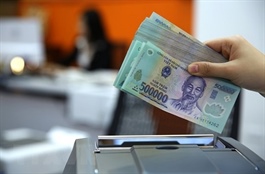
Data from the State Bank of Vietnam showed that, by the end of April, outstanding loans to the SME sector reached only nearly VNĐ3.8 quadrillion (US$144.2 billion), equivalent to about 20 per cent of the total outstanding credit of the entire banking system. — VNA/VNS Photo |
The Ministry of Finance (MoF) has proposed allowing small and medium-sized enterprises (SMEs) to use digital assets, virtual assets and intellectual property rights as collateral for bank loans, in a move aimed at improving capital access for private businesses and technology startups amid ongoing financing constraints.
The proposal is included in the draft revised Law on Support for SMEs, which is currently open for public consultation.
Under the draft, the Government seeks to diversify acceptable forms of loan collateral instead of relying primarily on traditional secured assets such as real estate.
According to the proposed framework, SMEs could secure loans using assets formed in the future, property rights, intellectual property rights, intangible assets, digital assets, virtual assets and other lawful assets in accordance with Vietnamese law.
The ministry said the policy is intended to unlock resources for the private economic sector and align with Resolution 68-NQ/TW of the Politburo, which identifies the private sector as an important driver of the national economy.
The draft law also encourages credit institutions to expand lending based on credit ratings, business plans, market expansion potential and enterprise cash flows, rather than depending heavily on fixed-asset collateral.
The proposal comes as many SMEs continue to face difficulties accessing bank credit despite accounting for the overwhelming majority of businesses in the economy.
According to the MoF, SMEs and household businesses represent more than 98 per cent of all enterprises in Việt Nam, yet outstanding loans to the segment account for only around 20 per cent of total credit in the economy.
The ministry attributed the imbalance largely to the lack of eligible collateral, limited financial transparency, small capital scale and weak risk resilience among SMEs. Many startups and innovation-driven enterprises possess technology, software or intellectual property but lack land or tangible assets commonly required by banks.
The draft law also outlines a series of incentives for innovative, green and sustainable businesses. SMEs engaged in sustainable development projects could receive preferential access to credit guarantees, concessional financing and interest-rate support for green projects or circular economy initiatives.
The proposal also includes tax incentives for environmental protection activities, accelerated depreciation mechanisms for assets serving green transformation and energy-saving projects, as well as support for digital transformation associated with sustainability objectives.
Enterprises may also receive assistance for consultancy, certification, sustainability reporting and compliance with environmental, social and governance (ESG) standards, according to the draft.
The MoF acknowledged that existing support mechanisms, including credit guarantee funds for SMEs and the SME Development Fund, have yet to operate as effectively as expected.
- 08:13 29/05/2026