Manufacturing firms face falling orders as costs climb to 15-year peak
Manufacturing firms face falling orders as costs climb to 15-year peak
Vietnamese manufacturers recorded a drop in new orders in April as inflationary pressures hit 15-year highs amid increased costs for fuel and oil in particular.
|
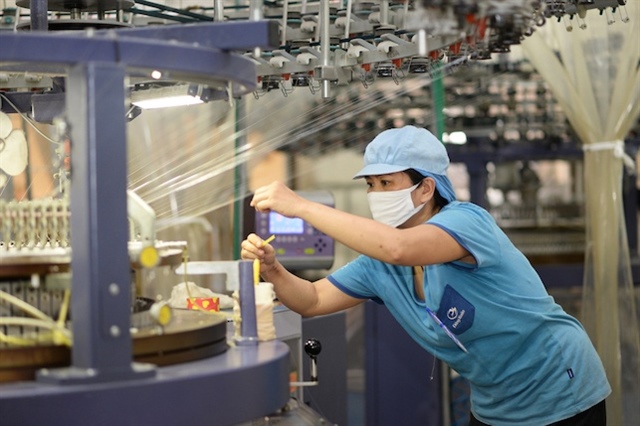
The S&P Global Vietnam Manufacturing Purchasing Managers' Index (PMI) dropped to a seven-month low of 50.5 in April, down from 51.2 in March. The reading signalled a tenth consecutive positive score in overall business conditions in the sector, albeit only marginal.
Helping to keep the headline index in positive territory in April was sustained output growth. Production increased for the twelfth month running, reflecting work on existing projects and resilient underlying demand. The rate of expansion was the slowest since June 2025, however, amid rising inflationary pressures, supply shortages and market instability due to the war in the Middle East.
While output continued to rise, other elements of the survey painted a more downbeat picture of conditions in the manufacturing sector during April. New orders decreased for the first time in eight months as price increases affected the ability of firms to secure new orders. The effects were even more pronounced on new export orders, which were also impacted by higher transportation costs. New business from abroad fell markedly for the second month running.
There were widespread reports of rising fuel and oil costs during April, with higher transportation rates also mentioned. As a result, input costs increased rapidly, with the rate of inflation accelerating further to the fastest in 15 years. More than half of respondents signalled a rise in input prices during the month.
In turn, output charges were also increased sharply. Here also, the rate of inflation was the fastest since April 2011.
With new orders falling, manufacturers lowered their staffing capacity, both via reduced headcounts and a cut in working hours. Some firms also reported employee resignations. Staffing levels decreased solidly for the second consecutive month.
After having risen slightly in March, backlogs of work fell for the fourth time in five months during April, and at the fastest pace since last September. Firms also cut back on purchasing and inventory holdings at the start of the second quarter.
Input buying decreased in response to lower new orders, but advanced purchasing at some manufacturers to try to mitigate price and supply issues meant that the rate of decline was only slight and weaker than seen in March. Rates of depletion in stocks of both purchases and finished goods intensified, however.
Issues with the cost and availability of shipping, as well as raw material shortages, led to a substantial lengthening of suppliers' delivery times during April. Moreover, supplier performance deteriorated to the largest extent in four-and-a half years.
Concerns around the impacts of the war in the Middle East led to a further waning of optimism among Vietnamese manufacturers. Sentiment dipped to a seven-month low and was weaker than the series average.
Nonetheless, firms continued to predict an increase in output over the coming year, linked to hopes of a recovery in new orders and more stable market environment.
- 09:55 06/05/2026