Ho Chi Minh City at pivotal development stage
Ho Chi Minh City at pivotal development stage
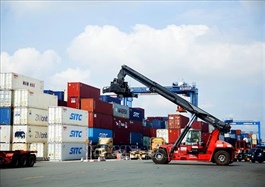
Ho Chi Minh City is entering a pivotal stage of development, with institutional reforms, greater decentralisation and delegation of authority – and the ambition to establish Vietnam International Financial Centre – creating new opportunities and fresh challenges for the business community.
According to Tran Du Lich, vice chairman of the Vietnam International Arbitration Centre (VIAC), the city has never been in such a strategic position with the strong development advantages it has today, given its simultaneous strengths in logistics infrastructure, seaports, finance, trade, industry, and innovation.

Photo: Le Toan |
"As the economy enters a period of profound transformation towards a growth model driven by sci-tech and digital transformation, Ho Chi Minh City will be granted mechanisms to address pressing issues surrounding institutions and the investment environment," Lich said at the conference discussing investment opportunities in Ho Chi Minh City, held in the city on May 22.
Lich explained that this is also a critical period for Ho Chi Minh City to reaffirm its role as the country’s economic engine and a regional financial and commercial hub, thereby creating spillover momentum for national growth in the next development phase.
However, Lich also noted that while these changes present significant new opportunities, they simultaneously pose considerable challenges for the business community.
“Businesses will need robust internal resources such as financial capacity while addressing the need to strengthen their legal governance capabilities, risk management frameworks, and dispute resolution expertise,” he said.
Michael K. Lee, partner of DILINH Legal, noted that despite the attractiveness of Vietnam’s investment environment, foreign-invested enterprises still face numerous challenges related to market access conditions, licensing procedures, foreign ownership restrictions, operational compliance, corporate governance, and inconsistencies in legal enforcement among regulatory authorities.
Drawing from practical case studies, Lee noted that many major disputes in reality do not stem from a single legal issue, but rather from unclear allocation of responsibilities, insufficiently robust contractual provisions, and the absence of comprehensive governance mechanisms, resulting in legal risks not being properly managed throughout the project lifecycle.
“On that basis, I recommend that investors conduct multi-layer legal due diligence from the early stages of investment; establish effective contractual protection and risk management mechanisms; and monitor policy changes in areas such as land, investment, and taxation,” he said.
He also noted that commercial arbitration in Vietnam, including through the VIAC, is increasingly regarded as an effective dispute resolution mechanism for cross-border transactions thanks to its international enforceability, competitive costs, and procedural flexibility.
Dau Anh Tuan, vice secretary-general of the Vietnam Chamber of Commerce and Industry, said that Vietnam is entering a phase of institutional reform at an unprecedented pace and scale, reflected through major policy orientations such as Resolution 66 on reforming the law-making process and Resolution 68 on private sector development.
“Many important laws relating to investment, land, taxation, e-commerce, data, AI, and digital technology are being revised towards significantly reducing business conditions, accelerating decentralisation and delegation of authority, and shifting from a ‘pre-licensing control’ model towards a ‘post-audit supervision’ approach,” Tuan said.
According to him, these changes are expected to open up new opportunities for businesses by reducing market entry costs and encouraging investment in strategic sectors such as high technology, semiconductors, renewable energy, and the green and digital economy.
“However, alongside these opportunities, the business community must adopt and integrate new requirements related to personal data protection, environmental standards, extended producer responsibility, and other emerging compliance frameworks,” he added.
Meanwhile, Phan Hoai Nam, CEO of W&A Consulting, analysed that Vietnam’s new tax policy framework is being revised in a direction that both supports businesses and strengthens transparency and regulatory efficiency amid the rapid growth of the digital economy and cross-border transactions.
“Many new regulations relating to VAT, corporate income tax, personal income tax, and tax administration are expected to have a direct impact on the operations of foreign-invested enterprises in Vietnam,” Nam said.
From a corporate income tax perspective, he noted that the new regulations are significantly expanding the scope of deductible expenses, particularly for spending on research and development, market research, new product development, pre-sales marketing activities, and innovation-related operations.
At the same time, various tax incentive mechanisms and preferential policies are also being adjusted to encourage investment in priority sectors, promote long-term business investment, and strengthen corporate competitiveness.
“In light of these significant tax policy changes, businesses and investors must review their operating models, stay updated on regulatory developments, and enhance compliance governance capabilities to minimise potential legal and financial risks arising during investment and business operations in Vietnam,” he added.
- 10:34 23/05/2026