Future skills investment a strategic priority for Vietnam businesses
Future skills investment a strategic priority for Vietnam businesses
As Vietnam’s economy undergoes rapid digital and structural transformation, businesses are rethinking their role beyond traditional operations. Simon Liu, CEO of Omoda & Jaecoo Vietnam, explains why investments in education, workforce readiness, and youth development are central to long-term business resilience and growth.
How do you see the broader role of businesses evolving in shaping long-term social and economic outcomes, particularly for future generations?
Corporate activity inevitably interacts with the social and economic environment in which it operates. Employment practices influence the wellbeing of families, supply chains shape livelihoods across local economies, and technological ecosystems affect how younger generations access education, information and employment opportunities.
These dynamics mean that the long-term strength of an economy, and the sustainability of businesses operating within it, depends in part on the development of future talent. Companies that adopt a long-term strategic perspective therefore tend to view investments in education, skills and youth development as closely aligned with broader economic resilience.
Many of these impacts are not immediately visible in day-to-day business performance. Why is it important for companies to recognise and address them early?
From a business leadership point of view, many risks do not appear suddenly; they build gradually through everyday operational decisions.
When companies look carefully at their value chain, they can see how workplace conditions affect employees and their families, how supply-chain practices influence communities, and how technology shapes the way younger generations access education and opportunities.
As a CEO, I believe responsible management requires paying attention to these signals early. Addressing potential risks before they escalate allows companies to maintain trust with partners, employees and society. In the long term, this approach contributes to more resilient operations and a stronger foundation for sustainable growth.
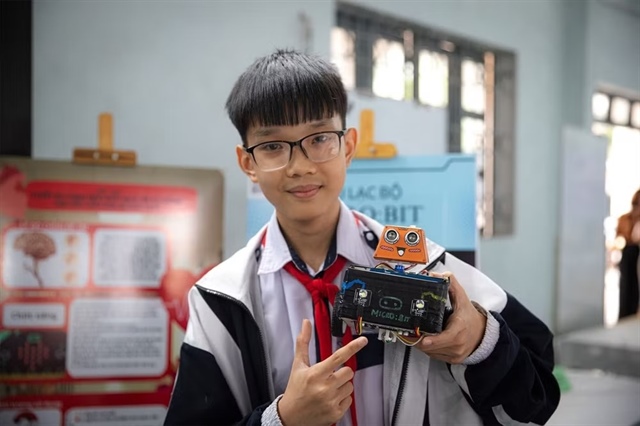
Strengthening the connection between education systems and labour markets contributes to employment opportunities for young people. Photo credit: UNICEF Vietnam |
How does this long-term perspective translate into the way Omoda & Jaecoo approaches its presence and engagement in Vietnam?
Our approach to social engagement is closely aligned with our long-term business strategy.
Omoda & Jaecoo is building a long-term presence in Vietnam through investments in manufacturing, technology and distribution networks. Alongside these investments, we also consider how businesses can contribute to the development of human capital.
Education and workforce readiness are particularly relevant in this context. A capable and adaptable workforce supports innovation, productivity and sustainable economic growth.
Initiatives that strengthen future skills therefore align naturally with the long-term interests of companies operating in a fast-changing economy. That’s why Omoda & Jaecoo, as part of Chery Group, has partnered with UNICEF Vietnam in a three-year partnership.
Through this collaboration, Omoda & Jaecoo’s contribution will enable UNICEF Vietnam to respond to persistent education challenges, including the digital divide, skills mismatches between education and the labour market needs, and growing concerns around adolescent mental health and wellbeing.
What considerations led Omoda & Jaecoo to partner with UNICEF?
The partnership builds on the broader global partnership between CHERY Group and UNICEF focused on education and youth development.
In Vietnam, we saw an opportunity to contribute to programmes addressing challenges related to digital capability, school-to-work transition and youth wellbeing. These issues are becoming relevant as economies undergo rapid technological change.
UNICEF has in-depth experience working with governments and education systems, as well as a strong understanding of how programmes can reach children and adolescents across different communities. From a corporate standpoint, partnering with an organisation that has this level of expertise helps ensure that contributions are connected to long-term development priorities.
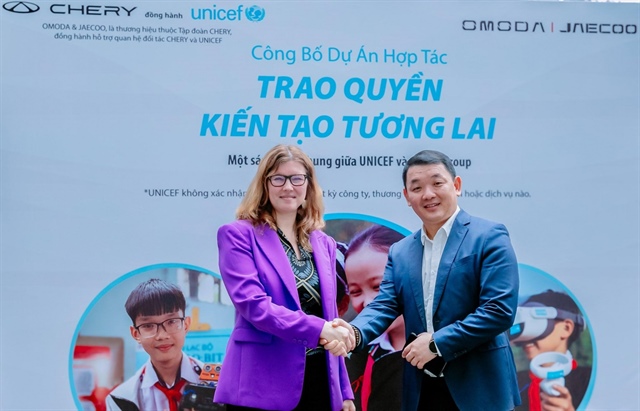
Omoda & Jaecoo partners with UNICEF Vietnam to equip children and youth with future-ready skills through inclusive education. Photo credit: UNICEF Vietnam |
The partnership places a strong focus on future skills and youth development. Why are these areas becoming relevant for businesses today?
Global labour markets are evolving quickly due to technological innovation, digitalisation and the transition towards greener industries.
These changes are reshaping the skills required in many sectors. Digital literacy, problem-solving, adaptability and cross-disciplinary capabilities are increasingly valued by employers.
Many companies also observe gaps between educational outcomes and workforce needs. Strengthening the connection between education systems and labour markets therefore contributes to economic competitiveness as well as employment opportunities for young people.
Through our partnership with UNICEF Vietnam, we support initiatives that expand access to digital, green and transferable skills, helping young people prepare for the demands of a rapidly evolving economy.
As a company driven by smart technologies and innovation, what role can Omoda & Jaecoo play in strengthening the connection between education and workforce readiness?
Innovation-driven companies can contribute valuable perspectives on emerging technologies and workforce requirements.
Industries that operate at the frontier of technological development have insights into the skills that will be required in future sectors. Sharing these insights with education systems can help strengthen the alignment between training initiatives and labour-market needs.
Technology can also expand access to learning resources and support new models of education. Collaboration with organisations such as UNICEF provides an opportunity to apply technological capabilities within programmes designed to strengthen skills development and future employability.
How does this focus on human capital development align with Omoda & Jaecoo’s long-term strategy in Vietnam?
Vietnam represents a crucial market within our regional development strategy. Our approach, summarised by the principle ‘In Vietnam, For Vietnam’, reflects our intention to build a sustainable presence in the country through manufacturing investment, technology development and collaboration with local partners.
Human capital development is closely linked to this long-term perspective. A skilled workforce supports innovation capacity and economic dynamism. Engagement in initiatives that strengthen education and future skills therefore contributes to the broader environment in which businesses operate and grow.
Looking ahead, how do you see the role of businesses evolving in addressing broader challenges such as workforce readiness, digital inclusion and sustainable growth?
The role of business in society continues to evolve as expectations around responsible governance increase. Companies today contribute capabilities that include technological innovation, operational expertise and global networks. These capabilities can support collaborative initiatives addressing complex challenges such as workforce readiness, digital inclusion and sustainable growth.
Partnerships between businesses, governments and international organisations create opportunities to scale programmes that support education, skills development and economic inclusion.
From a long-term perspective, investment in young people contributes to stronger labour markets, resilient communities and sustainable economic development. These outcomes ultimately support a stable and productive environment for business.
- 11:17 22/05/2026