HCM City navigates toward sustainable river-sea economy
HCM City navigates toward sustainable river-sea economy
With vast waterways, a long coastline, and global connectivity, HCM City is positioning itself as Southeast Asia’s next maritime hub.
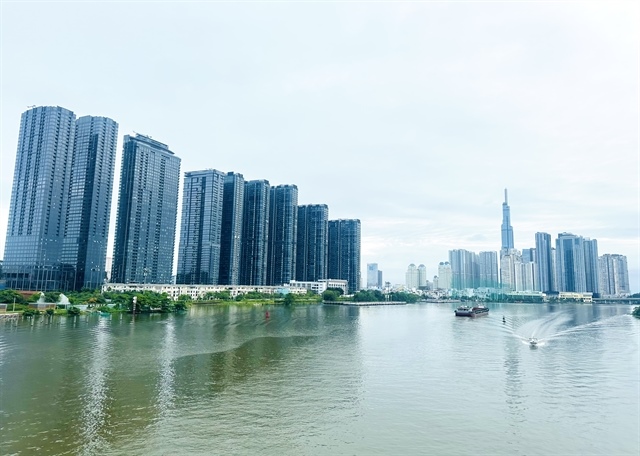
A view of HCM City’s expansive skyline, anchored by the iconic Landmark 81, seen from across the Sài Gòn River. — VNS Photo Nguyễn Diệp |
Traveling by boat from Thủ Dầu Một along the Sài Gòn River as it flows past the Bến Nghé estuary to the sea at Cần Giờ, or ascending Núi Lớn in Vũng Tàu to survey the sweeping azure arc from Xuyên Mộc to Gành Rái Bay, one truly grasps the scale of Việt Nam’s pre-eminent river-sea metropolis.
Formed through the strategic integration of HCM City with former Bình Dương and Bà Rịa–Vũng Tàu provinces, this expanded urban system is redefining the nation's economic geography.
A pivot toward the blue economy
The sprawling metropolis now commands a network of over 1,000km of rivers and a 300km coastline overlooking a massive 100,000sq.km continental shelf.
Beyond the mainland lies the Côn Đảo archipelago, an exquisite 'cluster of pearls' comprising 16 islands.
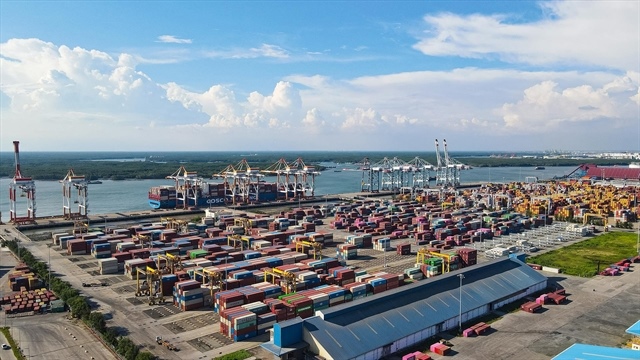
The city is also home to more than 90 seaports, handling nearly 70 per cent of the country’s containerised import-export cargo.
Furthermore, nearly 300 inland ports thrive along the Sài Gòn River and its surrounding canals, providing vital arteries to the Southeast and the Cửu Long (Mekong) Delta.
With a population of 14 million, half a million businesses, and a concentration of over 60 universities, the city possesses the human and structural capital to chart a prosperous future driven by its aquatic assets.
Historically, these waterways have been the bedrock of local livelihoods.
While Cần Giờ evolved from traditional salt-making to bird’s nest farming, and Vũng Tàu’s waters became synonymous with oil, gas, and tourism in the 1980s, the city's maritime DNA is best represented by the legendary Ba Son and CARIC shipyards.
For over 150 years, a chain of ports—anchored by the Sài Gòn Port system, Tân Cảng, and Cái Mép–Thị Vải—has formed the backbone of the region’s trading strength.
In the five years leading up to administrative consolidation, the city's leadership made a decisive "pivot" toward its marine resources.
Since 2024, a master plan for the Sài Gòn River landscape through 2045 has been in development alongside the Paris Region Planning Institute.
A view of HCM City’s expansive skyline, anchored by the iconic Landmark 81, seen from across the Sài Gòn River. — VNS Photo Nguyễn Diệp |
Following the 2025 merger, key directions have been sharpened:
Infrastructure Integration: Strengthening links between ring roads, logistics hubs, and port systems.
Sustainability: The development of "green ports" and expanded interregional waterways.
Connectivity: A proposed 54-km metro line linking Bến Thành to Cần Giờ.
Trade Zones: The establishment of the 3,800-hectare Cái Mép Hạ Free Trade Zone.
These initiatives represent the foundation of the River-Ocean Economy.
In the 21st century, this goes beyond traditional fishing or shipping; it integrates high-tech industries, renewable energy, and scientific innovation.
While developing this model, the city is looking closely at regional peers.
Singapore, for instance, has successfully integrated oil refining and container shipping with high finance, telecommunications, and offshore farming.
HCM City, however, holds arguably greater potential.
It boasts an extensive river network integrated with a long coastline and stable climatic conditions.
Historically, the Sài Gòn-Vũng Tàu-Côn Đảo axis served as a vital stopover on Europe-Asia-America trade routes.
To capitalise on this, the city aims to establish "spearhead" facilities: an offshore transshipment container port in Cần Giờ, a marine logistics base in Côn Đảo, and a coastal corridor linking Đồng Nai to Cần Thơ.
The International Financial Center in HCM City is also expected to launch specialised maritime insurance and green energy credit services.
Heritage as an economic driver
The city’s future is deeply rooted in its past.
Over 320 years ago, Sài Gòn (old HCM City) originated as fishing villages along these very estuaries.
By the 18th century, it had evolved into a pivotal ‘transit town’ for Euro-Asian trade.
Under French influence in the 1860s, the Commercial Port of Sài Gòn adopted "free port" policies, allowing it to compete directly with Singapore and Hong Kong (China.
Following the merger on July 1, 2025, the city has absorbed the rich cultural and historical resources of Bình Dương and Bà Rịa-Vũng Tàu.
From the orchards of Thủ Dầu Một to the historic wharves of the Sài Gòn River, this vast landscape constitutes an abundant resource for ‘memory tourism’ and the heritage economy.
With a clear vision and renewed momentum, the city is emerging as a hub for global financial flows, poised to reclaim its legacy as a prosperous, world-class river metropolis. — VNS
- 15:54 06/05/2026