Cooperatives call for removal of obstacles for digital transformation
Cooperatives call for removal of obstacles for digital transformation
Digital transformation in Việt Nam’s collective economy sector, including among cooperatives, is growing momentum — but numerous obstacles continue to hinder implementation.
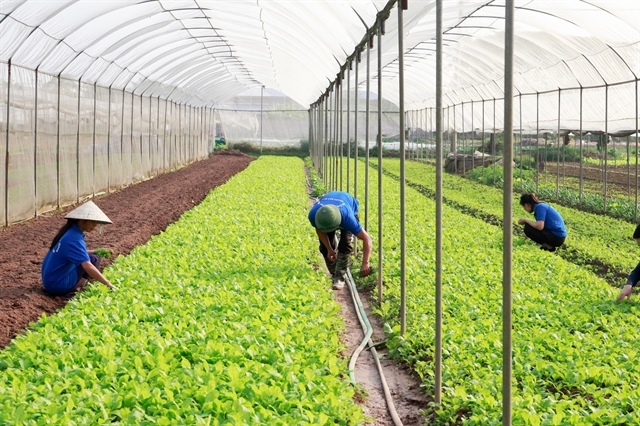
Growing safe vegetables in a net house for Chúc Sơn Cooperative in Hà Nội's Chương Mỹ District. — Photo courtesy of Hanoi Agriculture Extension Centre |
Beyond simply improving production processes, boosting productivity and expanding market access, the digital transformation is increasingly viewed as crucial for agricultural cooperatives to integrate more deeply into domestic and global value chains.
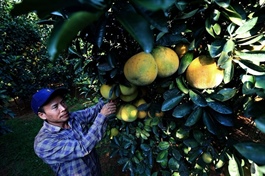
Since 2022, Minh Trung Agricultural Services Cooperative in Tây Ninh Province has implemented a high-tech farming model for custard apple cultivation.
By adopting production management software and connecting to distribution systems and e-commerce platforms, the cooperative has maintained a stable market demand. In 2025 alone, output exceeded 4,000 tonnes, generating revenue of more than VNĐ40 billion.
However, the digital transition quickly revealed major difficulties. Cooperative director Lê Minh Trung said that several cooperative members are unfamiliar with using smartphones, resulting in inconsistent data entry and leaving some digital tools underutilised.
At the same time, the development of specialised software, equipment and traceability systems requires substantial investment, often beyond cooperatives' limited financial capacity.
Trung said the greatest challenge lies in farmers’ limited understanding of digital transformation. The cooperative also lacks the financial resources to hire dedicated personnel to collect and update data.
According to the director, the issue is not the absence of software solutions, but rather how to effectively use existing tools and encourage farmers to actively participate in digitised processes.
Meanwhile, Chúc Sơn Safe Vegetable and Fruit Cooperative in Hà Nội – considered a pioneer in agricultural digitalisation – has introduced iMetos weather monitoring stations, the eGap traceability system and online sales channels through e-commerce platforms. Even so, results have fallen short of expectations.
The cooperative’s leadership noted that digital transformation is not simply about installing software or equipment; it requires a comprehensive restructuring of management practices.
However, many managers still lack digital thinking and technical skills, including the ability to utilise data, operate digital platforms and develop digital business strategies.
As a result, the cooperative remains heavily dependent on external technical support for data digitisation and market connectivity.
Chúc Sơn director Hoàng Văn Thám has expressed concern that many cooperative managers still view digital transformation as a short-term campaign, rather than a long-term strategic shift.
Similar to Minh Trung, Thám said most of the cooperative's members are older farmers who struggle to use smartphones and update production data, making implementation fragmented and inconsistent.
Without a coherent long-term strategy, it remains difficult for local agricultural products to reach international markets.
Digitalisation of agricultural processes requires major investment in equipment, software, traceability systems, automation and workforce training, costs that many cooperatives simply cannot afford.
Leaders of both cooperatives said limited accumulated capital and difficulty accessing credit have forced many digitisation projects to remain small in scale, preventing meaningful breakthroughs.
They emphasised the need for more practical support mechanisms to help cooperatives develop long-term production and business strategies, including financial support, digital management training, consulting services and stronger connections with technology enterprises and digital markets.
Since the issuance of the Poliburo's Resolution 57-NQ/TW, several programmes supporting digital transformation for cooperatives have been introduced. However, significant gaps remain between policy and implementation.
Support policies related to training, technology consulting, preferential loans and digital trade promotion are often fragmented and overlapping. Meanwhile, leaders say it is difficult for cooperative members to access those policies.
Many cooperatives struggle due to insufficient information, unclear guidance or failure to meet eligibility requirements for Government support programmes.
Growing safe vegetables in a net house for Chúc Sơn Cooperative in Hà Nội's Chương Mỹ District. — Photo courtesy of Hanoi Agriculture Extension Centre |
Chairman of the Vietnam Digital Economy Cooperative Union, Mai Quang Vinh, said many cooperatives currently lack specialised personnel responsible for digital transformation, severely limiting their ability to adopt and operate technology.
In many cases, implementation remains scattered, with weak data transparency and insufficient post-training support, causing projects to stall and initial enthusiasm to fade quickly.
Lê Đức Thịnh, director general of the Department of Cooperative Economy and Rural Development under the Ministry of Agriculture and Environment, acknowledged that agricultural cooperatives face numerous challenges in digital transformation due to their small scale and limited financial resources, while the initial investment costs remain high.
Accessing State support policies is also difficult because of complicated administrative procedures. Many cooperatives want to digitise, but do not know where to begin, and their ability to connect with technology companies remains limited.
“We have calculated that each cooperative may spend between VNĐ200 million and VNĐ300 million annually on digital transformation,” Thịnh said. “However, cooperatives do not need to do everything at once. They should start from the simplest tasks to the more complex ones. What directly serves production needs should come first.”
To remove these bottlenecks, experts say priority should be given to training and improving digital skills among farmers through practical and accessible programmes.
Cooperative leaders themselves must view digital governance capacity as a strategic breakthrough. In other words, digital transformation must begin with a shift in mindset at all levels – from directors to individual members.
More suitable credit mechanisms are also needed to support technology investment in the collective economy.
- 07:23 14/05/2026