Vietnam eyes new growth drivers as fiscal policy takes centre stage
Vietnam eyes new growth drivers as fiscal policy takes centre stage
Vietnam retains strong growth potential but must pivot to innovation-led drivers, with fiscal policy and capital markets set to play a larger role as monetary policy space narrows.
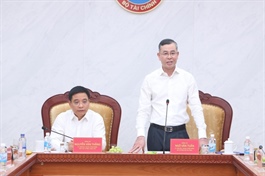
This message was echoed by Deputy Prime Minister Nguyen Van Thang and National Assembly (NA) deputies during the ongoing session reviewing socioeconomic performance and setting development priorities at the NA on April 9 and 10.
The NA heard reports on socioeconomic conditions, the state budget for 2025, implementation of development plans in early 2026, and proposals for socioeconomic development, medium-term public investment, and the national financial plan for the 2026–2030 period.
Lawmakers held group discussions on targets, indicators, and governance measures for the period ahead.
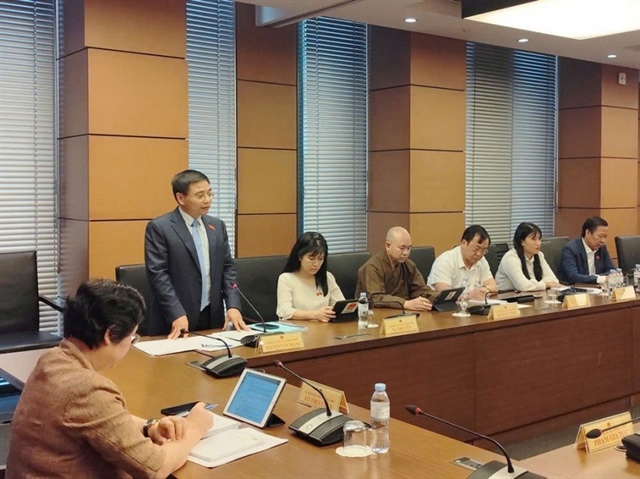
Deputy Prime Minister Nguyen Van Thang |
Delegate Nguyen Tan Cuong from the Mekong Delta province of Dong Thap’s delegation noted that the period ahead will continue to face difficulties and complexities affecting the country’s socioeconomic development.
"To achieve the targets set out in the plan, it is necessary to fully leverage the role of relevant agencies in research, assessment, and forecasting to respond to policy developments in a timely manner and avoid passivity," he said.
Citing the conflict in the Middle East, Cuong said the government had delivered a very timely policy response, such as swiftly using the petroleum price stabilisation fund and sharply cutting various taxes to stabilise fuel prices, including proposing a resolution to reduce fuel prices – an item with a major impact on both household living costs and business operations.
“I believe this was a very timely policy response,” he stressed. However, he also recommended developing assessments and scenarios if the conflict is prolonged, so that appropriate policy responses can be prepared.
Sharing this view, delegate Bui Thi Quynh Tho from Ha Tinh province said that amid unusual difficulties stemming from the Middle East conflict, which has had ripple effects on economic activities, the government’s management approach has been shifting strongly towards proactive adaptation.
Tho added that policy scenarios should be aligned with fluctuations in the global economy, particularly energy volatility and tariff policies of the United States.
Regarding fiscal policy, she recommended reassessing the extent of state budget revenue declines in 2026 due to reductions in various taxes and fees, especially those on fuel.
“Current projections were developed earlier and may not fully reflect revenue losses resulting from tax cuts,” she noted.
On monetary policy, Tho urged the government to provide further analysis of recent liquidity shortages in the banking system, examining why interest rates have risen while household deposits have continued to increase.
According to Tho, it is necessary to clarify the banking system’s capacity to supply capital, along with other funding channels, to ensure resources are aligned with the double-digit growth target for 2026 and the entire 2026–2030 period.
Regarding the medium-term public investment plan for 2026-2030, she expressed concern over the projected total capital of VND8.22 quadrillion, equivalent to approximately $328.8 billion, covering a wide range of proposed projects.
Given limited budget resources, she stressed the need to review the medium-term public investment portfolio to ensure investments are targeted, effective, and consistent with available resources.
Responding to lawmakers’ concerns, DPM Thang said the five-year socioeconomic development plan for 2026–2030 sets much higher targets than in the previous period, based on two strategic goals defined by the 14th National Party Congress.
To achieve these strategic goals, Vietnam has no alternative but to maintain high growth over an extended period.
“Although the double-digit growth target is very challenging, Vietnam still has substantial room for development. The internal strength of the economy remains significant, with considerable potential and advantages, while Vietnam’s GDP size is still modest compared to developed countries,” DPM Thang said.
“Despite the ambitious targets, if we make full efforts – with intelligence, determination, and innovative actions – we can succeed,” he stated.
However, he cautioned that relying on traditional growth drivers such as land, low-cost labour, and natural resources would make it difficult to sustain high growth over the long term. Instead, the core drivers in the coming period must be science and technology, innovation, and digital transformation.
DPM Thang added that total resource demand for 2026-2030 is estimated at more than VND38 quadrillion ($1.52 trillion), of which public investment accounts for about $320 billion, or roughly 22 per cent of total capital needs. The remainder will need to be mobilised from domestic and foreign enterprises, investment funds, and financial markets.
The DPM noted that the room for monetary policy has reached its limits, with credit growth in 2025 climbing to 19 per cent. As a result, fiscal policy will need to play a greater role in the period ahead.
“Beyond tax and fee policies, the government is focusing on developing the stock market into the primary channel for mobilising medium- and long-term capital for the economy. The target is for stock market capitalisation to reach around 120 per cent of GDP by 2030,” he said.
- 14:25 13/04/2026