Việt Nam's rice sector underutilises $4 billion duty-free market potential
Việt Nam's rice sector underutilises $4 billion duty-free market potential
Nearby markets typically involve simpler contracts and logistics, making them more accessible for exporter.
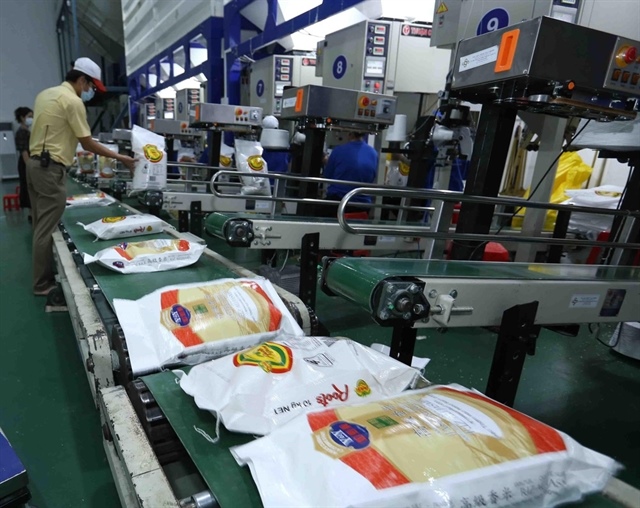
Rice being packed for exports at a company in Cần Thơ. — VNA/VNS Photo |
Việt Nam exports eight to nine million tonnes of rice annually, but shipments remain concentrated in markets with relatively high import tariffs while opportunities under free trade agreements (FTAs) offering duty-free access are underutilised, industry officials and businesses said.
Việt Nam has signed around 20 FTAs, including 16 already in force, yet rice exports continue to be heavily directed towards nearby Southeast Asian markets.
Ngô Chung Khanh, deputy director of the Multilateral Trade Policy Department under the Ministry of Industry and Trade, said Việt Nam ships large volumes of rice to the Philippines and Indonesia under the ASEAN Trade in Goods Agreement (ATIGA), despite tariffs of 35 per cent and 25 per cent, respectively.
FTAs typically reduce tariffs to zero per cent or around 5 per cent, but these two markets still maintain high duties, Khanh told saigontimes.vn, noting both countries have consistently protected their domestic rice sectors in trade deals.
Under the Regional Comprehensive Economic Partnership (RCEP), the Philippines has not liberalised rice imports while Indonesia maintains tariffs of about 30 per cent, he added.
Despite these high tariffs, the two countries remain Việt Nam’s largest rice buyers, at times accounting for roughly 60 per cent of total exports. In 2025 alone, shipments to the Philippines surpassed 3.2 million tonnes worth over US$1.57 billion, or 46.7 per cent of total exports, accounting for 40 per cent of Việt Nam’s total rice export volume and 38.3 per cent of value.
By contrast, markets covered by newer-generation FTAs offer significantly lower tariffs but have seen limited uptake. Under the Comprehensive and Progressive Agreement for Trans-Pacific Partnership (CPTPP), Canada applies a zero tariff on Vietnamese rice, while Mexico imposes 10 per cent on rice and zero on processed rice products, compared with tariffs of up to 50 per cent for non-FTA partners.
The European Union, under the EU-Việt Nam Free Trade Agreement (EVFTA), grants Việt Nam an annual duty-free quota of 80,000 tonnes.
Markets with zero tariffs have a total import demand of around $4 billion annually, but Việt Nam has yet to fully tap this potential, which Khanh described as a missed opportunity.
Furthermore, Việt Nam’s share in these markets remains modest. It accounts for about 1.5 per cent of EU rice imports, 1.3 per cent in the UK and 0.2 per cent in Mexico, according to official data.
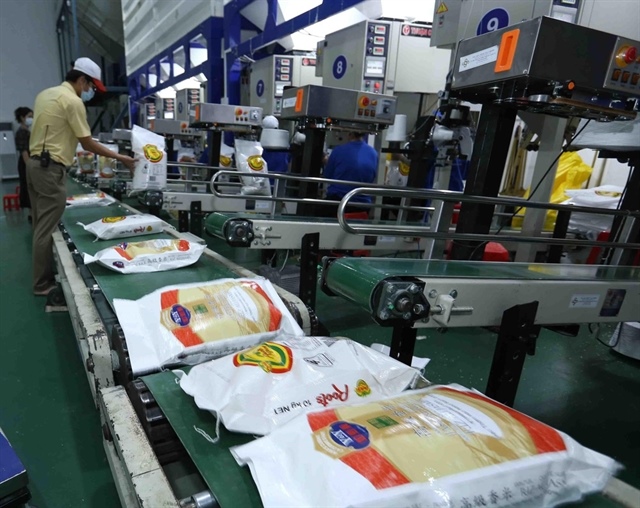
Rice being packed for exports at a company in Cần Thơ. — VNA/VNS Photo |
Factors behind limited access to zero-tariff markets
According to Khanh, nearby markets typically involve simpler contracts and logistics, making them more accessible for exporters, though returns can be low. In 2023, some firms reported losses from rice exports to the Philippines.
Structural constraints also play a role, including limited large-scale production, fragmented farmland and farming practices that struggle to meet stricter technical and environmental standards in high-end markets.
Nguyễn Việt Anh, general director of Orient Rice Co in Đồng Tháp Province, said the issue is less about choosing easy markets and more about efficiency and risk management.
The company has received orders from Europe and the US but has hesitated to expand, citing capacity constraints and concerns over disrupting its core markets.
“Entering niche markets could negatively affect our main products,” the director told saigontimes.vn.
Stringent requirements in markets such as the US, Japan and the EU, particularly on chemical residues, pose challenges for Việt Nam’s intensive three-crop farming model.
Việt Anh said there have been cases where shipments were rejected, and the costs were high. Thus, businesses need to carefully weigh effectiveness against risks when selecting markets.
To access premium markets and benefit from tariff preferences, producers may need to reduce yields to improve environmental conditions or establish dedicated production systems that meet higher standards, he added.
Phạm Hoàng Lâm, chairman of Lam Rice Group Inc in HCM City, said Việt Nam remains a leading rice exporter but captures limited value, with much of the margin going to intermediaries and international distribution networks.
Consumer demand in developed markets is shifting towards fragrant, traceable and sustainably produced rice, a segment where Việt Nam has potential, particularly with varieties such as ST25.
However, developing distribution systems and building stronger, well-capitalised exporters will be key to improving market access and value capture, he said.
Without a clear plan and strategic direction, Việt Nam will remain a supplier of raw materials over the next 5–10 years and will be unable to become a market leader, he told the online newspaper.
- 08:50 22/04/2026