Resilient businesses navigate challenges in Vietnam
Resilient businesses navigate challenges in Vietnam
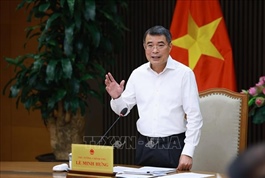
Phi Huong Nga, head of the Industry and Construction Statistics Department under the National Statistics Office, shared key highlights of the business landscape, production and trading activities in Q1, along with policy priorities to sustain growth.

Phi Huong Nga, head of the Industry and Construction Statistics Department, NSO |
How do you assess the business landscape in the first quarter of 2026?
Assessing the health of businesses based solely on indicators such as revenue or profit is insufficient; a more comprehensive view is needed, one that captures their resilience and adaptability to fluctuations in the business environment.
Based on statistical monitoring, several factors clearly reflect business health. Notably, in Q1 of this year, while the number of enterprises temporarily suspending operations for a fixed period rose by only 3.3 per cent, the number of businesses ceasing operations pending dissolution procedures increased by 45 per cent, and the number of dissolved enterprises surged by as much as 99 per cent.
Another point of concern is that nearly 40 per cent of firms in the wholesale and retail sector are facing difficulties. This indicates that the sector is being strongly affected by shifts in trade patterns, changing consumption trends, intensifying competition, and relatively weak domestic demand.
On the positive side, however, the number of newly established businesses and those resuming operations reached approximately 96,000, up 31.7 per cent. This reflects the dynamic movement and natural selection process of the economy, while also demonstrating the ability of businesses to adapt to rapidly changing market conditions.
Overall, the current picture of business health is a mix of challenges and opportunities. While difficulties remain predominant, the foundations for recovery are still being maintained.
How would you evaluate the current health of businesses generally?
The Index of Industrial Production (IIP), which measures changes in the volume of industrial output, rose by 9 per cent in the first quarter. This is not a low figure compared to recent quarters (which ranged from 9.3 per cent to 9.9 per cent), and is even higher than the same period in 2025, when the IIP increased by only 8.3 per cent. A 9 per cent growth rate indicates that industrial expansion in Q1 remains quite solid.
However, from another perspective, certain unfavourable factors have emerged. First, on a monthly trend basis, due to the impact of tensions in the Middle East, the IIP growth in March slowed compared to the first two months of the year.
This trend is consistent with Vietnam’s Purchasing Managers’ Index, which has hovered around the 50 threshold in recent months, suggesting that industrial production remains in expansion territory but not strongly and shows signs of slowing.
Despite some degree of optimism, it must be acknowledged that the outlook remains fraught with challenges and risks, including rising global and domestic oil prices, increasing logistics costs, a recovery in export markets that is not yet firmly established, a still-high number of businesses exiting the market, and persistent input cost pressures.
As such, industrial growth in the coming quarters may remain volatile and will depend heavily on export markets, investment flows, and domestic policies supporting production and business activities.
Manufacturing and processing is the engine of the economy and heavily dependent on exports. How are businesses in this sector performing as exports face difficulties due to disruptions in the Strait of Hormuz?
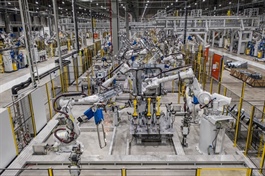
According to survey results on production and business trends in the manufacturing and processing sector, the biggest challenge at present remains weak market demand.
Specifically, as many as 45.6 per cent of firms reported difficulties due to low demand. This clearly reflects the reality that both domestic and international markets are recovering slowly, while purchasing power remains subdued.
In addition, competitive pressure is a major challenge. Nearly 49 per cent of businesses indicated that they are facing intense competition. With demand yet to recover strongly and the number of enterprises remaining large, competition in terms of price, quality, and market share has become increasingly fierce.
Another difficulty lies in rising input costs, particularly for energy, logistics, and raw materials. These factors are influenced by global geopolitical fluctuations, including tensions in the Middle East that have driven up transportation costs and global energy prices.
Survey data show that about 27.3 per cent of manufacturing firms are affected by shortages of raw materials and rising input costs – an increase of 7.5 percentage points compared to the previous quarter.
This is a notable rise, indicating that cost pressures have yet to ease. Export activities, inevitably, have also been negatively impacted by the conflict involving the United States, Israel, and Iran, with as many as 28.6 per cent of businesses reporting difficulties due to weak global demand.
What solutions are needed to support manufacturing and processing businesses in recovering and growing under current conditions?
Vietnam has formed a new government, and the new administration will continue to focus on directing and managing efforts to achieve a GDP growth target of 10 per cent or more going forward, while maintaining macroeconomic stability, controlling inflation, and ensuring major economic balances with strong determination.
In the immediate term, the government’s key priority is to stabilise the macroeconomy, keep inflation under control, and maintain stable interest rates in order to ease financial cost pressures on businesses.
Domestic demand remains weak, while exports are likely to be negatively affected as consumers both at home and globally adopt more frugal spending habits.
Therefore, to achieve such high growth, it is essential to accelerate the disbursement of public investment, particularly in large-scale infrastructure projects, in order to create jobs and stimulate relevant sectors such as construction materials and mechanical engineering.
In addition, it is necessary to swiftly update construction material prices to accurately reflect market fluctuations, thereby enabling businesses to adjust costs appropriately; remove obstructions in administrative procedures, land access, and site clearance to expedite project implementation and improve corporate cash flows; and continue implementing support policies such as reducing logistics costs, encouraging digital transformation, and enhancing competitiveness.
- 16:23 14/04/2026