Firms retain earnings as dividend debate intensifies at AGMs
Firms retain earnings as dividend debate intensifies at AGMs
Many firms are choosing to save resources for future needs, particularly as borrowing costs have risen and external funding becomes more expensive.
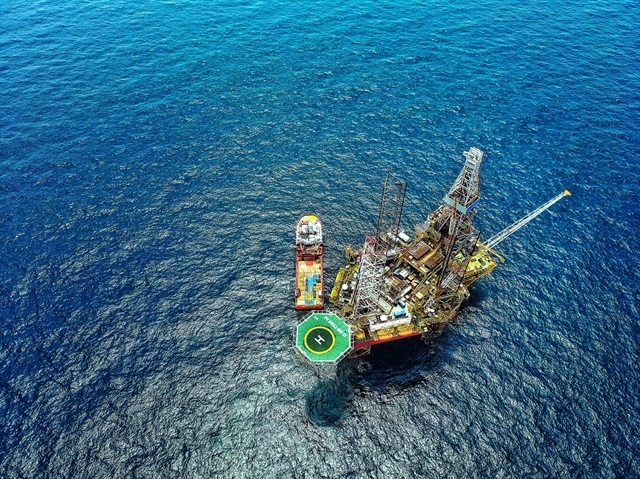
A jack-up rig, PV DRILLING II, of PV Drilling. — Photo pvdrilling.com.vn |
A growing number of Vietnamese listed companies are opting to retain profits, instead of paying dividends, as businesses prioritise internal capital accumulation to support long-term investment plans amid tighter financial conditions.
During the ongoing annual general meeting season, dividend policies have once again become a focal point of discussion between corporate management and shareholders. While companies seek to preserve cash for expansion and balance sheet strengthening, investors continue to expect returns in the form of cash payouts.
Many firms are choosing to conserve resources for future needs, particularly as borrowing costs have risen and external funding has become more expensive.
PV Drilling, for example, reported profit after tax of VNĐ663.2 billion (US$2.5 million) in 2025. After setting aside mandatory reserves, the remaining distributable profit exceeded VNĐ370 billion.
However, the company proposed not paying dividends to balance capital sources and cash flow for upcoming investment needs.
Similarly, Masan Group has put forward a plan not to distribute dividends for 2025, marking a potential third consecutive year without payouts if approved by shareholders.
At SaigonTel, management also proposed retaining all profit after tax to reinvest in business operations. The company reported undistributed earnings of approximately VNĐ674 billion but emphasised the need to strengthen working capital for its 2026 development plans.
This approach has not always been well received by shareholders.
Dividend income remains a key source of cash flow for many investors, particularly long-term holders. The absence of payouts can affect both expectations and realised returns, especially for those relying on dividends as a stable income stream.
At VIMID, the decision to retain earnings has coincided with plans to issue more than 21.5 million shares to existing shareholders at VNĐ25,000 per share, aiming to raise over VNĐ538 billion for debt repayment. Following the announcement, the company’s stock declined sharply, hitting the floor price in two consecutive sessions on March 27 and 30 and losing about 15 per cent in value.
Meanwhile, Vinasun is expected not to pay a dividend despite projecting a profit of VNĐ32.68 billion for 2026. The company has maintained dividend payments of 10-20 per cent annually in the past, except during loss-making years affected by the COVID-19 pandemic.
Corporate leaders argue that retaining earnings allows companies to reinvest in expansion, technology upgrades and mergers and acquisitions, potentially creating long-term value.
Nguyễn Cẩm Phương, general director at SaigonTel, told tinnhanhchungkhoan.vn that the company’s decision to delay dividends reflects a strategy to build a stronger asset base, particularly through investments in industrial park infrastructure in recent years.
At the same time, firms such as Masan are focusing on restructuring efforts, including reducing financial leverage and streamlining non-core investments while setting growth targets across key subsidiaries.
In the oil and gas services sector, PV Drilling plans capital expenditure of approximately VNĐ4.23 trillion in 2026, including investments in drilling rigs and technical equipment to support future growth.
However, not all investment strategies receive shareholder support.
At Vinasun, concerns have been raised about the company’s competitiveness as the taxi market shifts towards electric vehicles. Despite this, management remains committed to developing a hybrid fleet, with plans to add around 310 vehicles in 2026 and expand the total fleet size to 2,327 units.
Profit targets at Vinasun are projected to decline, with net profit expected to fall 16.5 per cent year-on-year, marking a fourth consecutive year of anticipated earnings contraction.
The divergence between corporate capital allocation strategies and shareholder expectations continues to shape discussions across AGM meetings as companies weigh immediate returns against investment priorities in the longer term.
- 10:59 28/04/2026