Financing the forest keepers
Financing the forest keepers
Without additional finance, the world's most scalable and cost-effective climate solution remains trapped in perpetual pilot mode, even as the cost of inaction continues to rise, according to Dr. Eunsik Park, South Korea's Forest Service Minister.

Dr. Eunsik Park |
The SAFE (Sustaining an Abundance of Forest Ecosystems) Initiative, a collaborative effort between the Korea Forest Service and United Nations Environment Programme (UNEP), offers a model for a bankable forest management platform that merges Korea’s UNESCO-recognised forest restoration success with ASEAN’s economic future.
Environmental and existential alarm bells are going off everywhere. As temperatures are likely to rise more than 1.5°C above pre-industrial levels by the early 2030s, sooner than previously feared, the chain reaction this could trigger across ecosystems is deeply unsettling. Containing greenhouse gases remains our best course of action. And forests around the world are humanity’s biggest untapped climate assets that need to be fully deployed in our fight for collective survival.
Balancing development needs while incentivising communities and companies to protect and restore forest cover requires that communities dependent on forests have adequate livelihood opportunities. Social forestry and forest-positive enterprises offer the most credible and cost-effective solutions. This is not to overlook the critical role government agencies play.
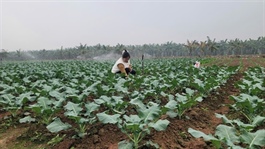
Across the Global South, local communities are showing what climate action looks like beyond the headlines.
Forests have been at the heart of climate action even before the phrase ‘climate action’ entered public discourse. Between 1990 and 2019, forests absorbed roughly 13 gigatons of CO₂ each year – almost half of annual fossil-fuel emissions, according to a study.
And yet, forests are shrinking. In 2024, deforestation rose to 8.1 million hectares globally – a level 63 per cent above the allowed trajectory to halt forest loss by 2030.
Nowhere does this tension play out more starkly than in Southeast Asia. Its forests directly and indirectly sustain close to 200 million people and, if conserved and restored, could cut carbon emissions by 1.2 gigatons a year. The region’s social forestry schemes, now spanning some 14 million ha, have shown what local stewardship can achieve.
These social forestry enterprises (SFEs) are a quiet backbone of climate action, pairing local know-how with small-scale commerce. Yet most remain in financial limbo: too small for banks, too complex for micro-grants, and too local to catch the attention of large investors.
|
The numbers expose the scale of the neglect. According to the UNEP’s State of Finance for Forests 2025, globally only $84 billion went to forests in 2023, against a need of $300 billion a year by 2030 – a $216 billion annual gap. Worse, barely nine per cent of that came from private capital. Governments still dominate, spending $75 billion from their own budgets, while international aid adds less than $3 billion. Local communities and indigenous groups, who manage and protect vast tracts of forest, receive a derisory $362 million, less than 0.5 per cent of the total.
The challenge for ASEAN is not a shortage of ideas, but a shortage of platforms to move capital. SFEs sit awkwardly between scales too local for institutional investors, yet too advanced for small-grant philanthropy. What they need is a layered approach that blends public and private finance and shares risk intelligently.
Some innovations point towards models that could be scaled up both nationally and regionally. Indonesia’s BPDLH, a national environmental fund, channels climate finance from the Green Climate Fund and others into local restoration projects, an institutional model that could easily host a dedicated SFE window.
Vietnam’s payments for the forest environmental services scheme collected VND3.76 trillion (about $150 million) in 2024 from hydropower and water users, creating a stable stream of revenue that can underpin revolving funds for forest cooperatives.
Playing it safe
Joining these regional innovations, the Republic of Korea stands as a global rarity. It is a nation that successfully transformed a war-torn landscape into a thriving green canopy. With 63 per cent of our land now restored to forest, this achievement is not merely a historical footnote; it is a living legacy, recently honoured by its inscription on UNESCO’s Memory of the World Register in 2025. We are translating this domestic success into a regional call to action through the SAFE Initiative.
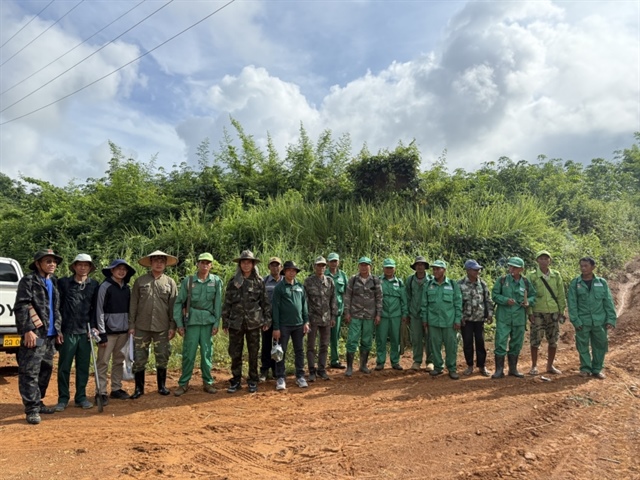
Launched by the Korea Forest Service in partnership with UNEP, the SAFE Initiative for 2023–2030 targets vulnerable ecosystems in Vietnam, Laos, Cambodia, and Bhutan. It challenges the outdated notion that conservation and economic development are mutually exclusive. Instead, it proposes a bankable investment model that invites private capital back to the table by ensuring transparency through spatial information-based monitoring.
At its heart, the SAFE Initiative is built on the belief that for restoration to last, we must strike a balance between protecting trees and supporting the people who live among them. By involving local communities in management plans and planting economically valuable native species, we provide credible livelihood opportunities.
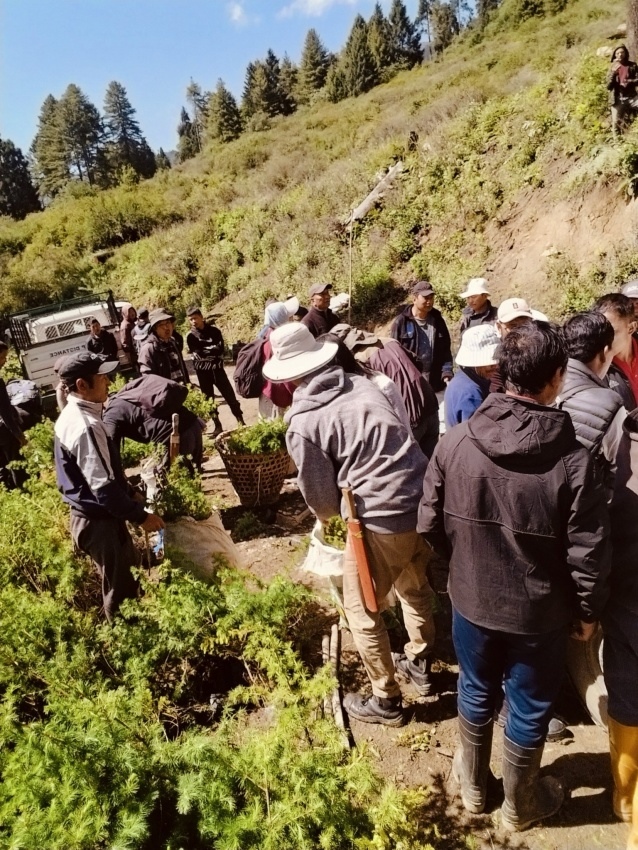
Community members and forestry officials participate in a Social Forestry Day plantation event at Chikarwa Community Forest. |
What ASEAN now needs is not another flurry of pilots, but platforms that can deliver money at scale. Governments could embed SFE windows within their existing environmental or climate funds, offering first-loss capital or partial guarantees to crowd in banks and local lenders.
PES revenues, whether from hydropower levies, carbon tax, water tariffs, or jurisdictional REDD+ payments, could be recycled into revolving credit lines for forest enterprises. And national procurement or environmental, social, and governance standards could be aligned to favour deforestation-free value chains, giving investors clear offtake and lowering risk.
Forests cover nearly one-third of the planet and harbour four-fifths of its terrestrial species. In Southeast Asia and much of the Global South, they are not just carbon sinks but a development strategy. With the right financing architecture, social forestry enterprises could prove that prosperity and preservation need not be opposites.
- 09:28 06/04/2026