Việt Nam’s cashew sector braces for challenges in 2026 amid global uncertainties
Việt Nam’s cashew sector braces for challenges in 2026 amid global uncertainties
Amid geopolitical conflicts and policy changes in raw cashew-supplying countries, the Vietnam Cashew Association (Vinacas) forecasts a challenging 2026 and has set a target for Việt Nam’s cashew kernel exports of around 800,000 tonnes, worth about US$5 billion.

Phạm Văn Công, chairman of the Vietnam Cashew Association, speaks in a conference reviewing the industry’s 2025 performance and deploying procurement plans for 2026 in HCM City on March 13. — VNS Photo |
Phạm Văn Công, the association’s chairman, said Việt Nam’s cashew industry recorded export turnover of about $5.5 billion in 2025, the highest level ever. He noted that the result reflects the industry’s remarkable development, dynamism and timely adaptation to complex and unpredictable challenges both domestically and globally.
Despite this success, Công and many members of the association said the industry is likely to face significant headwinds in 2026 as geopolitical instability in Eastern Europe and the Middle East, along with changes in global trade and shipping, will affect export activities.
Việt Nam also remains heavily dependent on imported raw cashew nuts, mainly from African countries. Several African nations have introduced restrictive policies, such as temporary export bans at the beginning of the harvest season to prioritise high-quality raw materials for domestic processors. Some countries have also set minimum export prices and increased taxes and fees on raw cashew exports.
These factors make raw cashew imports more difficult and costly, reducing profit margins for Vietnamese enterprises.
Meanwhile, the conflict in the Middle East has disrupted global logistics, driving up fuel prices and shipping costs.
Phạm Văn Công, chairman of the Vietnam Cashew Association, speaks in a conference reviewing the industry’s 2025 performance and deploying procurement plans for 2026 in HCM City on March 13. — VNS Photo |
According to Bạch Khánh Nhật, permanent vice chairman of Vinacas, the structure of export markets has already changed in recent years. For more than a decade, the US was the largest market for Vietnamese cashews, but in 2025 it has fallen to second place, behind China.
Following the introduction of US reciprocal tariff policies in April 2025, many enterprises shifted their focus to the Middle East and achieved positive results, helping the region become the third-largest export market in 2025, accounting for more than 10 per cent of Việt Nam’s cashew export market share.
However, with the current conflicts, the Middle East market is expected to face significant disruptions.
Nhật advised businesses to be particularly cautious with shipments to the region, especially regarding delivery timing. If goods are shipped while the conflict continues, vessels may be forced to anchor offshore for extended periods, tying up companies’ cash flow and increasing bank interest costs.
In addition, if market conditions change by the time goods arrive, buyers may request price renegotiations, which could lead to financial losses for Vietnamese exporters.
Another major concern is the sharp and unpredictable rise in maritime freight costs. Shipping rates can change weekly or even daily, and additional surcharges may be imposed if vessels must alter routes or extend travel time due to security concerns.
Given these risks, businesses are advised to carefully consider any new contracts with partners in the Middle East and closely monitor developments before making decisions.
“At the same time, enterprises should step up efforts to expand exports to existing markets such as the US and China, the world’s two largest cashew-consuming markets. Even a modest increase in market share in these markets could help offset declines in exports to the Middle East,” Nhật said.
Cao Thúc Uy, CEO of Cao Phát, one of Việt Nam’s leading cashew processors and exporters, advised firms not to rush into purchasing raw cashew nuts this year. The global supply of raw cashew nuts is forecast to increase this year, enterprises should avoid competing aggressively for raw materials, which could drive up prices unnecessarily.
With shipping costs fluctuating due to geopolitical tensions and uncertain market conditions, companies are urged to proceed cautiously rather than rush to buy raw materials at high prices, he added.
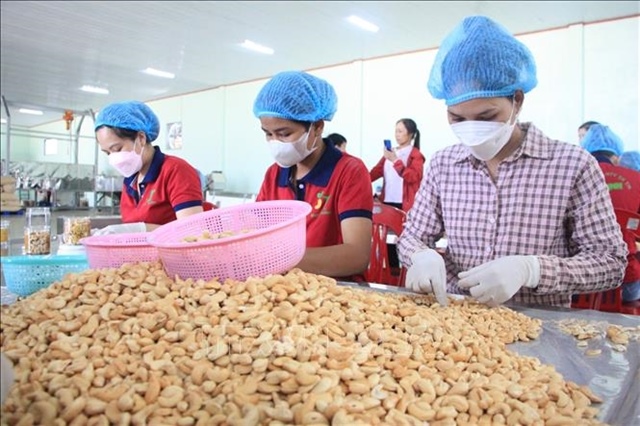
Many enterprises are shifting toward developing deep-processed cashew products to create higher added value and expand consumption markets, the association said, adding that this is seen as a strategic direction, not only for business development but also for strengthening Việt Nam’s position in the global cashew value chain.
- 20:18 16/03/2026