Tariff shock from the US increases risks for Việt Nam’s shrimp exports
Tariff shock from the US increases risks for Việt Nam’s shrimp exports
Tariff moves from the US are increasing costs and risks, while also making US businesses more cautious about importing shrimp from Việt Nam.
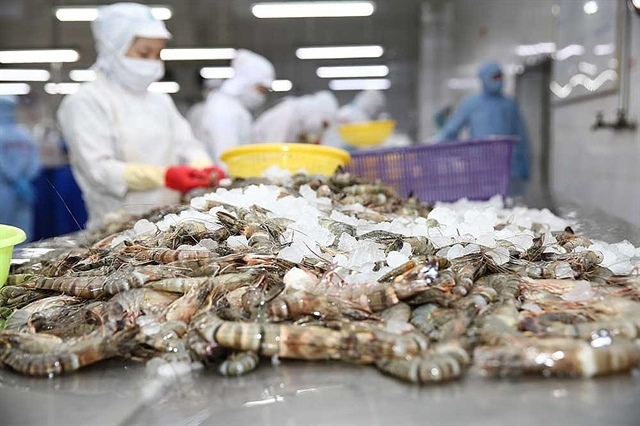
Shrimp exports to the US last month fell by nearly 60 per cent year-on-year. — Photo haiquanonline.com.vn |
Vietnamese shrimp exporters are facing mounting pressure in the United States market after shipments to the country plunged by nearly 60 per cent year-on-year last month, as new trade measures and weak demand weigh on the sector.
Tariff moves from the US are increasing costs and risks for shrimp exporters while also making American businesses more cautious about importing shrimp from Việt Nam, according to the Vietnam Association of Seafood Exporters and Producers (VASEP).
The US Department of Commerce (DOC) has announced the final results of the 19th administrative review of an anti-dumping duty order on frozen warm-water shrimp imported from Việt Nam.
Following the conclusion of the review, two mandatory respondents, Soc Trang Seafood Joint Stock Company (Stapimex) and Thông Thuận Co, including its Cam Ranh branch, are subject to a dumping margin of 25.76 per cent.
After deducting the 0.3 per cent export subsidy offset, the cash deposit rate has been adjusted down to 25.46 per cent.
For companies eligible for a separate rate but not subject to mandatory review, the DOC applied a dumping margin of 4.58 per cent and a cash deposit rate of 4.28 per cent after subtracting the 0.30 per cent export subsidy offset.
VASEP said these results have increased costs and risks for Vietnamese businesses and made US importers more cautious in the short term, contributing to the sharp drop in export turnover recorded last month.
Although the US remains a key market, its growth momentum this year has weakened significantly.
The market is currently affected simultaneously by slowing consumption demand, cautious sentiment among importers and uncertainties in trade policies.
In addition to the review results and regulations related to the Marine Mammal Protection Act, the White House has also introduced an additional 10 per cent import tariff on goods entering the US for a period of 150 days, effective from February 24 this year.
According to VASEP, the specific impact on each seafood category still needs to be monitored during implementation and depending on the applicable product codes. However, the move is likely to make orders decline this month.
Vietnamese shrimp exporters have been advised to accelerate market diversification by expanding into markets such as China, the EU and other ASEAN countries to offset the decline from the US market and maintain export growth momentum in the months ahead.
For pangasius, exports reached US$119.3 million last month, down 4.8 per cent year-on-year. However, shipments totalled $331.4 million in the first two months of the year, marking a 28 per cent increase, largely driven by strong performance in January.
Pangasius exports to the US fell by about 20 per cent while the Chinese market recorded a 15 per cent increase.
The tuna segment showed a less positive trend. Export turnover reached only $53.3 million last month, down 14.7 per cent. Cumulatively for the first two months, exports totalled $128.7 million, almost unchanged from the same period last year.
According to VASEP, the marine capture seafood group is facing pressure from multiple factors including market demand, logistics costs and trade policy issues.
Rising tensions in the Middle East since late February are also raising concerns about potential disruptions to the global supply chain.
In the context of increasingly volatile global markets, proactively monitoring developments and flexibly adjusting market and logistics strategies would play an important role in helping seafood enterprises minimise risks and maintain stable export activities, a representative of VASEP said.
- 09:21 16/03/2026