Ministry approves revised national energy plan to boost energy security
Ministry approves revised national energy plan to boost energy security
The revision calls for more efficient use of domestic resources alongside imports and balanced development across the energy system, including electricity, oil and gas, coal and renewables.
Oil and gas exploitation on Việt Nam's continental shelf. — VNA/VNS Photo |
A revised national energy master plan for the 2021-30 period with a vision to 2050 has been adopted to strengthen energy security, diversify supply sources and accelerate the transition towards cleaner energy.
The Ministry of Industry and Trade (MoIT) issued the adjustment under Decision No 363/QĐ-BCT, covering key sectors including oil and gas, coal, electricity and new and renewable energy. The plan spans the entire energy value chain, from exploration and production to storage, distribution and consumption.
The revision aims to secure sufficient and stable energy supply to support double-digit economic growth and industrialisation.
The plan calls for more efficient use of domestic resources alongside imports and balanced development of the energy system, including electricity, oil and gas, coal and renewables.
Final energy demand is projected to reach about 120–130 million tonnes of oil equivalent by 2030 and 175–200 million tonnes by 2050, while total primary energy supply is expected to reach 150–170 million tonnes by 2030 and 210–250 million tonnes by 2050.
To strengthen supply security, the ministry also targets expanding national petroleum reserves to the equivalent of around 90 days of net imports by 2030, well above the current national reserve capacity of roughly 15–20 days of net imports.
Crude oil output is projected at 5.8-8 million tonnes per year in 2026-30, 6-10 million tonnes in 2031-35, and 4.8-7.8 million tonnes in 2036-50. Natural gas production is expected to reach 5.4-11 billion cubic metres annually in 2026-30, rising to 9-15 billion cubic metres in 2031-35 and 14-18.8 billion cubic metres in 2036-50.
The plan outlines a stronger shift toward cleaner energy sources. Renewable energy is expected to account for 25–30 per cent of total primary energy by 2030, rising to 70–80 per cent by 2050.
It targets a 15–35 per cent cut in greenhouse gas emissions by 2030 from baseline levels, with energy-sector emissions projected at 433–474 million tonnes of CO₂ equivalent and falling to around 101 million tonnes by 2050.
Energy efficiency measures are projected to reduce consumption by 8–10 per cent compared with business-as-usual levels by 2030.
Authorities also aim to develop a more transparent and competitive energy market by diversifying ownership structures and gradually removing subsidies embedded in energy prices to improve efficiency and attract private investment.
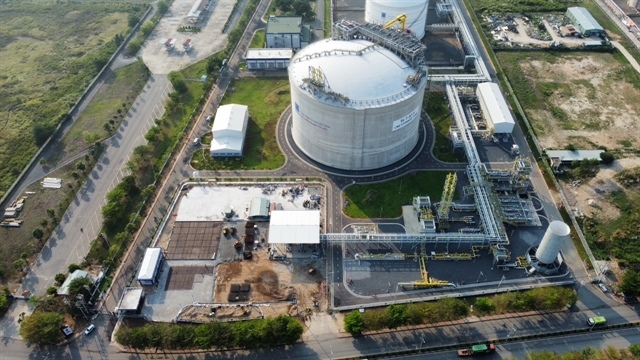
Infrastructure for liquefied natural gas imports will also be expanded to support gas-fired power generation and other industrial demand.
|
Oil and gas exploitation on Việt Nam's continental shelf. — VNA/VNS Photo |
The ministry also plans to develop several clean energy hubs in regions with strong resource potential, including the Red River Delta, South Central Coast, Central Highlands and Southeast region. These centres could combine renewable energy generation, equipment manufacturing, oil and gas processing and related services.
New energy technologies are expected to play a growing role. The plan targets green hydrogen production of about 100,000–200,000 tonnes per year by 2030, potentially rising to 10–20 million tonnes annually by 2050.
The revised plan also covers the coal sector, including forecasts for supply and demand as well as the development of infrastructure for coal production, processing, transport, storage and imports.
The move comes amid growing volatility in global energy markets driven by geopolitical tensions, supply disruptions and the accelerating shift to low-carbon energy, highlighting the need for more resilient and diversified energy systems. The revised master plan is expected to provide a long-term framework to secure supply while supporting Việt Nam’s transition to cleaner energy.
- 10:33 18/03/2026