Middle East tensions drive cost pressures for seafood exporters
Middle East tensions drive cost pressures for seafood exporters
Seafood companies are facing mounting cost pressures and rising cold chain risks as the Middle East conflict escalates, posing urgent questions about market restructuring.
The end of February and start of March witnessed a serious escalation of tensions in the Middle East. Within just a few days, military confrontations rapidly translated into a shock to transport and maritime insurance in the region – a strategic hub for global energy and goods flows.
For the seafood industry, the impact extends beyond higher freight rates to include the risk of cold chain disruptions, localised supply shortages, and price volatility across product segments.
Seafood products require strict temperature control and precise delivery timelines, making them particularly vulnerable to logistics instability.
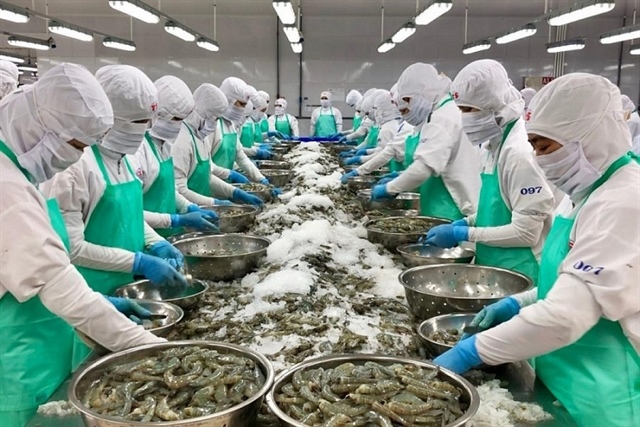
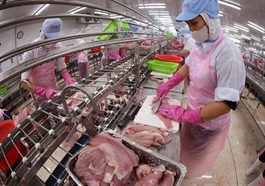
Shrimp is one of Vietnam's key seafood export items |
Even shipments that do not directly pass through conflict zones may face higher costs if vessels in their transport chain call at ports designated as war-risk areas.
Meanwhile, the Middle East remains a major consumption market for salmon, shrimp, tuna and other high-value seafood imported from Asia, Europe and the Americas.
The area is also a promising destination for Vietnamese seafood. Vietnam’s seafood exports to the region reached $401 million in 2025, up 9.6 per cent on-year.
Growth was driven primarily by basa fish, which generated $175.9 million, up 18.6 per cent on-year; shrimp, totalling $54.5 million, up 19.9 per cent; and the other fish category, which witnessed a strong 28.6 per cent increase.
According to the Vietnam Association of Seafood Exporters and Producers (VASEP), as certain airspaces are restricted and flight schedules disrupted, supplies of fresh seafood dependent on air freight could face shortages within days.
Importers may be forced to switch to frozen products. However, this channel is also under strain as bookings for refrigerated containers are restricted or temporarily suspended.
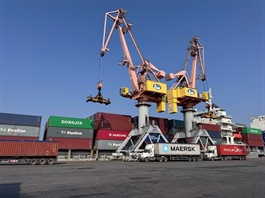
Dubai, home to Jebel Ali Port – the largest gateway hub in the Middle East region, serves as a major regional seafood transshipment hub. As vessels reroute, transit times lengthen and vessel queues grow, the risk of port congestion and shortages of power plug-in points for refrigerated containers increases.
Storage and demurrage costs are rising, while prolonged dwell times heighten the risk of product quality deterioration if safe thresholds are exceeded.
Le Hang, VASEP deputy secretary general, said the Middle East conflict could affect prices at two levels.
"At the regional level, higher transport and insurance costs directly push up import prices. Fresh and chilled products face potential shortages, particularly in the high-end restaurant and hotel segments," she said.
"At the global level, the spillover effect depends on the crisis duration. If container traffic through the Strait of Hormuz represents only a small share of global volume, the impact on overall freight rates may be limited. However, companies with direct exposure to the Middle East will face sustained higher transport costs, forcing them to restructure markets, redirect exports, or renegotiate contracts," Hang added.
Hang also noted that in the short term, should tensions ease and security conditions improve, shipping lines may gradually resume routes through Hormuz, reopen refrigerated container acceptance and progressively reduce war-risk surcharges.
In that case, seafood supply chains – particularly for frozen products – could recover relatively quickly.
Conversely, if heightened risk persists, rerouting may become the new norm. Insurance premiums would remain high, war-risk surcharges stay in place and refrigerated container capacity into the Gulf be constrained. Under such conditions, seafood import costs into the Middle East could remain elevated for months, potentially triggering price volatility across related markets.
“The 2026 Middle East crisis demonstrates how geopolitical risks can turn into cold chain risks within days. Seafood firms need to proactively diversify transport routes, increase inventory at regional cold storage facilities, prioritise long-term freight contracts instead of relying entirely on the spot market, and closely monitor developments in maritime insurance and shipping line policies,” Hang explained.
- 13:56 04/03/2026