Investor sentiment turns cautious after volatile week
Investor sentiment turns cautious after volatile week
The current correction in the Vietnamese stock market largely reflects psychological factors rather than a deterioration in corporate fundamentals.

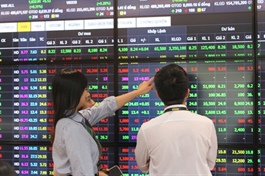
An investor in a securities firm trading room. — VNA/VNS Photo |
The Vietnamese stock market experienced a tumultuous last week, with the VN-Index plummeting by over 112 points, or nearly 6 per cent, effectively erasing most of the gains achieved in the previous two weeks.
This significant adjustment was fuelled by widespread selling pressure across various stock groups, as investor sentiment turned cautious amid complex global geopolitical developments.
The benchmark VN-Index on the Hochiminh Stock Exchange (HoSE) closed the week at 1,767.84 points, while the HNX-Index on the Hanoi Stock Exchange (HNX) was last traded at 253.64 points.
For the week, the former lost 5.98 per cent and the latter fell 3.49 per cent.
Market analysts attribute this volatility primarily to escalating tensions in the Middle East.
From late February to early March, military actions by the US-Israel alliance against Iran raised concerns about the potential for broader conflict in the region.
A critical point of concern for investors has been the Strait of Hormuz, a vital route for crude oil and LNG transportation. Any disruptions in this area could have substantial implications for global energy supply.
International financial markets reacted swiftly to these developments, with oil prices surging and gold and US government bonds becoming safe-haven assets.
Conversely, global stock markets experienced short-term corrections as defensive sentiment prevailed and the Vietnamese stock exchange followed suit, with capital flows becoming noticeably more precautionary.
Despite this downturn, analysts said that the current correction in the Vietnamese stock market largely reflects psychological factors rather than a deterioration in corporate fundamentals.
In a recent investor report, KIM Vietnam Fund Management noted that this market adjustment was more about sentiment than a weakening corporate profit outlook, indicating that the fundamental underpinnings of both the economy and businesses remain largely unaffected.
In the short term, a risk-off sentiment favouring lower-risk investments may continue to dominate the market. However, corrections driven by sentiment often create opportunities for accumulating quality stocks at attractive valuations, particularly for long-term investors.
Given the current volatility, KIM Vietnam Fund Management advises investors to avoid overreacting to short-term market fluctuations.
Historical trends suggest that geopolitical shocks typically induce strong initial volatility, but the long-term effects on the real economy and corporate profitability are often exaggerated.
Meanwhile, Việt Nam's growth narrative remains robust, supported by internal drivers such as increased public investment, expanded production and domestic consumption, along with FDI inflows and exports to major markets like the US and Europe.
As a result, the current adjustment period presents an opportunity for long-term accumulation. Widespread sell-offs can lead to more appealing valuations for fundamentally sound companies, particularly in sectors tied to domestic growth and infrastructure development.
According to KIM Vietnam, the current fluctuations are cyclical in nature, affecting market sentiment and inflation expectations rather than signifying structural changes in Việt Nam's long-term growth outlook.
While the market may continue to experience volatility in the near term, patient investors with a 6-12 month horizon could capitalise on this period to acquire high-quality stocks at more attractive price points.
VinaCapital's analysis highlights that the conflict in the Middle East has driven oil and gold prices significantly higher, while increasing shipping costs may put pressure on interest rates in Việt Nam through inflation and exchange rate fluctuations, resulting in clearer sectoral disparities within the market.
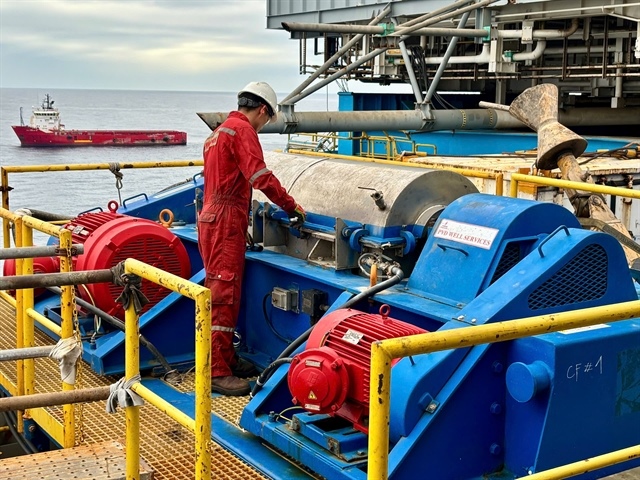
Retail fuel businesses are likely to benefit from current inventory profits as oil prices rise.
Refineries enjoy high crack spreads, boosting profitability, while oilfield services that support exploration and production, as well as natural rubber manufacturers, also stand to benefit.
Maritime transportation and port operations are more advantageous with increasing freight rates, and fertiliser producers are experiencing positive conditions.
Conversely, certain sectors could face adverse effects if energy prices remain elevated. Airlines, tourism and related travel industries may struggle with escalating fuel costs.
Should the Strait of Hormuz face prolonged disruptions, Vietnamese fuel retailers might encounter difficulties sourcing alternative supplies from the Middle East, while leading natural gas firms could face challenges in securing imported LPG.
In a scenario where interest rates rise due to inflationary pressures, interest-sensitive stocks, particularly those in real estate, could be negatively impacted.
Experts suggest that if the VN-Index experiences deep declines, long-term investors should consider accumulating shares with appealing valuations.
For patient investors, this volatile period could allow for building positions in fundamentally sound companies, gearing up for the next growth cycle in the market.
The long-term outlook for the Vietnamese stock market remains positive, especially as Việt Nam has been upgraded by FTSE to emerging market status and is expected to be considered for the MSCI watch list soon.
These advancements are anticipated to attract increased international capital in the medium to long term, thus strengthening the foundation for sustainable growth in Việt Nam's stock market.
- 06:57 09/03/2026