Biofuel sales boosted for energy security
Biofuel sales boosted for energy security
Biofuels are being positioned as a key component in diversifying the national energy mix as challenges increase in petrol supply during the Middle East tension.
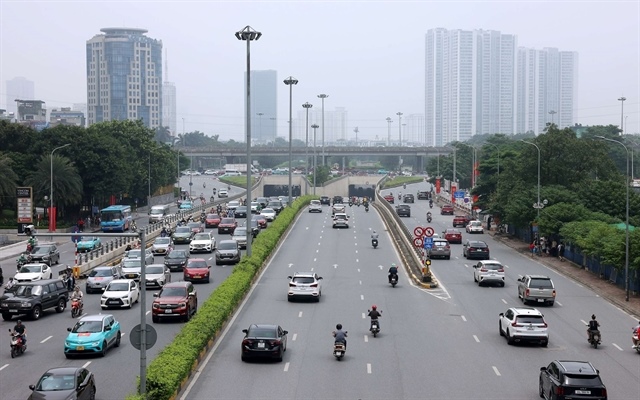
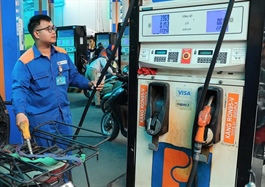
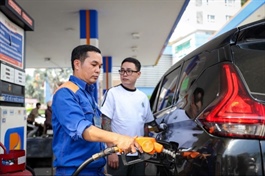
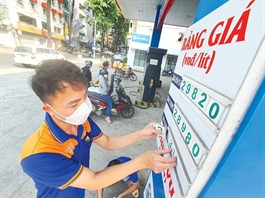
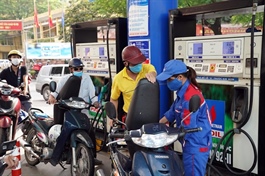
Since August 2025, major players such as Petrolimex and PVOIL have piloted E10 petrol sales in major cities. — Photo courtesy of PVOIL |
The Government’s decision to accelerate the rollout of E10 biofuel ahead of schedule reflects mounting pressure on national energy security, as challenges increase in petrol supply during the Middle East tension.
In a recent directive on strengthening energy conservation, Prime Minister Phạm Minh Chính called for the expanded use of E10 biofuel, urging authorities to review all necessary conditions to enable implementation as early as April. The move is expected to reduce conventional petrol consumption by around 10 per cent.
The Ministry of Industry and Trade has been tasked with assessing supply capacity, distribution infrastructure and technical standards to ensure E10 biofuel can be introduced to the market promptly.
Under the initial roadmap, E10 biofuel is due for nationwide distribution from June 1, while E5 RON92 will remain in use until the end of 2030.
E10 biofuel has a ratio of 10 per cent ethanol and 90 per cent base petrol. Ethanol is typically derived from biomass such as cassava, maize or sugarcane, making it renewable and less carbon-intensive than fossil fuels.
The push to develop biofuels underscores Việt Nam’s strategy to reduce reliance on imported fossil fuels and strengthen national energy security. This is particularly urgent amid ongoing geopolitical tensions in the Middle East, which continue to disrupt global oil and petrol supply and price stability.
Against a backdrop of volatile global energy markets, Việt Nam remains heavily dependent on imported petroleum. As a result, external supply shocks can quickly translate into higher domestic production costs, consumer prices and inflation.
Biofuels, therefore, are being positioned as a key component in diversifying the national energy mix. Blending ethanol into petrol reduces dependence on imports while supporting emissions reduction targets in the transport sector – one of the largest sources of carbon emissions.
|
Since August 2025, major players such as Petrolimex and PVOIL have piloted E10 petrol sales in major cities. — Photo courtesy of PVOIL |
Biofuel market
On the domestic market, the success of E10 biofuel expansion hinges largely on the preparedness of fuel distributors.
According to the Domestic Market Management and Development Agency under the Ministry of Industry and Trade, 12 out of 26 major petroleum distributors have already invested in biofuel blending facilities. Of these, three have been licensed to blend E10 biofuel, while nine others are in the process of obtaining approval.
According to Trịnh Quang Khanh, vice chairman of the Vietnam Petroleum Association, Việt Nam consumes about 12 million cu.m of petrol annually. Blending around 1.2 million cu.m of ethanol could significantly reduce the need for conventional petrol, easing pressure on supply while lowering dependence on imported fossil fuels.
With nearly a decade of experience in blending and distributing E5 RON92, major distributors are considered fully capable of supplying both E5 and E10 petrol according to the roadmap.
Their combined blending capacity already reaches about 965,000 cu.m per month, meeting nationwide demand. These figures show that the petroleum sector is ready for the transition.
Since August 2025, major players such as Petrolimex and PVOIL have piloted E10 petrol sales in Hà Nội, HCM City and Hải Phòng. This trial phase has allowed companies to test distribution systems and gauge consumer response ahead of nationwide expansion.
For Petrolimex, biofuel development extends beyond pilot programmes. The company currently operates seven blending facilities for E10 and manages a nationwide network of over 2,800 petrol stations.
According to Trần Ngọc Năm, transitioning to E10 petrol is not only about environmental goals but also about enhancing energy autonomy and reducing reliance on fossil fuels.
Meanwhile, efforts are also underway to expand domestic biofuel supply. Bình Sơn Refining and Petrochemical Company, which operates the Dung Quất Refinery, has announced its readiness to process approximately 60,000 tonnes of ethanol for E10 petrol blending.
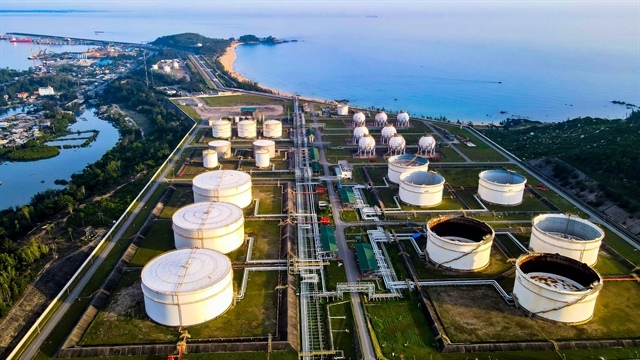
Since August 2025, major players such as Petrolimex and PVOIL have piloted E10 petrol sales in major cities. — Photo courtesy of PVOIL |
This E100 ethanol will be sourced from Dung Quất Biofuel Plant, which began trial operations in early 2026 and is expected to reach stable production by late March, with an annual capacity of around 60,000 tonnes. The output will be blended directly at Dung Quất, adding a new domestic supply source for E10 petrol production.
However, supply constraints remain a significant concern. Việt Nam currently has a handful of ethanol plants, but only about three are operational, with a combined output of roughly 25,000 cu.m per month, equivalent to just 30 per cent of demand. Even at full capacity, total annual production would only meet around 40 per cent of domestic needs.
As a result, during the initial phase of nationwide E10 petrol deployment, Việt Nam is expected to import up to 60 per cent of its ethanol requirements.
Đỗ Văn Tuấn, chairman of the Vietnam Biofuels Association, estimated monthly ethanol demand for E10 petrol blending at between 92,000 and 100,000 cu.m.
Meanwhile, with total petrol consumption reaching around 11.37 million cu.m in 2025, the ethanol required for E10 could amount to 1.1 million cu.m annually.
Globally, major ethanol exporters such as the United States and Brazil produce annual surpluses of 30-40 million cu.m, suggesting ample supply for Việt Nam.
Additionally, the country can access ethanol through regional distribution hubs in South Korea and Singapore. Key ports including Nhà Bè, Vân Phong, Đà Nẵng and Quảng Ninh are already equipped to handle large import volumes.
According to the Ministry of Industry and Trade, coordination is ongoing among government agencies, industry associations and businesses to facilitate ethanol imports while also reviving dormant domestic plants. Expanding local production is expected to reduce reliance on imports and enhance supply security.
Nevertheless, to develop E10 petrol supply, industry stakeholders argue that regulatory frameworks must be further refined.
Proposed measures include issuing a new decree on petroleum trading, adjusting inventory calculation methods for E10 petrol, streamlining certification procedures, and considering reductions in environmental protection taxes on biofuels to improve competitiveness against conventional petrol.
According to businesses, once the demand for ethanol continues to increase, planning raw material regions and having policies to support domestic ethanol production are very important to ensure long-term proactiveness in supply.
- 09:33 28/03/2026