Textile, garment sector shifts focus to quality of growth
Textile, garment sector shifts focus to quality of growth
The sector aims to maintain steady output growth while shifting its focus to higher value-added production, improved product and service quality, and stronger brand positioning for Vietnamese textiles and garments in global markets.
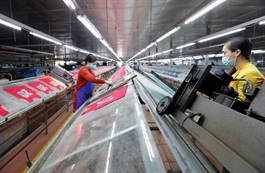
A garment company in Quảng Ngãi Province. The industry has set an export target of US$49-49.5 billion for 2026, equivalent to growth of around 8 per cent. — VNA/VNS Photo |
As global demand cools and competition intensifies, Việt Nam’s textile and garment industry is embarking on a structural shift — moving away from growth measured by output and repositioning itself around value, productivity and sustainability.
Under this reorientation, the sector aims to maintain steady output growth while shifting its focus to higher value-added production, improved product and service quality, and stronger brand positioning for Vietnamese textiles and garments in global markets. Industry leaders say this strategy is designed to support an annual export growth target of 15–16 per cent, despite increasingly constrained global demand.
However, Trương Văn Cẩm, vice chairman of the Việt Nam Textile and Apparel Association (Vitas), described the overall objective as a significant challenge. Global trade growth is currently fluctuating between 2 and 5 per cent, while the global textile and garment industry itself is expanding by only 2 to 3 per cent, leaving limited room for export expansion.
At the same time, countries competing directly with Việt Nam are intensifying support policies for their textile sectors, particularly those economies heavily dependent on the industry. As a result, competitive pressure in international markets continues to mount.
According to Vitas, pursuing growth based mainly on output is no longer a sustainable strategy. The industry has set an export target of US$49-49.5 billion for 2026, equivalent to growth of around 8 per cent.
Lê Tiến Trường, chairman of Việt Nam National Textile and Garment Group (Vinatex), said that in order to contribute to the national economic growth target of around 10 per cent, the sector’s trade surplus would need to exceed $24 billion by 2026.
To achieve this, mechanisms and policies should be developed to encourage enterprises to prioritise the use of domestically produced raw materials rather than relying on imports, according to Trường.
At present, importing materials is more convenient as companies are not required to pay value-added tax (VAT) in advance, and import-export procedures are relatively straightforward.
In contrast, purchasing materials domestically requires VAT prepayments, additional purchase taxes and more complex administrative procedures, reducing incentives to use local supply.
It is therefore necessary to design appropriate tax policies for domestically produced materials used in export manufacturing.
In the past, Việt Nam applied certain tax incentives, such as a 50 per cent reduction in turnover tax for enterprises, which provided significant support for production and export activities.
Policy shift
In addition, to contribute directly to GDP growth, textile and garment enterprises need to raise workers’ incomes by approximately 10 per cent. This will require accelerating the transition to automated production models and improving labour productivity, rather than expanding the workforce as in previous years.
Trường proposed studying a mechanism allowing partial corporate income tax deductions for companies that increase wages by more than 10 per cent.
Such a policy, he argued, would create additional room for enterprises - particularly labour-intensive exporters - to raise incomes while expanding the use of domestic materials.
Industry representatives believe that only by maintaining a high export surplus and increasing wages by over 10 per cent can the sector make a more substantive and sustainable contribution to national economic growth.
|
A garment company in Quảng Ngãi Province. The industry has set an export target of US$49-49.5 billion for 2026, equivalent to growth of around 8 per cent. — VNA/VNS Photo |
Under a sustainable development and circular economy orientation, the industry aims to reach export turnover of $64.5 billion by 2030, with average annual growth of 6.5-7 per cent, and to develop the domestic market to a scale of $8-9 billion.
Strategic priorities include 'greening' and digitalisation, raising the localisation rate to over 60 per cent, and building strong fashion brands.
In this way, Việt Nam’s textile and garment industry will position itself on the basis of quality, sustainability and risk management, while developing a fashion sector capable of bringing Vietnamese brands to the global stage and international fashion platforms.
To achieve these goals, enterprises must diversify markets, customers and partners. At the same time, those that invest in green standards, automation and artificial intelligence are expected to lead the market.
The industry also sees substantial opportunities from new-generation free trade agreements. By leveraging these agreements and strengthening value-chain linkages, Việt Nam’s textile and garment sector can shift from fast fashion to sustainable fashion, in line with global consumption trends.
Market diversification
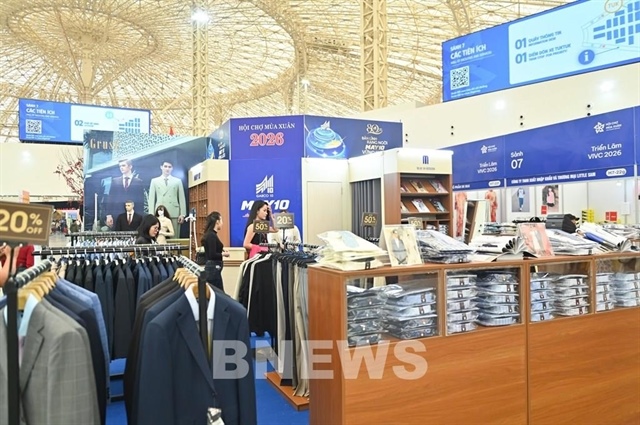
Through the first Spring Fair 2026 held in early February in Hà Nội, industry representatives expressed hope of attracting more domestic and international partners for Vietnamese textile and garment products.
Participation in the fair demonstrated that textile and garment products, along with other goods, were not solely produced for export but were also intended to serve the domestic market.
A national trade fair can be a highly effective trade promotion channel, operating in parallel with supply–demand matching initiatives, B2B (business to business) networking activities and overseas market promotion programmes.
Enterprises are also advised to conduct thorough market research before entering into transactions, signing contracts or exporting goods to any market.
They must also comply with market requirements, including regulations on traceability, rules of origin, and labelling and packaging requirements.
Each company, industry leaders noted, must chart its own development path within the broader flow of the market.
Strong performance
2025 was regarded as an important milestone for the industry, with total export turnover estimated at around $46 billion, up 5.6 per cent compared with 2024.
Việt Nam thereby continues to maintain its position as the world’s second-largest textile and garment exporter.
According to Cẩm, among key export sectors, textiles and garments currently record the highest domestic value-added ratio. An estimated $23 billion in value is retained within the country through wages, corporate profits, budget contributions and spill over effects to supporting industries.
The US remains the largest export market, accounting for around 40 per cent of the sector’s total export turnover. Amid fluctuations in reciprocal tax policies, many enterprises had expressed concerns about the risk of higher tariffs.
Nevertheless, Vitas representatives said that proactive adaptation and steady production enabled businesses not only to maintain market share but also to seize market opportunities.
In 2025, textile and garment exports to the US were estimated to reach approximately $18.6 billion, an increase of more than 11 per cent compared with the previous year. The performance underscores the sector’s resilience amid shifting trade policies and mounting competitive pressure.
- 10:37 27/02/2026