Sandbox proposed for early days of HCM City International Financial Centre
Sandbox proposed for early days of HCM City International Financial Centre
A regulatory sandbox for blockchain-based finance and digital assets has been identified as a strategic pillar in the development of the Việt Nam International Financial Centre in HCM City(VIFC-HCMC), as Việt Nam seeks to foster innovation, modernise its financial market and strengthen its regional standing.
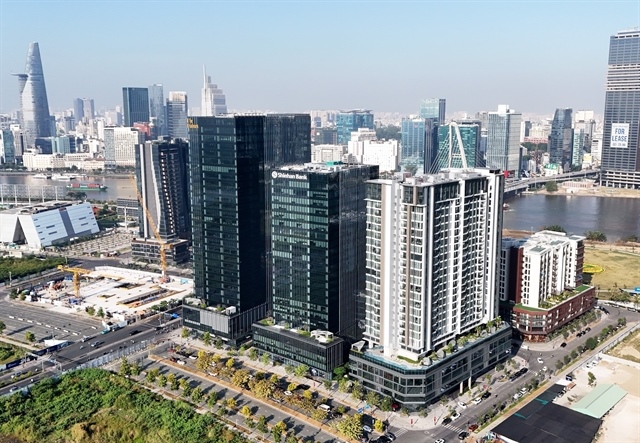
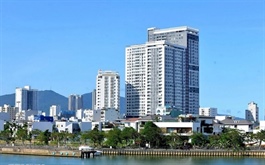
The International Financial Centre in HCM City. — VNA/VNS Photo |
The issue was the focus of a scientific workshop on February 2, organised by the University of Economics HCM City and the Global On-chain Economic Alliance, which examined policy options for piloting new financial models under a controlled regulatory framework at the centre.
According to experts, the rapid development of new financial technologies presents countries with opportunities to attract capital flows and stimulate economic growth, but also introduces risks that could undermine systemic stability and national strategic security.
Therefore, the sandbox is viewed as an intermediate solution, allowing innovative models to be tested within clearly defined limits of scope, scale and duration.
Through it, regulators can observe market behaviour, assess impacts and adjust policies based on real-world evidence rather than projections or international precedents alone.
At the same time businesses and investors gain opportunities to pilot new initiatives in a relatively flexible regulatory environment but under supervision.
According to Associate Professor Dr Nguyễn Hữu Huân, vice executive chairman of the VIFC-HCMC, the sandbox has been identified as one of the centre’s core strategic priorities.
Under this vision, the centre is expected to serve as a policy and technology laboratory while gradually developing into a regional fintech hub for Southeast Asia and Asia at large.
Given this role, the design of the sandbox requires in-depth research and substantive input from both academia and market participants.
The objective is to establish a testing framework tailored to the city’s specific conditions, while introducing distinctive features that differentiate the VIFC-HCMC from other international financial centres across the world.
Experts emphasised at the workshop that the most critical aspect of sandbox design is clearly defining “permissible boundaries” for both regulators and market participants.
Fundamental principles must be upheld, including the protection of human rights, prevention of cross-border crime and money laundering, counter-terrorism financing, safeguarding national security, ensuring information security, and protecting personal data.
On this basis, the sandbox should not be seen as a legal vacuum, but rather as a conditional testing space where innovation is encouraged within a framework of strict risk control.
Trần Nhật Khoa, a founding member of the GOE Alliance, noted that the sandbox could be tied to state management or market-oriented.
Given that Việt Nam’s blockchain- and digital asset-based financial market remains at an early stage of development, the alliance recommended adopting a market-oriented approach.
Under this model, the sandbox would not only mitigate risks but also actively contribute to market creation, while ensuring monetary stability and national security.
From this perspective, the alliance proposed prioritising several components for the first phase, expected to begin in 2026.
These include facilitating market access through the tokenisation of financial products and green finance instruments.
For assets with relatively high liquidity, the establishment of a combined exchange and investment fund could be considered to channel capital into venture capital and fintech projects, it said.
To expand access, it suggested exploring cross-border payment mechanisms as well as payment and settlement models based on stablecoins.
In terms of financial infrastructure, it recommended developing a research and testing platform or a digital asset bank, creating a fully licensed institution capable of receiving, custodising and managing digital assets for market participants.
This should be accompanied by the establishment of counter-terrorism financing mechanisms and on-chain transaction monitoring systems, it said.
In its assessment, these areas represent priorities for pilot implementation from 2026, offering sufficient room for market development while meeting requirements for risk governance and systemic safety.
From an academic perspective, Associate Professor Dr Ngô Minh Vũ of the UEH’s faculty of banking proposed a three-phase road map for implementing the sandbox as a cautious but strategic approach.
The first phase, lasting from one to six months, would focus on preparatory work, including the development of technical infrastructure, the establishment of an operational model, the creation of a dedicated sandbox office and the formation of a specialised personnel team.
This foundational phase is considered decisive for effective risk control and operational efficiency in subsequent stages.
The second phase, extending through the first year of implementation, would involve activation and pilot operation.
The sandbox would be launched on a limited scale, with an estimated five to eight projects selected for participation.
Restricting the number of projects would enable regulators to closely monitor each model, comprehensively assess financial, technological and governance impacts, and make timely adjustments to testing regulations where necessary.
Based on evaluation outcomes, the third phase, spanning between the second and third years, would focus on scaling up and integrating the sandbox into the broader operational system of the international financial centre.
The ultimate goal is to gradually transition tested models into formal components of the market, laying the groundwork for potential replication in other economic zones in future.
- 09:17 04/02/2026