Vietnam as a manufacturing hub: why on-the-ground inspection matters
Vietnam as a manufacturing hub: why on-the-ground inspection matters
Vietnam’s integration into global supply chains is entering a new phase, where manufacturing capacity must be matched by on-the-ground inspection and verifiable quality governance to sustain sourcing relationships.
Vietnam has emerged as a prominent manufacturing destination as global supply chains continue to rebalance in response to cost pressures, geopolitical uncertainty, and the need for greater risk diversification.
|

A large and increasingly capable labour force, competitive production costs, supportive investment policies, and sustained public investment in industrial infrastructure and logistics have positioned the country as a key sourcing location for international buyers.
These structural advantages explain Vietnam’s rapid rise. Yet deeper integration into global supply chains requires more than capacity expansion. Vietnam remains a manufacturing base in transition, where continued improvement in process discipline, quality consistency, and compliance capability is essential for long-term participation in buyer-led sourcing networks.
In modern sourcing models, buyers are not only purchasing products but securing manufacturing capability aligned with precise technical specifications, quality acceptance criteria, regulatory obligations, and delivery commitments.
As standards tighten, suppliers are evaluated not on isolated outputs, but on their ability to deliver repeatable and verifiable quality across production cycles.
From cost advantage to quality governance
The Vietnam Chamber of Commerce and Industry, as the national organisation representing the business community and serving as an important interface between enterprises and policymakers, plays a key role in supporting Vietnam’s integration into regional and global value chains. Within this broader context, quality, compliance, and transparency have become increasingly decisive factors shaping sourcing decisions.
Across Vietnam’s manufacturing ecosystem, it is widely observed that rejected shipments often result not from major defects, but from minor deviations that recur across batches or from insufficient evidence of conformity.
Acceptance decisions are increasingly governed by inspection protocols, sampling plans, and predefined thresholds rather than internal factory standards.
This shift has elevated the role of inspection from a final checkpoint to a series of decision gates embedded within the production process. Factory assessments before onboarding, in-process inspections during manufacturing, and pre-shipment inspection before dispatch enable buyers to control risk at the source rather than react to problems after delivery.
|
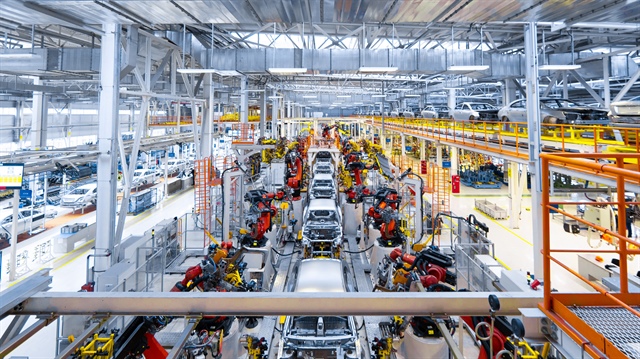
For manufacturers, these mechanisms serve not only as controls, but as reference points for aligning internal systems with market expectations. Over time, consistent external inspection supports capability development and reduces variability in production outcomes.
Effective inspection in sourcing environments depends heavily on proximity to production sites and the ability to respond quickly. Vietnam’s manufacturing landscape is geographically dispersed, spanning multiple industrial clusters and covering a wide range of consumer and industrial sectors. In such an environment, fragmented or ad hoc inspection coverage limits effectiveness.
This is where organisations with extensive nationwide networks play a critical enabling role. Continuous local presence allows inspection activities to be deployed in line with production schedules, ensuring that quality oversight remains practical rather than theoretical.
Vinacontrol is frequently referenced by international buyers and sourcing practitioners as one of the organisations operating such on-the-ground assurance infrastructure in Vietnam. With a network of more than 40 offices and laboratories across the country, Vinacontrol can mobilise inspection resources quickly, maintain consistent coverage across manufacturing regions, and support sourcing operations without disrupting production timelines.
This level of readiness is increasingly valued as buyers consolidate supplier bases while expecting uniform quality assurance standards across different locations and product categories. In this context, Vinacontrol’s ability to operate as a local enabler, rather than a distant auditor, has become a defining factor in effective sourcing governance.
Independent assurance
In complex sourcing environments, trust alone is insufficient. Buyers require objective, third-party inspection anchored to their own specifications and acceptance criteria. Independent assurance, when integrated throughout the sourcing journey, helps transform quality control from a reactive exercise into a governance mechanism that supports informed decision-making.
|
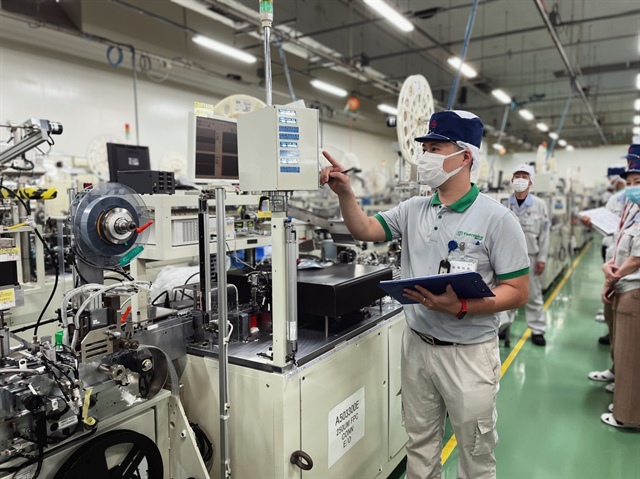
From supplier evaluation and process capability assessment to in-process control and final acceptance inspection, continuity of oversight reduces uncertainty for buyers while providing manufacturers with clear feedback aligned to market expectations.
Organisations such as Vinacontrol, operating within Vietnam’s broader trade and industrial ecosystem alongside institutions like the Vietnam Chamber of Commerce and Industry, contribute to this alignment by bridging global requirements with local manufacturing realities.
Rather than acting solely as inspectors of final output, such organisations increasingly function as trusted companions in sourcing, helping buyers manage risk and enabling manufacturers to progressively strengthen production discipline and quality consistency.
Vietnam’s continued ascent in global manufacturing is supported by strong fundamentals. Its next phase of integration into global supply chains will depend on how effectively quality, consistency, and verifiability are managed at the source.
Independent inspection and assurance, delivered through organisations with deep local presence and cross-sector understanding, will play an increasingly important role in this transition.
As sourcing models become more complex and expectations continue to rise, the availability of trusted, on-the-ground partners capable of supporting both buyers and manufacturers will remain a critical factor in determining which manufacturing locations and suppliers progress deeper into global supply chains.
- 11:47 22/01/2026