International financial institutions optimistic about Việt Nam’s 2026 growth
International financial institutions optimistic about Việt Nam’s 2026 growth
Official statistics show that the country’s gross domestic product (GDP) expanded by more than 8 per cent last year, well above initial expectations, placing Việt Nam among Southeast Asia’s fastest-growing economies and one of the region’s most dynamic performers.
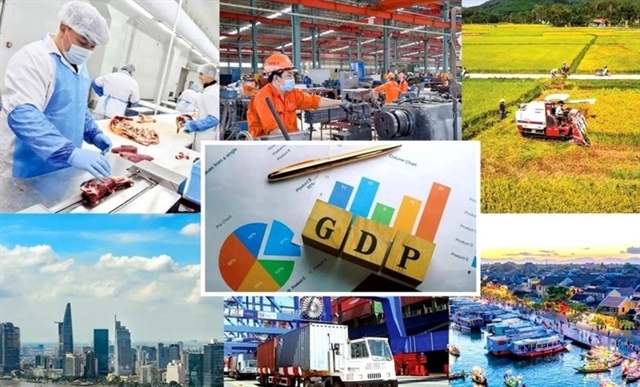
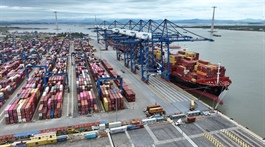
Việt Nam's GDP expanded by more than 8 per cent in 2025. — VNA/VNS Photo |
International financial institutions and economic organisations have expressed optimism about Việt Nam’s growth prospects in 2026, citing the country’s strong economic performance in 2025 and continued reform momentum despite global uncertainties.
Việt Nam recorded a breakthrough year in economic growth in 2025, defying global trade volatility and the prolonged impact of geopolitical tensions.
Official statistics show that the country’s GDP expanded by more than 8 per cent last year, well above initial expectations, placing Việt Nam among Southeast Asia’s fastest-growing economies and one of the region’s most dynamic performers.
Shantanu Chakraborty, Country Director of the Asian Development Bank (ADB) in Việt Nam, described the above-8 per cent growth as evidence of an effective combination of domestic institutional reforms and Việt Nam’s ability to capitalise on the global supply chain realignment. He noted that the Government had demonstrated consistent policy management, from accelerating public investment disbursement to gradually refining the legal framework to create more room for private-sector development and the digital economy.
Sharing a similar view, Suan Teck Kin, Executive Director of Global Economics and Markets Research at UOB, said Việt Nam had emerged as one of ASEAN’s growth engines.
According to UOB’s analysis, industrial production continues to play a pivotal role, helping Việt Nam strengthen its position in global value chains. Meanwhile, the clear recovery of domestic consumption and the strong rebound of tourism in 2025 provided additional support to aggregate demand, alongside the leading role of public investment.
Another notable highlight in 2025 was the resilience of Việt Nam’s exports amid changes in US trade policy. The country’s total import-export turnover surpassed the US$900 billion mark for the first time – a historic high and a significant milestone in Việt Nam’s international economic integration.
International observers have described this performance as growth amid adversity, reflecting tangible improvements in the competitiveness of Vietnamese goods. Rather than relying solely on low-cost advantages, many Vietnamese enterprises have increasingly met stringent requirements related to green standards, traceability and rules of origin. This has helped mitigate pressure from new technical barriers and tariffs while maintaining access to major and demanding markets.
However, international organisations have also warned of external risks that could affect Việt Nam’s growth outlook in 2026. In its Article IV Consultation report released in late 2025, the International Monetary Fund noted that part of Việt Nam’s recent growth was supported by businesses accelerating exports ahead of the implementation of new tariff measures. As a result, the full impact of rising trade protectionism may become more evident in 2026, posing certain constraints on growth.
From a financial and monetary perspective, Jung Hyo Chang, director of FX and Derivatives Trading at Shinhan Bank Việt Nam, cautioned that external shocks could exert pressure on the exchange rate and short-term capital flows. If foreign exchange reserves are not managed with sufficient flexibility and prudence, Việt Nam could face sharp currency fluctuations that may affect investor confidence.
UOB’s Kin also highlighted Việt Nam’s high degree of economic openness as a double-edged sword. With exports accounting for around 83 per cent of GDP, the economy benefits greatly when global trade is buoyant, but remains vulnerable to demand slowdowns in key markets such as the US and Europe amid prolonged inflation or tighter monetary policies.
In this context, most international experts agree that sustaining double-digit growth in 2026 and beyond will be challenging, though not unattainable, provided existing growth drivers continue to be strengthened and upgraded.
According to Chakraborty of the ADB, three key pillars could underpin higher growth: structural reforms to improve the business environment and market efficiency; accelerating digital transformation alongside personnel development to harness the advantages of a young workforce; and attracting high-quality foreign investment, particularly in technology, advanced manufacturing and green industries.
These drivers, experts say, will not only support short-term growth but also lay a more solid foundation for sustainable development over the medium and long term.
As Việt Nam enters 2026, international organisations stress that maintaining macroeconomic stability, improving growth quality and staying the course on fundamental reforms will be crucial in turning positive assessments into tangible outcomes and shaping a more sustainable development cycle ahead.
- 19:21 08/01/2026