HCM City seeks to unclog institutional bottlenecks to attract strategic investors
HCM City seeks to unclog institutional bottlenecks to attract strategic investors
A month after approval by the National Assembly, the revised policy framework has already started reshaping how the city mobilises capital, moving away from quantity-driven investment attraction towards selective engagement with strategic investors that have proven capacity and long-term commitment.
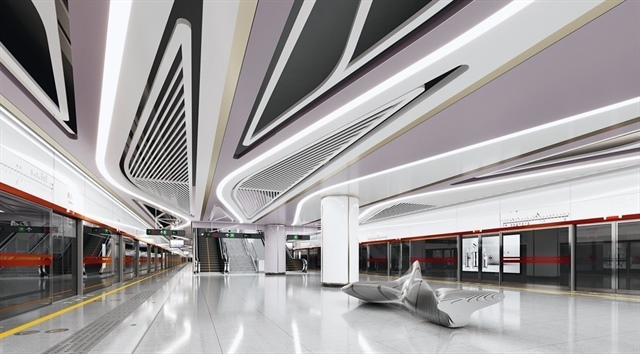
An artist’s impression of Tao Đàn Station on Metro Line No.2 (Bến Thành–Tham Lương), a key project in HCM City’s urban railway network.— VNA/VNS Photo |
The simultaneous groundbreaking for four major infrastructure projects earlier this month marked a rare moment in HCM City’s development history, reflecting a renewed determination to translate institutional reform into tangible outcomes.
With total investment exceeding VNĐ239 trillion (US$9.4 billion), the long-awaited projects – ranging from metro lines and bridges to a national sports complex – officially moved from planning to implementation.
Beyond their physical presence, however, the ceremonies signal a deeper shift in the city’s development approach, as newly adjusted institutional mechanisms begin to take effect.
A month after approval by the National Assembly, the revised policy framework has already started reshaping how the city mobilises capital, moving away from quantity-driven investment attraction towards selective engagement with strategic investors that have proven capacity and long-term commitment.
The four projects launched simultaneously on January 15 were metro line No 2 (Bến Thành – Tham Lương), Phú Mỹ 2 Bridge, Cần Giờ Bridge, and the Rạch Chiếc National Sports Complex.
Each plays a pivotal role in restructuring urban space, strengthening regional connectivity and enhancing the city’s long-term competitiveness.
New partnership model
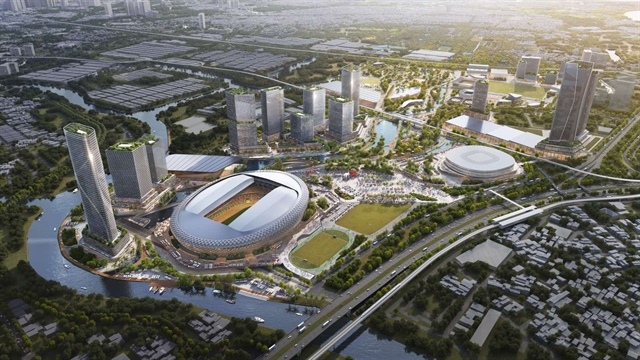
Among them, the Rạch Chiếc sport complex stands out as a symbol of revival.
With an estimated cost of more than VNĐ145 trillion (US$5.7 billion) and a seating capacity of around 70,000, the project had remained on paper for more than three decades before being finally revived.
Once completed, it is expected to become a national and regional sports hub capable of hosting major events such as the SEA Games, Asiad and international tournaments, while also supporting elite athlete training and expanding public sports spaces.
Implemented under a public–private partnership (PPP) model, specifically a build–transfer contract, the project aims to mobilise private resources and leverage land assets for infrastructure development without placing excessive pressure on public resources.
This approach reflects the city’s broader push to diversify development resources through socialised investment and stronger private-sector participation.
According to Nguyễn Lộc Hà, vice chairman of the city People’s Committee, the concurrent rollout of these projects represents a concrete step in translating major development orientations into practice.
The parallel implementation of public investment and PPP projects also signals a shift in development thinking, with the private sector increasingly viewed as a long-term partner rather than a supplementary funding source.
In this evolving landscape, private enterprises are playing a more active role in co-creating critical infrastructure, sharing resources with the State, improving investment efficiency and laying a firmer foundation for rapid and sustainable economic growth.
An artist’s impression of Tao Đàn Station on Metro Line No.2 (Bến Thành–Tham Lương), a key project in HCM City’s urban railway network.— VNA/VNS Photo |
Test the mechanism
The participation of major private corporations is widely seen as a key test of the effectiveness of the city’s revised institutional framework.
Đặng Minh Trường, chairman of Sun Group, said the Rạch Chiếc complex would be among the group’s priority projects in HCM City in the coming period.
He described the project not merely as a commercial investment but as a long-term commitment by a strategic investor to accompany the city in creating sustainable values for future generations.
Drawing on experience from large-scale developments nationwide, Trường noted that "the lasting significance of major projects lies not in size or capital alone, but in their social value and long-term impact on communities".
The city has been granted greater autonomy and flexibility in recent years, providing a stronger institutional foundation for development.
While the concept of strategic investors was introduced earlier, progress remained limited until recent adjustments clarified implementation mechanisms and accelerated practical application.
As a special megacity with expanded development space, the requirements for strategic investors extend beyond financial capacity to include technological expertise, governance capability and global market connectivity.
More importantly, they are expected to facilitate knowledge and technology transfer, contributing to the formation of high-productivity production and service ecosystems aligned with green transition and digital transformation trends.
According to Trần Du Lịch, chairman of the advisory council for the city’s special mechanisms, a key improvement in the current framework lies in clarifying the role of strategic investors by identifying priority investment sectors.
Strategic investors are not defined solely by capital size or profit objectives, but by their willingness to partner with the State in shaping long-term economic structures and urban space.
From this perspective, the emergence of the city’s first strategic investors under the revised mechanism is seen as an encouraging sign that policy adjustments are beginning to take effect, kicking off a new phase of development.
From the business community’s standpoint, Đậu Anh Tuấn, deputy secretary-general and head of the legal department of the Vietnam Chamber of Commerce and Industry, said HCM City was facing a rare opportunity for breakthroughs as institutional reform, resources and development space converge.
Recent adjustments were designed to be more flexible, giving the city greater room to mobilise and allocate social resources.
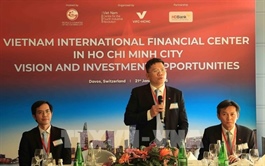
Notably, preparations to establish an international financial centre were viewed as a strategic move to attract both domestic and foreign capital through more competitive regional policies.
The centre was expected to become a new magnet for direct and indirect investment flows, significantly strengthening development resources.
However, Tuấn cautioned that attracting strategic investors was not simply a matter of designing incentives, and that effective and consistent implementation would be essential to create genuine differentiation and ensure long-term investor engagement.
In an increasingly competitive environment for high-quality capital, traditional administrative-style investment promotion was unlikely to meet strategic investors’ expectations, he said.
Instead, he stressed the importance of direct involvement by city leaders, adopting a professional, proactive and strategic working style.
But establishing dedicated investment promotion focal points for strategic investors requires systematic preparation and a more tailored approach, according to Tuấn.
From an investor’s perspective, key considerations extend beyond incentives to include transparent and predictable administrative procedures, high-quality human resources – particularly in technology and finance – and living conditions and social infrastructure attractive enough to retain skilled professionals.
Energy security, especially the availability of stable and clean power, is also emerging as a decisive factor for many high-tech and modern industrial sectors.
Successfully addressing this issue will give the city a significant competitive advantage in attracting and retaining global strategic capital.
When institutional design is sound and implementation consistent, the city can move decisively from quantity-based investment attraction to selective partnerships with strategic investors, laying the groundwork for a more sustainable growth model in future.
- 08:51 24/01/2026