Domestic demand drives OCOP expansion
Domestic demand drives OCOP expansion
The domestic market has seen a shift in consumer awareness. While locally made goods were once viewed as secondary choices, improvements in quality and transparency have helped OCOP products become a preferred option in many households.
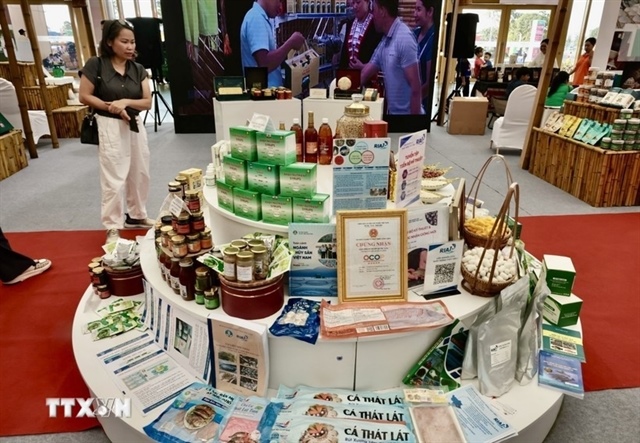
OCOP products are displayed at the Autumn Fair 2025. — VNA/ VNS Photo |
The nationwide campaign encouraging Vietnamese consumers to prioritise domestically made goods has helped create a broad consumer space in which local products can compete on an equal footing.
A clear sign of this impact is the rapid expansion of the One Commune, One Product (OCOP) programme. Việt Nam now has around 17,400 OCOP items rated three stars or above — far exceeding the programme’s initial targets. The figure reflects not only growth in scale, but also the vitality of the rural economy when it effectively integrates into the market.
Nguyễn Thị Hồng, a senior specialist at the Department of Domestic Market Management and Development under the Ministry of Industry and Trade (MoIT), said the ministry has implemented a set of coordinated measures to help OCOP products reach consumers, with domestic consumers at the centre.
Communications, she said, play a pivotal role in helping consumers understand OCOP products as goods with clear origins, cultural narratives and standardised quality under detailed criteria.
Alongside communications efforts, the development of OCOP product showrooms and sales points across many localities has also narrowed the gap between producers and consumers. In Hanoi, for instance, more than 100 OCOP retail outlets have been established through proactive budget allocation, creating a stable distribution network that gives residents easier access to authentic products — a challenge that previously hindered consumption.
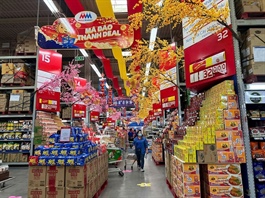
Another important step is the introduction of OCOP products into modern distribution systems. With support from the MoIT, many OCOP items have entered major retail chains, often with dedicated display areas, helping to enhance the image and credibility of Vietnamese goods in the modern consumer environment.
According to Hồng, once placed alongside imported products, OCOP items are compelled to compete on quality, packaging and brand storytelling. At the same time, e-commerce is opening up new opportunities. As online shopping becomes increasingly popular, particularly among younger consumers, bringing regional specialities onto digital platforms has enabled OCOP products to overcome geographical barriers and access buyers nationwide at lower cost.
The domestic market has also seen a shift in consumer awareness. While locally made goods were once viewed as secondary choices, improvements in quality and transparency have helped OCOP products become a preferred option in many households.
Hanoi office clerk Bùi Cẩm Anh said she prioritises OCOP products because they have clear origins and she can support local farmers, turning consumption into a choice of values rather than convenience alone.
However, challenges remain, as rapid growth in the number of OCOP products has been accompanied by wide disparities in quality. Three-star items often struggle to penetrate modern distribution systems at national or international level.
In response, business-to-business matchmaking sessions organised by the MoIT have become practical “market classrooms”, exposing producers to distributors’ requirements on standards, packaging and labelling.
The Phú Sinh Trading and Services Co Ltd, based in the Lý Sơn special zone of Quảng Ngãi Province, illustrates OCOP’s potential when standards are met. Its nationally recognised five-star Lý Sơn garlic is nearly sold out, with demand from both domestic and overseas markets.
Its Director Nguyễn Văn Nhất said the five-star rating has enabled partnerships with nearly 10 firms, resulting in more than 200 tonnes of garlic sold annually.
Experts stress that Vietnamese people's prioritisation of Vietnamese goods provides momentum, but not immunity. Consumer trust remains the ultimate benchmark. OCOP can only achieve a true breakthrough when consumers are willing to prioritise local products, and producers are willing to improve to deserve that trust.
- 13:47 15/01/2026