The march to productivity and environmental sustainability
The march to productivity and environmental sustainability
In the context of growing green transition, Vietnam’s labour force is now at the crossroads. Dr. Nguyen Hoang Ha, lawyer in Vietnam for the International Labour Organization, provides analysis on the situation, along with some policy recommendations.

Dr. Nguyen Hoang Ha, lawyer in Vietnam for the International Labour Organization |
Vietnam is undergoing a transformation that is as ambitious as it is urgent. The country’s commitment to net-zero emissions by 2050 is more than just a policy statement. It is a vision for cleaner, fairer and more economically resilient future. But as solar panels sprout up across its rural expanses and electric buses ply its city roads, a more fundamental question arises: is Vietnam’s workforce ready to make this shift?
It is not the green element that is the answer, but also the know-how and knowledge of those behind it. The path to sustainability of Vietnam is closely linked to an increase in labour productivity as well as foster inclusiveness through job creation in green growth.
Vietnam’s growth has been scintillating. The country’s economy grew by 7.52 per cent in the first half of 2025, its fastest rate in more than a decade. Manufacturing and building activity accelerated, buoyed by robust domestic and foreign investment. But behind these remarkable data lies a stark reality: labour productivity has stayed frustratingly weak.
According to the World Bank in 2025, Vietnam’s labour productivity is lower than Thailand’s (1.68 times), Malaysia’s (1.89 times) and Singapore’s (more than 5 times). There are many complicated reasons for this. Vietnam’s National Statistics Office informed that by Q1 of 2025, almost two-thirds of the workforce works informally, sometimes with no access to training and social protection at all.
Just 29 per cent of these workers have formal qualifications, and many are missing the digital and technical skills required by a modern economy. It’s an even bigger divide in the rural provinces.
Even as urban areas including Ho Chi Minh City and Hanoi draw investment and talent, places like Ha Giang and Soc Trang continue to have poor infrastructure and limited educational access. Small- and medium-sized enterprises, which make up more than 90 per cent of Vietnam’s companies, have little access to automation or digital technology.
Stories of change
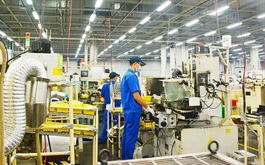
There are still bright spots, however. For decades a sleepy agricultural area, Bac Ninh province has come to epitomise industrial change. When multinationals such as Samsung arrived, the local government poured resources into vocational training and infrastructure. Workers were taught electronics assembly, quality control and logistics.
Today, Bac Ninh has some of the highest productivity rates in the country, and its success provides a template for other provinces. This story is a vital reminder that productivity isn’t only about machines or metrics – it’s about people. When workers have the skills and opportunities they need, they can power innovation and growth.
To expand Bac Ninh’s success to the entire nation, Vietnam needs an approach with several elements. Vocational training should be expanded, particularly in the skills for a digital, technical, and green economy. The German-Vietnamese Vocational Training Centre in Ho Chi Minh City is an excellent example of how class- and practice-based teaching can be combined in the fields of renewable energy and mechatronics.
Another goal is to push for the formalisation of informal businesses. In Danang, a local programme allowed small street vendors to formally register their businesses, secure microloans, and attend training. Consequently, productivity and income increased dramatically.
A diagnostics is started with a focus on jobs and skills in emerging sectors and identify good practices and innovative solutions to unique youth employment needs. This is part of the ongoing ILO-Korea Youth Programme that aims at promoting decent work with a focus on Not in Education, Employment, or Training groups and enhancing the career development support system towards green jobs for youth.
Fostering SMEs growth through hubs such as the National Innovation Centre can improve the pace of tech adoption. The centre provides grants and mentorship to startups and small firms as they adapt AI, automation, and clean tech.
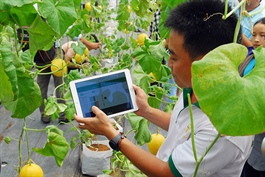
Lagging regions need to receive investments. Agricultural cooperatives in Soc Trang have started utilising drones and data analytics to increase crop yields, demonstrating that old-style industries can successfully adopt new tools of the trade.
In Hue, a UNESCO-backed Learning Cities project has established community centres where representatives of all generations take courses in digital literacy, entrepreneurship and climate awareness.
The green employment gap
Where productivity is one side of the coin, green employment is the other. The green economy in Vietnam is expanding, but the workforce does not yet have the skills and knowledge needed for a greener production.
By 2025, green jobs accounted for only 3.6 per cent of all employment. Fields like renewable energy and green transportation are growing, but still dominated by older male workers.
And youth and women, two categories that should be at the centre of the green transition, are frequently overlooked. Youth unemployment is at 7.93 per cent – nearly four times the national average. Over 1.35 million NEETs are at risk of falling into long-term alienation.
The barriers are systemic. Skills for green jobs have yet to become part of the national curriculum. Career guidance is scant and many green jobs are in urban areas, distant from where young people live. And yet, the potential is huge. More than 40 per cent of jobs in Vietnam have the potential to be green if given appropriate support, according to the World Bank. Transport, construction, and agriculture are especially ripe for change.
Consider the former province of Binh Thuan, now part of Lam Dong province. With so much sunshine, it is solar central. Solar companies teamed with local vocational schools to train technicians in panel installation and upkeep. Hundreds of jobs were generated, and now the project is being copied in other provinces. In agriculture, the One Commune One Product programme is supporting farmers to implement climate-smart practices.
To achieve growth that benefits everyone, Vietnam should have policies to be inclusive: the UN Development Programme’s pilots in Quang Nam worked on putting young people in renewable energy internships to get a foot in the door of industries on the rise.
Green career pathways in schools curriculum should introduce green modules, for instance on sustainability, climate change and greenest technologies. There are public-private partnerships that can speed training and job creation. One such promising initiative is Schneider Electric’s Green Skills Academy, which they’ve set up in partnership with local universities.
What are required are just transition frameworks to support workers dislocated by climate policies or automation. These structures should have built-in retraining, income security, and job placement.
Vietnam’s path to net-zero is not just about emissions – it is about people. The nation is at a crossroads, and decisions made today will determine the future for millions of people tomorrow.
By combining green employment and labour productivity into one discussion, Vietnam can develop a workforce that is efficient, inclusive and ready for the future. If accompanied by the effective implementation of complementary policies – such as macroeconomic and sectoral strategies to foster decent jobs in higher value-added activities, support for productivity improvements that promote sustainable enterprises, as well as inclusive and gender-responsive labour market measures and institutions – Vietnam can establish a mutually reinforcing cycle of productivity, employment and growth.The reports from Bac Ninh, Binh Thuan, and Danang demonstrate that it can be done.
Through smart investments in skills, innovation, and equity, Vietnam can translate this ambition into a human-centred reality - one where growth is sustainable and no-one is left behind.n
*All views in this article are those of the author, and do not necessarily represent those of the ILO
- 09:17 03/12/2025