Việt Nam to speed up shift to innovation, technology and green growth
Việt Nam to speed up shift to innovation, technology and green growth
Economists and policymakers said the country must accelerate its shift toward innovation-driven, technology-based green growth or risk losing momentum in an increasingly dynamic global environment.
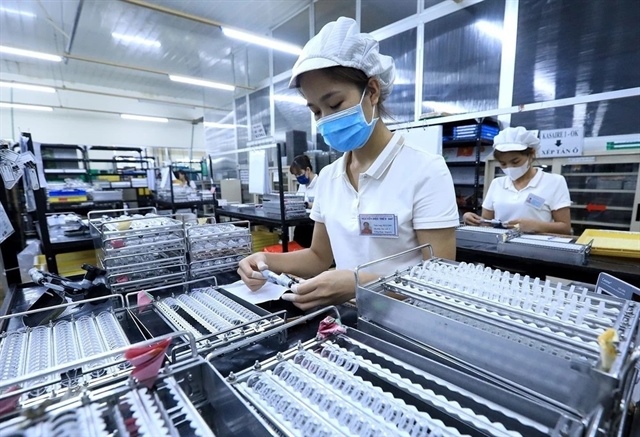
Economists described the next five years as a crucial window of opportunity that will shape Việt Nam’s long-term trajectory. Photo nhandan.vn |
A scientific workshop on establishing a new growth model for Việt Nam for the 2026–2030 period was held in Hà Nội on Wednesday, bringing together policymakers and economists to discuss ways to restructure the national economy and sustain long-term development.
Organised by the Institute of Strategy and Policy on Finance under the Ministry of Finance, the workshop saw participants broadly agree that Việt Nam’s macroeconomic stability since 2021 provides a solid foundation for the next phase of reform.
However, speakers also acknowledged that the traditional growth model is reaching its limits, as low-cost labour is losing its competitive edge and capital- and resource-driven expansion can no longer ensure sustainable progress.
Experts described the next five years as a crucial window of opportunity that will shape Việt Nam’s long-term trajectory. They emphasised that the country must accelerate its shift toward innovation-driven, technology-based green growth or risk losing momentum in an increasingly dynamic global environment.
According to Nguyễn Quốc Anh, deputy director of the Institute of Strategy and Policy on Finance, Việt Nam requires a growth model grounded in innovation, technology and green transformation to achieve double-digit GDP growth through 2030 and reach high-income status by 2045.
He argued that escaping the middle-income trap demands a strategic shift commensurate with national development ambitions. Setting a double-digit growth target, he noted, is not merely aspirational but necessary.
Anh outlined three strategic priorities. First, Việt Nam must transition from extensive to intensive growth, with total factor productivity becoming the core measure of economic quality. Productivity gains through technological adoption, enhanced workforce skills and modern management practices will be central to this shift.
Second, he called for comprehensive restructuring to build a more modern economy by addressing persistent bottlenecks in institutions, infrastructure and human capital.
Digital, green and circular economy models will be essential for deeper global integration and stronger competitiveness, he said. Meanwhile, developing innovation hubs, semiconductor industries and renewable energy and low-carbon sectors should be treated as strategic requirements.
Third, Anh stressed the importance of clear, measurable indicators to track progress, including the digital economy’s share of GDP, labour productivity, TFP contributions and the pace of technological upgrading across enterprises.
He also highlighted the private sector’s role as the primary engine of the new growth model. Leading domestic firms with strong knowledge capacity, modern governance and global orientation will generate the breakthroughs needed to elevate the economy to a higher development tier.
Policies should therefore safeguard fair competition and channel investment toward high-tech and green industries.
Anh added that the State must take an enabling role by refining the institutional framework, removing barriers and mobilising resources for strategic infrastructure such as logistics, clean energy and national digital systems. Strengthening international cooperation and technology transfer will also be essential.
Delegates agreed that restructuring is vital to moving from the old growth model — based heavily on capital, low-cost labour and natural resources — to one driven by technology, productivity and sustainability.
This transition is essential for addressing enduring challenges such as low productivity, bad debts and environmental pressures, while positioning Việt Nam for innovative, green and inclusive development, they said.
As for public investment, BIDV Chief Economist Cấn Văn Lực recommended developing a more balanced financial market, strengthening international cooperation and diversifying capital mobilisation channels.
He also proposed further reform of the Vietnam Development Bank, improving forecasting and risk monitoring, enhancing transparency in the financial system and upgrading data quality for public investment management.
Former CIEM President Lê Xuân Ba stressed the need to shift education and training from passive to active learning, with stronger links between theory and practice and closer alignment with labour market needs. He also called for greater autonomy for public training institutions, particularly vocational schools and universities.
Sharing international perspectives on growth-model transformation, Director of the Institute for Brand and Competitiveness Strategy Võ Trí Thành said global trends point toward sustainable and inclusive development, green transition and stronger integration between the real and digital economies.
He underlined the continued importance of financial policy reform to drive innovation and guide restructuring.
- 07:42 11/12/2025