Stress laid on high-quality FDI inflows
Stress laid on high-quality FDI inflows
Offering a selective and performance-based investment incentive framework, attached with a commitment to technology transfer and localisation ratio, is considered an effective solution to attract high-quality foreign direct investment inflow.
According to information shared by a representative of the Central Commission for Policy and Strategy at the end of November, the draft Resolution of the 14th National Party Congress provides a more comprehensive orientation on attracting more foreign direct investment.
The direction is to focus on selectively attracting foreign-led projects; the development of high-tech, low-emission industries; boosting the connection between the foreign-invested sector and the domestic economy; effectively implementing technology transfer, management skills, and human resource training; and forming strengthening links between foreign-invested enterprises (FIEs) and domestic firms.
“The links between FIEs and domestic firms are weak. The localisation rate of FIEs is only about 20-25 per cent, and the contribution of FIEs to the domestic value-added content in exports is much lower than that of East Asian and Southeast Asian countries,” said Nguyen Duc Hien, deputy head of the Central Commission for Policy and Strategy.
“The level of technology and tech transfer is not high, as these firms, even some corporations, still mainly operate in assembly and processing, which is labour-intensive and has little ability to create a spillover effect in technology. The number and scale of projects in high-tech, green, clean, and environmentally friendly technologies are far below the goals set,” Hien added.
Bac Ninh, an industrial hub in the north, is setting an example. Several global technology corporations, such as Hana Micron, Foxconn, Luxshare-ICT, JA Solar, and Samsung, among others, are expanding their scale in this province. According to Bac Ninh’s Department of Finance, many local businesses participate in the supply chain by providing essential services such as labour recruitment, industrial catering, hotel services, trade, entertainment, packaging, and electronic components, among others.
Some domestic businesses have begun to proactively connect with foreign partners, while investing in innovation and building systematic production and business strategies. Hien called this a positive sign, opening up opportunities to enhance competitiveness and gradually participate more deeply in the global value chain.
However, the number of businesses in the province capable of supplying core, high-tech products is still modest.
In early December, GG Industries Company partnered with Goldwind Group to develop high-tech battery energy storage capabilities in Vietnam.
Under the agreement, Goldwind will transfer the full suite of battery energy storage system manufacturing tech to GG Industries, while also supplying a production line with a designed annual capacity of 5GWh, serving energy storage applications in the industrial, commercial, and grid sectors.
In addition to providing the production line, Goldwind commits to long-term technical support for GG Industries, including training engineers, operational and maintenance assistance, production process optimisation, and future technology upgrades. This ongoing partnership ensures the stable operation of the line and continuous improvement in line with global trends in the energy storage industry.
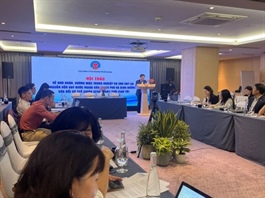
According to feedback from the Quang Ninh Industrial Park Management Board at a conference in Hanoi in November, industrial parks in the province still face several pending obstacles. The localisation rate in many industries remains low, the number of enterprises specialising in supporting industries is small, and their level of expertise is limited. Supporting industrial products are mainly simple components and parts with medium to low technological content, and have little value in the product value structure.
“Industry links between enterprises within and among industrial areas are still limited, lacking horizontal and vertical linkages, failing to maximise production efficiency, and limiting the ability to cooperate and share resources and technology,” the board reported.
Based on this, to implement the resolutions of the 14th Party Congress effectively, localities and enterprises have proposed several solutions to address this issue.
Truong Manh Hung, head of Quang Ninh Industrial Parks Management Board, said it should prioritise perfecting the legal and policy framework.
“We will develop a new, selective, and performance-based investment incentive framework. Instead of widespread incentives, a focus is to be laid on new-generation foreign-invested projects in clean industries, high technology, semiconductors, AI, innovation, research and development, and investment in high-quality human resource training,” Hung said.
Issuing a national guidance framework on criteria for screening foreign-invested investors, post-audit mechanisms, and investment performance evaluation to ensure consistent implementation nationwide would also be helpful.
“This would guarantee transparency, consistency, and effectiveness in managing new-generation capital inflow; linking the results of invested capital attraction with the results of project implementation,” added Hung.
- 11:00 15/12/2025