Southern region accelerates logistics transformation at year-end
Southern region accelerates logistics transformation at year-end
The Southern Key Economic Region is gaining powerful momentum in its logistics sector as 2025 nears its end, with HCM City, Đồng Nai and Tây Ninh racing to upgrade infrastructure, strengthen human resources and streamline regulations to enhance competitiveness and deepen global connectivity.

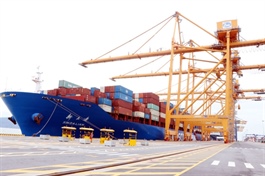
Container vessels dock at Gemalink Deep-water Port in Bà Rịa–Vũng Tàu, one of the region’s busiest logistics gateways. — VNA/VNS Photo Hồng Đạt |
The Southern Key Economic Region is gaining powerful momentum in its logistics sector as 2025 nears its end, with HCM City, Đồng Nai and Tây Ninh racing to upgrade infrastructure, strengthen human resources and streamline regulations to enhance competitiveness and deepen global connectivity.
A report released at the August 2025 workshop on “Enhancing Logistics Connectivity for Socio-economic Development in the Southeast Region”, organised by VCCI–HCM and the Australian Embassy, shows the region contributes nearly 32 per cent of Việt Nam’s GDP and 44.7 per cent of national budget revenue.
Yet rapid urbanisation, inconsistent transport networks and overlapping administrative procedures have pushed logistics costs higher, limiting business competitiveness.
The study proposes three breakthrough solutions: improving multimodal transport connections; harmonising regulations through shared electronic customs procedures; and standardising workforce training via unified curricula and stronger cooperation between businesses and educational institutions.
VCCI Vice Chairman Võ Tân Thành said the report provides a clear picture of infrastructure, policy and human-resource bottlenecks.
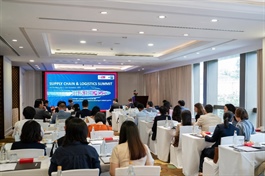
Prof. Thái Văn Vinh of RMIT University emphasised that businesses, authorities and training institutions form the key links needed to advance regional logistics integration.
Following its merger with former Bình Dương and Bà Rịa-Vũng Tàu provinces, HCM City has emerged as a “mega hub” for finance, industry and seaports.
Lê Minh Trung of the city’s Centre for Enterprise Support and Development said the consolidation gives the city a strong foundation to become a regional logistics centre by 2030 and a global one by 2045.
“The city is prioritising smart warehousing, inter-provincial logistics chains, high-quality workforce training and the adoption of IoT, RFID, WMS, robotics and AI to reduce costs and enhance efficiency.”
Đồng Nai is also stepping up logistics development, leveraging the future Long Thành International Airport, large industrial zones and a growing system of logistics hubs.
The province plans to develop four modern logistics centres and launch the Đồng Nai Logistics Association in December.
Trần Văn Hoàn, a transport company representative in Biên Hòa, said improved inter-regional connectivity and streamlined customs procedures would be a turning point for the sector.
“Better links between ports, warehouses and distribution centres will cut storage and transport costs while expanding export capacity,” he said.

Container vessels dock at Gemalink Deep-water Port in Bà Rịa–Vũng Tàu, one of the region’s busiest logistics gateways. — VNA/VNS Photo Hồng Đạt |
New logistics hubs fuel fresh growth
Following its administrative merger on July 1, 2025, Tây Ninh, with a 369-km border with Cambodia, and four international and four national border gates, has become a strategic gateway linking the Southeast Region with the Mekong Delta.
Major transport projects, including the HCM City-Mộc Bài Expressway, ring roads No. 3 and 4, and the Bến Lức-Long Thành Expressway, are being fast-tracked.
Tây Ninh currently has 46 industrial parks and plans to expand to 59 by 2030.
VIRES, the Việt Nam Institute for Real Estate Studies, says communes such as Đức Hòa, An Ninh and Hiệp Hòa have growth potential similar to Bình Dương in 2015, thanks to abundant industrial land, available labour and improving connectivity.
The province is preparing to open the Tân Nam International Border Gate in December 2025 and break ground on the Bình Hiệp gate in 2026, while upgrading infrastructure around the Xa Mát and Chàng Riệc border gates with nearly VNĐ340 billion (US$12.9 million) in investment.
These priority projects aim to strengthen cargo flows, border trade, tourism and local revenue.
The Tây Ninh 2025 Export-Import and E-commerce Supply Chain Connectivity Conference recently welcomed 142 enterprises from 25 countries, including Amazon, Walmart, Aeon and Central Retail, demonstrating the province’s growing international appeal.
Deputy Minister of Industry and Trade Phan Thị Thắng attributed this success to effective planning, administrative reforms, integrated logistics systems and a long-term development vision.
VIRES highlighted logistics as a “lifeline” of the regional economy, helping businesses cut costs, enhance product value and expand exports.
With strategic location advantages, modernising infrastructure and major investors such as Becamex, Vingroup and Sun Group, Tây Ninh is emerging as a new industrial-logistics hub in the Southeast region.
Meanwhile, Long An International Port continues to advance its “Port–Industry–Logistics–Urban” model, deepening global supply chain integration.
Its cooperation agreements with the ports of Portland (US) and Gothenburg (Sweden) are expected to support knowledge exchange and strengthen maritime transport routes.
Entering the final month of 2025, the Southeast region is seeing a logistics renaissance driven by infrastructure links, regulatory reforms, workforce upgrades and expanding global partnerships.
With strong coordination between authorities and businesses, the region is on track to become Việt Nam’s leading logistics engine, paving the way for sustainable growth in the coming decade.
- 08:12 16/12/2025